
Hon Hai’s 21.6% revenue jump on Nvidia servers. NATO shifting its July summit agenda from tanks to drones and AI. A Ukrainian battlefield software company approaching a $1B valuation. A quantum hardware player burning $216M while a rival heads to public markets at ~$2B. OpenAI quietly re-scoping commerce inside ChatGPT.
Different domains, same story: AI is no longer a “sector.” It’s the organizing principle for capex, defense posture, and even how public markets price risk.
The throughline is rotation.
From headcount to infra. From steel to software. From “AI feature” to “AI balance sheet exposure.” From speculative R&D to assets that must clear public-market scrutiny.
If your 2026 plan still treats AI as a line item under “innovation” instead of the constraint function on capital, vendors, and go-to-market, you’re running the wrong playbook.
BLUF
At Neue Alchemy, we support leaders navigating inflection points, when tech, capital, and policy converge. If your roadmap is already in motion and you're pressure-testing execution, we're open to conversations.
We also reserve capacity for education, SMBs, and mid-market leaders, those starting, mid-flight, or seeking outside perspective before systems harden.
INFRASTRUCTURE / CAPITAL CYCLE
AI capex is still in acceleration, not mean-reverting
Nvidia partner Hon Hai’s sales climb 22% on AI server demand
Hon Hai reported a 21.6% year-on-year revenue increase, driven largely by Nvidia AI server demand, per Bloomberg. The company flagged continued strength in AI-related orders rather than a plateau.
The Bet: Hyperscalers and large buyers will keep ramping GPU and AI server capex through at least the next planning cycle, not pause for digestion.
So What? The “GPU glut is coming, just wait” thesis is not showing up in the manufacturing pipeline. OEMs are still scaling, not slowing. That means your unit economics will not be rescued by near-term price collapses, the structural tightness in high-end compute persists.
The Risk: If you anchor on today’s pricing and availability, you risk overcommitting to architectures that assume permanent scarcity, just as new supply, alternative accelerators, or regulatory constraints change the curve. Conversely, underestimating continued tightness leaves you short on capacity when your own usage spikes.
Action: • Lock in multi-year capacity and pricing where AI workloads are core to your product, treat GPUs like long-term power contracts, not spot instances. • Design for hardware abstraction now: ensure your stack can run across at least two accelerator types and two clouds without a full rewrite. • Re-forecast your 12–24 month infra budget assuming flat-to-up GPU pricing, not discounts, then decide what you’ll cut to fund it.
DEFENSE / AUTONOMY
Defense is rotating from platforms to software, data, and autonomy
NATO to prioritize drones and AI systems over conventional hardware at July summit
Officials signaled that NATO’s main focus at its July summit will be investments into drones and AI systems rather than primarily conventional defense hardware, per Bloomberg. The emphasis is on unmanned systems, sensing, and AI-enabled decision support.
So What? Defense budgets are being rewired around recurring software, data pipelines, and model updates, not just one-off platform purchases. The vendor of record is increasingly the one who owns the sensor network and the training data, not the airframe.
The Risk: If you sell into defense and still think in units shipped instead of sensors deployed and data rights secured, you’ll get commoditized as a hardware subcontractor. On the buyer side, locking into proprietary data stacks now can create long-term interoperability and sovereignty headaches.
Action: • If you’re a defense or dual-use vendor, reframe your offering around data and update cycles, spell out who owns telemetry, training data, and model weights in every contract. • If you’re a government or prime contractor, audit your current programs for AI-readiness: where are you still buying “dumb” platforms without an upgrade path to autonomy. • Stand up a cross-functional team this week, ops, legal, engineering, to define your default stance on data rights and model update obligations in defense deals.
Ukraine battlefield tech firm UFORCE nears $1B valuation
UFORCE, a Ukrainian battlefield tech company, is nearing a $1B valuation, per Bloomberg. Its systems are combat-proven in Ukraine, with a focus on software, autonomy, and real-time coordination.
So What? Defense buyers and investors are now explicitly valuing field-tested autonomy stacks over legacy procurement cycles. “Combat-proven” software is becoming a credential, and a distribution channel, for dual-use tech across logistics, security, and industrial automation.
The Risk: Racing into defense for growth without a governance framework exposes you to export controls, reputational risk, and internal talent pushback. Over-indexing on one conflict’s constraints can also overfit your product to a narrow use case.
Action: • If you build dual-use autonomy or sensing, map your product to defense-relevant workflows and identify one low-friction pilot with a defense or security customer. • Draft an internal policy this week on acceptable defense use cases and red lines, don’t wait for a contract to force the conversation. • For non-defense operators, study these battlefield systems as a preview of high-stress autonomy: pull concrete patterns into your own logistics, safety, or incident-response design.
CAPITAL FLOWS / RISK
AI-heavy exposure is now a credit and governance story, not just a venture story
SoftBank Group CDS rises toward year-high after S&P outlook cut
SoftBank’s credit default swaps widened toward a year-high after S&P cut its outlook, per Bloomberg. The market is re-pricing the risk of its concentrated bets, many of them AI-heavy, on the liability side of the balance sheet.
So What? AI exposure is now being priced in credit markets, not just in venture decks. If your cap table includes investors under rating pressure, their time horizons and liquidity needs will bleed into your own runway and strategic options.
The Risk: Assuming your capital providers are stable “long-term partners” when their own cost of capital is rising can lead to surprise pressure for exits, down-rounds, or aggressive monetization. You inherit their constraints.
Action: • Map your investors’ credit and rating exposure, especially conglomerates and structured funds, and update your risk register accordingly. • In upcoming board conversations, explicitly ask how shifts in their own financing environment change their expectations on your burn, growth, and exit timing. • If you’re fundraising, diversify away from any single capital source whose CDS or outlook is deteriorating, treat concentration in “AI mega-bet” capital as a risk factor.
Crunchbase Tech Layoffs Tracker passes 127,000 US tech layoffs since 2025
The Crunchbase tracker now shows 127,000+ US tech layoffs since 2025, per Crunchbase News. The pattern is clear: incumbents are trading broad headcount for AI and infrastructure spend.
So What? The labor-to-infra swap is no longer theoretical. Budget is moving from generic roles into AI tooling, infra, and a smaller set of high-leverage GTM and engineering positions. If you’re still staffed like a 2021 SaaS company, you’re misaligned with where the margin structure is going.
The Risk: Cutting headcount without redesigning workflows around AI just degrades service and product quality. On the flip side, over-hiring “AI” roles without clear integration into revenue or cost structure sets you up for the next round of cuts.
Action: • This week, classify your roles into three buckets: automated, augmented, and irreplaceable, and align 2026 hiring plans accordingly. • Reallocate at least a small percentage of open headcount budget into AI tooling and infra experiments tied to specific workflows, not generic “innovation.” • For leaders at risk of cuts, document where AI has already absorbed work in your org, and where targeted investment could unlock further savings without degrading outcomes.
QUANTUM / DEEP TECH
Quantum is bifurcating: public-market assets vs. burn-heavy hardware bets
Pasqal to go public at ~$2B valuation via SPAC
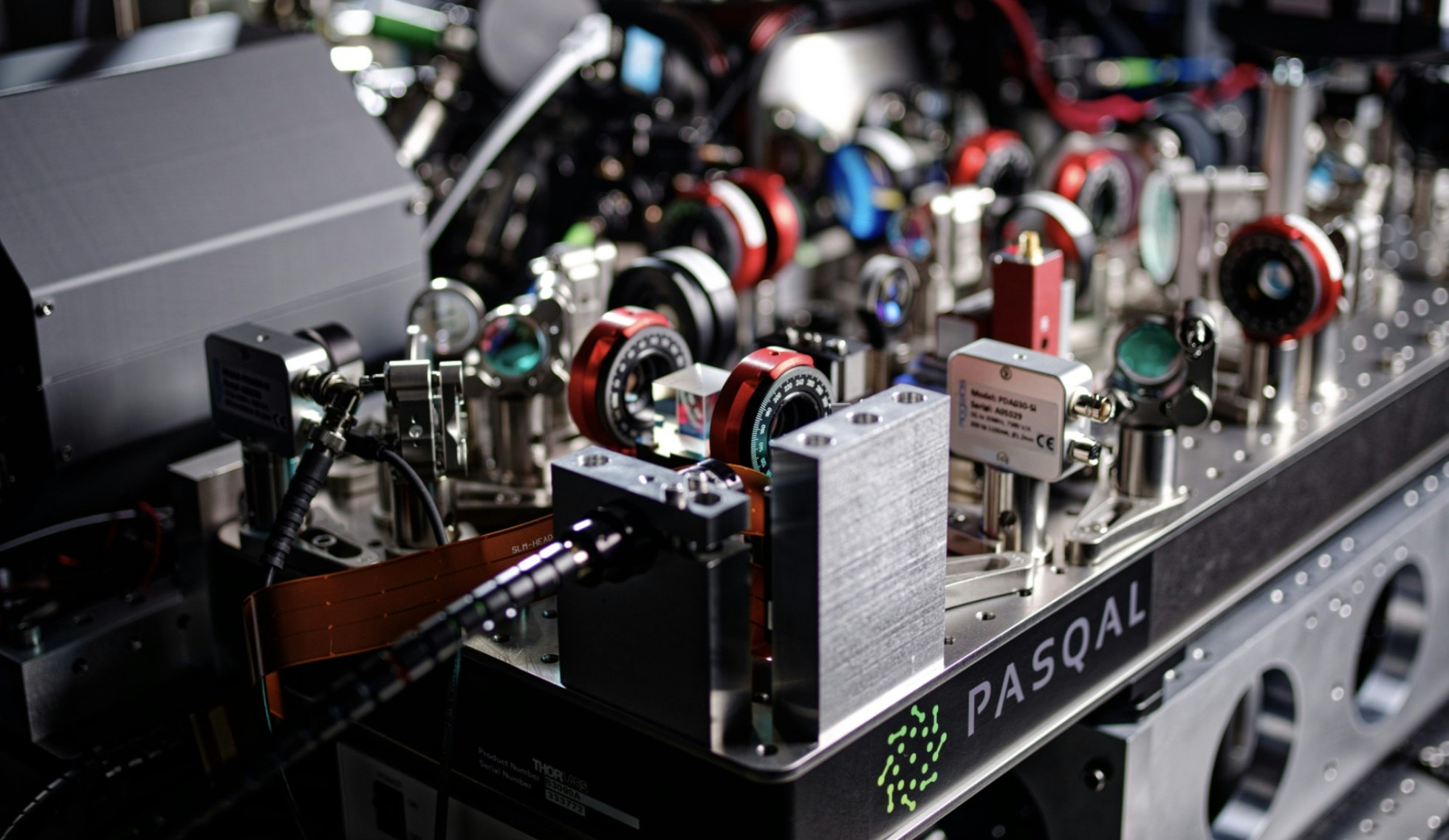
Pasqal, a neutral-atom quantum computing company, is heading to public markets at around a $2B valuation via a SPAC, per Sifted. The deal sets a late-stage pricing anchor for quantum players with deployed systems and enterprise traction.
Rigetti posts $216M annual loss while expanding deployments
Rigetti reported a $216M annual loss with “modest” revenue, even as it expands quantum system deployments, per The Quantum Insider. The numbers highlight the capital intensity and long road to commercial scale for hardware-first quantum.
So What? Quantum is now an asset class with public-market comparables, and a visible burn profile. Enterprise buyers are no longer just “doing pilots”; they’re underwriting vendor survivability, roadmap credibility, and alignment with national strategies. The spread between capital-efficient, application-aligned players and deep-burn hardware bets is widening.
The Risk: Locking into a single quantum vendor whose runway depends on optimistic public-market sentiment exposes you to stranded integrations and orphaned APIs. Conversely, sitting out quantum entirely because the hardware story looks expensive risks missing the software and algorithm layers that will matter sooner.
Action: • If quantum touches your 3–7 year roadmap, build a vendor matrix that scores not just qubits and benchmarks, but cash runway, government alignment, and ecosystem partnerships. • Structure engagements as option-like: small paid pilots with clear off-ramps and IP terms, plus rights to migrate workloads if a vendor falters. • For investors and boards, stop treating “quantum exposure” as a single line item, distinguish between hardware, middleware, and application layers in your portfolio and risk models.
Switzerland unveils national quantum strategy
Switzerland announced a national quantum strategy to strengthen its global tech position, per The Quantum Insider. The plan includes coordinated investment in talent, research, and infrastructure.
So What? National quantum strategies are becoming the organizing hubs for talent, standards, and procurement. Vendors and ecosystems will cluster around these programs. If you’re in Europe, your access to talent, grants, and early deployments will increasingly depend on which national initiative you’re plugged into.
The Risk: Ignoring these programs leaves you outside the emerging standard-setting forums and supply chains. Over-indexing on one country’s ecosystem can backfire if geopolitical or regulatory conditions shift.
Action: • Identify which national or regional quantum programs are most relevant to your footprint, Switzerland, EU-wide, or others, and assign an owner to engage. • For enterprises, align at least one exploratory project with a national initiative to secure co-funding, talent access, or early hardware time. • For startups, treat alignment with a national strategy as a GTM channel, not just a grant source, and build it into your fundraising narrative.
PLATFORMS / SURFACE AREA
Assistants are intent routers, not full-stack commerce, for now
OpenAI scales back Instant Checkout inside ChatGPT
OpenAI is scaling back shopping directly inside ChatGPT via Instant Checkout, shifting checkouts back into the specific apps that plug into ChatGPT, per The Information. ChatGPT remains a discovery and intent layer, while transactions complete in partner environments.
So What? The assistant is being clarified as a high-intent traffic source, not a closed commerce OS. That keeps platform risk more balanced: partners own checkout, data, and LTV; OpenAI owns discovery, ranking, and demand generation. For operators, the play is to treat ChatGPT like SEO + paid search + app deep links, not like an app store with its own cart.
The Risk: If you built product assumptions around in-assistant checkout, your funnel and attribution models are now wrong. Over-reliance on a single assistant as your primary acquisition channel also leaves you exposed to ranking and policy changes you don’t control.
Action: • Redesign your ChatGPT integration to optimize for lead capture and deep linking into your own app or site, with clear tracking and attribution. • Audit your dependency on assistant-driven traffic: what percentage of new users or revenue would disappear if ranking changed tomorrow. • For commerce and SaaS teams, align your pricing and onboarding flows so they’re “assistant-friendly”, low-friction, mobile-optimized, and resilient to context switches between ChatGPT and your app.
GOVERNANCE / RISK STACK
AI acceleration is spawning its own control layer, and new red lines
Unleash raises $35M Series B to manage AI-accelerated dev risk
Oslo-based Unleash raised a $35M Series B led by One Peak to build tools that let enterprises manage risks in AI-accelerated software development, per SiliconANGLE. The platform focuses on feature flags, rollout control, and governance in environments where AI is in the loop.
So What? The control plane for AI-accelerated development is becoming its own product category. As Copilot-style tools permeate engineering, auditors and CISOs are demanding visibility into what’s being shipped, where AI touched the code, and how to roll back safely. This is no longer a “nice-to-have”, it’s part of the compliance and reliability stack.
The Risk: Ignoring this layer until a regulator, customer, or incident forces it on you means retrofitting governance under duress. Over-centralizing control without developer buy-in, however, can stall the very productivity gains you’re chasing.
Action: • Inventory where AI is already in your SDLC, code generation, testing, infra, and identify the blind spots in change management and auditability. • Pilot a feature-flag and rollout-control platform that can explicitly tag and manage AI-touched changes. • Update your engineering policies to state when AI-generated code is acceptable, how it’s reviewed, and how issues are traced back.
Polymarket walks back nuclear detonation prediction incentives
Polymarket decided to stop incentivizing a prediction market around a nuclear detonation, per Gizmodo. The move acknowledges that some real-world events are too high-stakes for “skin in the game” incentives.
So What? Incentive-driven systems, prediction markets, bounties, gamified risk tools, are hitting hard boundaries where the event itself is existential. This is a preview for AI-aligned systems that touch bio, cyber, or physical safety: you can’t outsource ethics to the market and expect alignment to emerge.
The Risk: If you build incentive mechanisms around real-world risk without explicit red lines, users will eventually find edge cases that are legally and morally untenable. Overreacting after the fact with ad hoc bans erodes trust and invites regulatory intervention.
Action: • Write down your “no-go” event categories this week, the outcomes you will not incentivize, simulate, or trade on, and socialize them internally. • If you run any prediction, bounty, or reward system, add an ethics and legal review gate for new markets or challenges. • For AI teams building agentic or market-like systems, bake in constraints at the design level, don’t rely on moderation alone to catch catastrophic incentive failures.
IN PRACTICE
The pattern across these rails is simple: the control plane is where the leverage is moving.
In infra, it’s not just GPUs, it’s who controls allocation, abstraction, and long-term contracts. In defense, it’s not just drones, it’s who owns the sensor network, data rights, and model update cadence. In software, it’s not just Copilot, it’s who defines the guardrails, rollout policies, and audit trails.
When we work with operators, we start by mapping three layers: assets (compute, models, data), workflows (where AI actually touches work), and control (who can change what, how fast, under what constraints).
Most teams have invested in assets and pilots. Very few have a coherent control strategy.
For the full breakdown, reach out for a Field Report.
CONTRARIAN SIGNAL
The real AI bottleneck isn’t compute, it’s credit and control
The dominant narrative is still about GPU scarcity and model capabilities. Hon Hai’s revenue spike, NATO’s AI focus, quantum companies going public, the story sounds like “more compute, more models, more autonomy.”
The quieter story is about who underwrites the risk and who holds the kill switch.
SoftBank’s CDS widening shows that AI-heavy exposure is now a credit question. Unleash’s raise shows that AI-accelerated development needs its own governance layer. Polymarket’s nuclear walk-back shows that incentive design has hard limits long before the tech does.
If you’re optimizing for tokens per second and parameter counts while ignoring capital structure, data rights, and control planes, you’re solving the easy problem.
The Takeaway: The next wave of AI advantage goes to operators who treat governance, credit exposure, and control surfaces as first-class design variables, not afterthoughts once the model is in production.
THE QUESTION FOR TODAY
GPU supply is still tight and getting monetized through long-term contracts. Defense budgets are rotating into drones, autonomy, and recurring software. Quantum is stepping into public markets with visible burn and national backing. Assistants are solidifying as intent routers, not end-to-end commerce stacks. Governance and incentive design are emerging as the real failure modes.
Are you allocating this year’s capital and headcount as if control, not capability, is the scarce resource?
See exactly how this impacts your specific industry and function. Upgrade to PRO to get bespoke tactical breakdowns generated instantly for your operating model.
Go deeper with the Weekly Signal
This is the daily take. The Weekly goes further — full strategic analysis across 8–10 sections, each with a signal read and operator action items. Source panel included.
Sign up free → then upgrade