
Tokens as compensation. Frontier models as legal territory. Quantum as an extension of CUDA. Edge inference as the default, not the exception.
The connective tissue: compute is being financialized, contractualized, and embedded into existing stacks, not treated as a separate “AI initiative.”
This isn’t a model race story anymore.
It’s a control-plane story, who owns the meter, the contract, and the workflow where intelligence runs.
If your plan still assumes “we’ll pick a model and a cloud and build on top,” you’re already behind. The real game is: how do you keep optionality when the meter, the legal rights, and the hardware roadmap are all converging around someone else’s incentives.
BLUF
At Neue Alchemy, we support leaders navigating inflection points, when tech, capital, and policy converge. If your roadmap is already in motion and you're pressure-testing execution, we're open to conversations.
We also reserve capacity for education, SMBs, and mid-market leaders, those starting, mid-flight, or seeking outside perspective before systems harden.
COMPUTE / CONTROL PLANE
Tokens, contracts, and who owns the meter
Nvidia CEO Jensen Huang can’t stop talking about “AI tokens”, per Business Insider, he’s framing tokens as the unit CFOs should use to think about AI budgets and consumption.
In parallel, tokens are being positioned as the abstraction layer between raw FLOPs and business value, a way to normalize spend across models, workloads, and time.
The Bet: Nvidia is betting that whoever defines the unit of account for AI spend will control how enterprises perceive cost, value, and lock-in.
So What? This is an attempt to move the control plane for AI from “GPU hours”, an infra metric, to “tokens”, a business metric. Once your board and CFO think in tokens, they’ll benchmark vendors, teams, and products on that basis. That shifts power to whoever issues, meters, and reports those tokens. If you ignore this and keep talking in “instances” and “FLOPs,” you’ll sound like a cost center while others sound like a product line.
The Risk: If token definitions diverge across vendors, you get the equivalent of multiple incompatible “kilowatts”, confusing, non-comparable units that obscure true cost. That confusion can stall internal adoption or trigger blunt cost-cutting when finance loses trust in the numbers.
Action: • Translate your AI cost reporting into a token-like metric this week, even if it’s internal only. • Ask your infra providers how they define and meter tokens; map that to your own usage so you’re not surprised in QBRs. • In new product specs, require PMs to express unit economics in “cost per 1,000 tokens” or equivalent, not just “per user” or “per request.”
Jensen Huang and Sam Altman are also talking about tokens as compensation and even proto-UBI, per Business Insider, Huang floated AI tokens as part of engineers’ comp, while Altman framed tokens as a future income stream for the broader population.
This reframes compute capacity and model access as an asset class employees and citizens can hold exposure to, not just a line item on a P&L.
The Bet: Leaders are assuming that tying human upside directly to AI-denominated assets will attract talent and build political cover for large-scale compute deployment.
So What? If tokens become part of compensation, your top technical talent will compare offers on “AI upside exposure,” not just salary and equity. That tilts the market toward organizations that either issue their own AI-linked instruments or negotiate access to them. It also means compute allocation becomes a governance problem, who decides which teams, products, or users get the “good” tokens and at what rate.
The Risk: If token economics are opaque or volatile, you risk recreating the worst of crypto-era comp, employees feeling misled, regulators scrutinizing offerings, and internal politics over who got in early. Misaligned token incentives can also push teams to optimize for token accrual rather than durable product value.
Action: • Ask your head of talent what your “AI upside” story is, in plain language, and write it down this week. If you don’t have one, you’re already losing candidates. • If you’re at scale, explore synthetic exposure, e.g., bonus pools indexed to AI-driven revenue or margin, before you jump into issuing anything on-chain. • For boards: push management to clarify how compute access and any AI-linked rewards will be governed, who allocates, who audits, who can say no.
Sources report Microsoft is weighing legal action over whether AWS can offer OpenAI’s Frontier models without breaching the Microsoft–OpenAI agreement, via Financial Times.
The dispute centers on where Frontier runs and who controls the high-margin inference surface when those models are consumed at scale.
The Bet: The major players are assuming that control over the runtime environment for frontier models is worth legal escalation, because that’s where long-term margin and data gravity live.
So What? Cloud lock-in is no longer just about APIs and egress fees, it’s about contract language and exclusivity around specific models. If you standardize on a single frontier model without a multi-cloud, multi-model architecture, you’re effectively letting your legal team, and someone else’s contract, dictate your technical roadmap. The inference layer is becoming contested territory; your architecture needs to assume that some endpoints may move, fragment, or become exclusive.
The Risk: If courts or regulators intervene, you could see abrupt changes in where and how models are available, with little operational notice. A legal ruling can break your deployment assumptions overnight, especially if you’ve hard-wired a specific provider into critical workflows.
Action: • Inventory every system that depends on a specific model endpoint or cloud region; flag those as “single-point-of-failure” this week. • Start a proof-of-concept to run at least one core workload on an alternative model and/or cloud, even if it’s more expensive, to prove you have a Plan B. • In new contracts, push for explicit language on model portability, API continuity, and notice periods for material changes.
INFRASTRUCTURE / EDGE & MEMORY
Inference gravity is shifting, and memory is being pre-sold
Multiverse Computing and Axelera AI announced a strategic collaboration to bring next-gen AI models to edge devices, per The Quantum Insider, combining model compression with dedicated edge accelerators.
The goal is to run sophisticated models on low-cost hardware close to where data is generated, reducing dependence on centralized cloud inference.
The Bet: They’re assuming the default architecture flips, from “ship data to the model” to “ship the model to the data”, because of latency, privacy, and cost.
So What? If edge inference becomes the norm, the moat shifts from “we have access to big models in the cloud” to “we can fit useful intelligence into constrained, distributed environments.” That favors teams who invest in compression, distillation, and hardware-aware model design. It also erodes the advantage of pure API-based businesses that assume every interaction round-trips to a central LLM.
The Risk: Edge deployments are harder to update, monitor, and secure. If you push intelligence to the device without a robust update and observability story, you’re trading cloud costs for operational and security risk, especially in regulated or safety-critical contexts.
Action: • Identify one workflow today that doesn’t need cloud latency, e.g., on-device classification, summarization, or control, and scope an edge POC. • Ask your ML team what their compression and quantization capabilities actually are; if the answer is “we just call the API,” you have a gap. • For hardware-adjacent products, start vendor conversations with edge accelerator providers now, allocation will tighten as more players move off pure cloud.
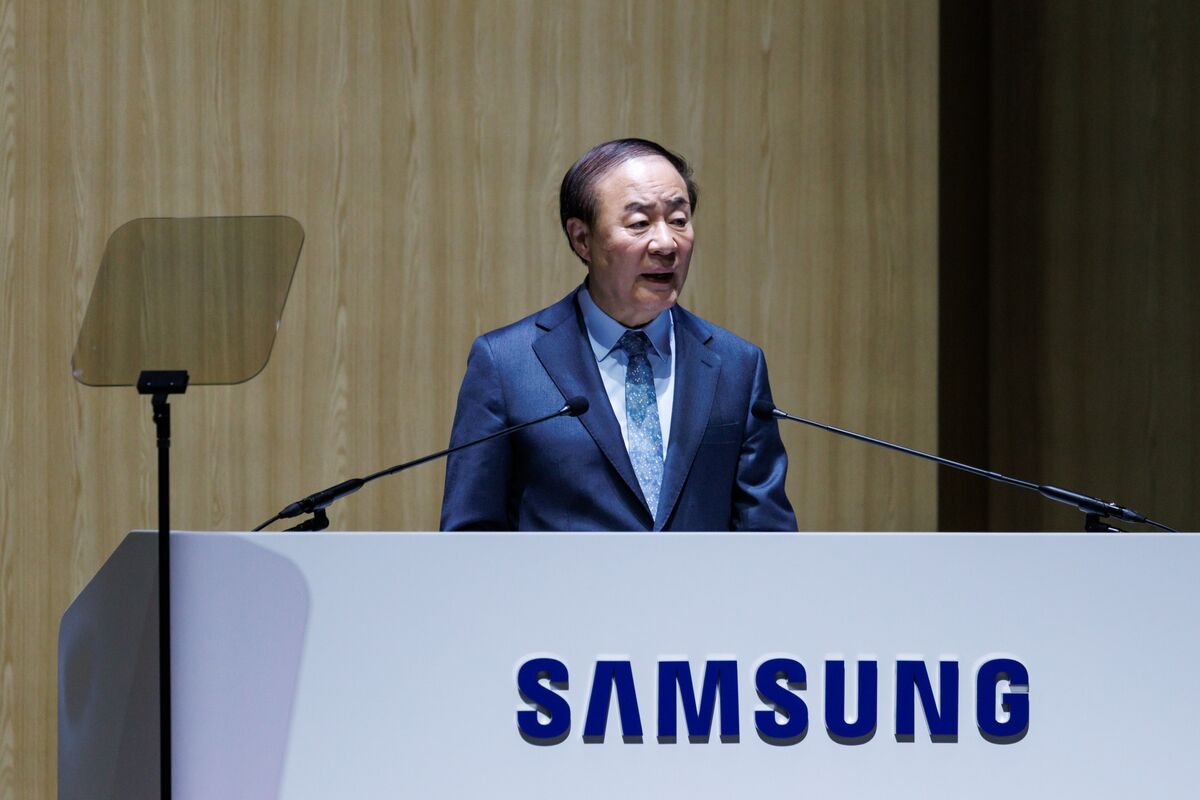
Samsung and AMD signed a preliminary deal for Samsung to supply next-gen HBM4 for AMD’s MI455X accelerators and DDR5 for its Helios line, via Bloomberg.
This is a forward allocation of high-bandwidth memory for data center accelerators, locking in supply years ahead of deployment.
The Bet: Memory, not just compute, is the real choke point, and pre-buying HBM is how you guarantee training and inference capacity in 2027 and beyond.
So What? If you’re planning large-scale training or high-context inference, your risk is increasingly your vendor’s HBM pipeline, not just their FLOPs roadmap. The big buyers are turning memory into a financial instrument, secured via multi-year supply agreements, while everyone else is left to the spot market. That means your “we’ll just scale up when we need to” plan is fragile if you’re not a priority customer.
The Risk: If demand projections overshoot, you can end up locked into expensive capacity you don’t fully utilize, or stuck on a specific hardware generation longer than you’d like. On the flip side, if your vendor overcommits elsewhere, you may find your promised capacity quietly reprioritized.
Action: • In your next infra review, ask explicitly: “What is our vendor’s HBM4 exposure and how are we prioritized?” Don’t accept hand-waving. • For any 2027+ large training plans, model scenarios where you have to downsize or delay runs due to memory constraints, and design fallbacks. • If you’re sub-scale, lean into architectures and workloads that are less memory-hungry, retrieval, smaller specialized models, and smart context management.
QUANTUM / HPC INTEGRATION
Quantum stops being exotic and starts being “just another accelerator”
Pasqal introduced a new integration with Nvidia’s CUDA-Q to enhance its hybrid quantum computing environment for HPC, per The Quantum Insider.
The integration lets developers treat Pasqal’s neutral-atom quantum systems as accelerators within familiar CUDA-centric workflows.
The Bet: Quantum will be adopted through existing HPC stacks, not via greenfield quantum-only environments.
So What? This moves quantum from “science project in a separate lab” to “optional accelerator in the same toolchain as GPUs.” For operators running heavy simulation, optimization, or materials workloads, the barrier to experimentation drops from “build a quantum team” to “extend your CUDA workflows.” That changes when you should start paying attention, earlier than when quantum is “ready,” because integration risk is now low.
The Risk: Over-rotation is the danger, treating quantum as production-ready just because it plugs into CUDA. If you misread maturity and bake quantum assumptions into critical paths, you’ll introduce fragility and delay.
Action: • If you have an HPC footprint, ask your team this week: “What would it take to run a small pilot through CUDA-Q with a quantum backend?” • Identify one non-critical workload, e.g., portfolio optimization, routing, or small-scale materials modeling, as a testbed for hybrid quantum experiments. • Update your 3–5 year infra roadmap to treat quantum as a potential accelerator class, not a separate stack, even if your conclusion is “not yet.”
Qblox is beginning manufacturing of quantum control electronics in Massachusetts, per The Quantum Insider.
They’re localizing production of the control hardware that sits between qubits and classical systems, a critical piece of the quantum stack.
The Bet: Quantum is moving from lab prototypes to an industrial supply chain, and control electronics are a strategic chokepoint worth domesticating.
So What? For US-based operators, this reduces some geopolitical and logistics risk around piloting quantum hardware. It also signals that the quantum stack is maturing into something you can plan around, with vendors, lead times, and manufacturing footprints, not just research collaborations. The industrial base is forming around the “boring” parts of quantum, which is usually the precursor to real deployments.
The Risk: Localized manufacturing doesn’t eliminate risk, it concentrates it. If a small number of vendors dominate control electronics, any disruption, technical, financial, or regulatory, can ripple through the ecosystem.
Action: • If quantum is on your horizon, add control electronics and cryogenics vendors to your vendor risk register, not just qubit providers. • Start informal conversations with quantum hardware and control vendors now, even if you’re 3–5 years out, relationships will matter when capacity tightens. • For boards: treat quantum supply chain developments as part of your broader “strategic compute” risk, alongside GPUs and HBM.
PLATFORMS / GOVERNANCE
Values clauses, procurement, and ad rails as regulated surfaces
Nearly 150 retired judges filed a brief supporting Anthropic in its dispute with the Pentagon, per Business Insider.
In a separate filing, the Pentagon responded to Anthropic’s suit by arguing the company is a “substantial risk” to national security due to its usage constraints, per Business Insider.
The core issue: whether an AI vendor’s values and acceptable-use policies are compatible with defense procurement and offboarding requirements.
The Bet: Both sides are assuming that AI procurement will set precedent, for how much control vendors retain over model use, and how much leverage governments have over dual-use tech.
So What? “Values clauses” are no longer marketing copy, they’re contractual variables that can win or lose you entire markets. If your acceptable-use posture is misaligned with defense or other sensitive sectors, you either need to adjust it explicitly for those customers or accept that you’re not playing in that arena. Conversely, if you want those contracts, you’ll be expected to build in offboarding, continuity, and usage rights that may conflict with your default policies.
The Risk: If you straddle both sides, promising strict usage constraints to the public and broad flexibility to governments, you invite reputational and regulatory scrutiny. You also risk internal revolt if your employees discover a gap between stated values and contractual reality.
Action: • Sit down with legal and product this week and answer: “Where are we willing to say no on use cases, and to whom?” Write it down. • If you’re targeting government or defense, have counsel review your current ToS and AUP against typical federal procurement clauses; identify conflicts early. • For sales: stop treating values language as boilerplate. Train reps on where you will and won’t flex for strategic accounts.
The UK’s Financial Conduct Authority said Meta has repeatedly failed to stop illegal ads for high-risk financial products on its platforms, despite prior commitments, per Reuters.
Regulators are treating ad integrity, especially for financial products, as a supervised control, not a best-effort moderation problem.
The Bet: Supervisors are assuming platforms and advertisers can and should operate ad rails with the same rigor as regulated financial systems.
So What? If you acquire users via social ads, you’re now part of a regulated surface, even if you’re not directly supervised. Expect more scrutiny on your creatives, targeting, and funnel, especially in fintech, crypto, and other high-risk categories. “The platform approved it” is no longer a defense; regulators will expect you to have your own controls and monitoring.
The Risk: If you don’t adapt, you risk sudden campaign takedowns, account bans, or retroactive enforcement, all of which can blow up your CAC assumptions mid-quarter. Overreaction is also a risk: platforms may clamp down broadly, making it harder for legitimate products to advertise.
Action: • Audit your current social ad campaigns this week for any language or structures that could be construed as high-risk or misleading, especially around returns, guarantees, or complexity. • For regulated sectors, route ad copy and targeting through compliance review before launch; treat it like you would a new product disclosure. • Build basic alerting around ad disapprovals and policy changes from major platforms so you’re not caught flat-footed.
CAPITAL / TALENT SURFACES
Where the money and people actually cluster
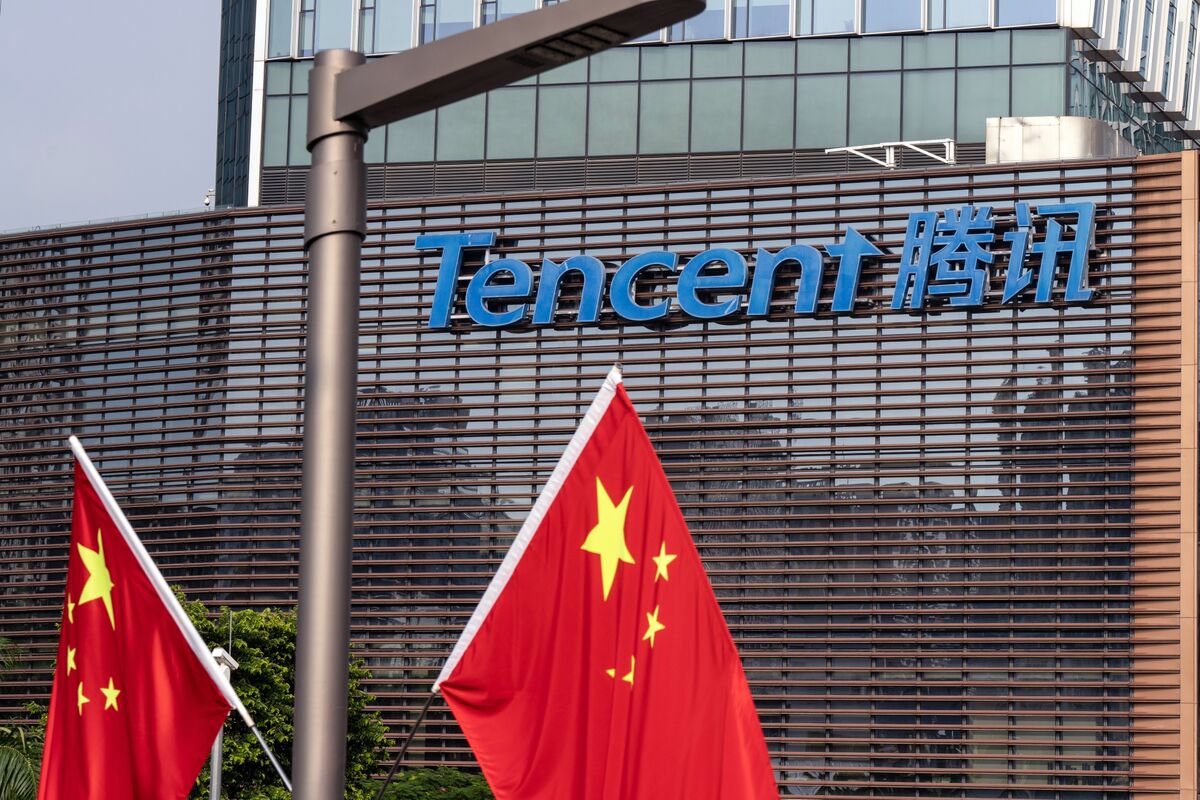
Tencent reported Q4 revenue up 13% year-over-year to about $28.3B, its fifth straight quarter of double-digit growth, driven by gaming and ads, while it invests heavily in agentic AI, per Bloomberg and Techmeme.
The AI push is being underwritten by mature, high-margin businesses, not by AI revenue itself.
The Bet: AI is being treated as a force multiplier on existing monetization loops, engagement, personalization, commerce, rather than a standalone P&L that has to pay for itself immediately.
So What? If your AI roadmap is expected to stand alone financially, you’re competing against players who can treat AI as a long-duration call option funded by legacy cash cows. Boards and CFOs will increasingly ask: “Which existing revenue engine does this AI spend deepen?” If you don’t have a crisp answer, your budget is at risk.
The Risk: If incumbents over-index on using AI to optimize existing loops, they can miss new category opportunities, but in the near term, their ability to subsidize experimentation will crowd out thinner-capitalized competitors.
Action: • Map each major AI initiative to a specific existing revenue stream this week, name the SKU or line item it’s supposed to move. • For early-stage teams without a cash cow, narrow your AI bets to one or two high-conviction use cases; you don’t have the subsidy to spray and pray. • In board materials, stop presenting “AI” as a separate line; show it as a lever on gaming, ads, SaaS, or whatever your core is.
Founders are increasingly leasing multimillion-dollar mansions in San Francisco’s wealthiest neighborhoods as corporate HQs and hacker houses during the AI boom, per The San Francisco Standard.
These spaces are being used as recruiting magnets, investor meeting stages, and 24/7 build environments.
The Bet: Physical spectacle and density, the “mansion HQ”, will attract talent and capital more effectively than traditional offices or remote setups.
So What? If your talent strategy assumes remote parity, you’re now competing against teams offering a highly concentrated, high-status physical environment. For some profiles, especially young, ambitious engineers, that’s a powerful draw. The mansion HQ is less about desks and more about narrative: “this is where the future is being built.” If your story is purely digital, you need a counter-narrative that’s equally compelling.
The Risk: These setups can burn cash fast and create insular cultures detached from customers. They also concentrate key people in a single physical risk surface, from health to security to local policy shifts.
Action: • Reassess your talent pitch this week: what is your equivalent of the “mansion magnet”, mission, autonomy, upside, or something else, and is it actually visible in your hiring funnel. • If you’re considering a physical hub, model the burn and cultural implications honestly; don’t copy the aesthetic without understanding the tradeoffs. • For distributed teams, invest in periodic, high-intensity in-person gatherings that create some of the same energy without permanent fixed costs.
Candex raised $40M in a Series C extension led by HSBC to streamline onboarding and payments for global long-tail vendors, per Crunchbase News.
The product promise: kill the “one-off supplier” tax by making it easy and compliant to onboard any vendor, anywhere.
The Bet: Large enterprises will pay real money to compress the procurement friction around small, infrequent, or international vendors, because that friction is now a growth bottleneck.
So What? If your product touches procurement, AP, or vendor management, the bar just moved from “we integrate with your ERP” to “we make any vendor globally plug-and-play.” This also changes how AI products get into the enterprise: if onboarding is easier, teams can experiment with more niche tools, but only if those tools can clear compliance quickly.
The Risk: Centralizing vendor onboarding through a few intermediaries creates concentration risk, if they have an outage or compliance issue, a large chunk of your supply chain or tooling ecosystem can stall.
Action: • Ask your finance/procurement lead how many “one-off” vendors you onboarded last year and how long it took; quantify the drag. • If you sell into large enterprises, make your onboarding story a core part of your pitch, security docs, compliance posture, and integration paths should be ready to go. • Explore partnerships or integrations with vendor-onboarding platforms rather than fighting their process from the outside.
IN PRACTICE
Most teams still treat “compute strategy” as a procurement problem, pick a cloud, pick a model, negotiate a discount.
The pattern across these moves, tokens, HBM pre-buys, CUDA-Q integration, edge accelerators, says that’s the wrong abstraction.
The more accurate frame is: you’re designing a multi-layered control plane.
• Economic layer, how you meter, price, and report AI usage internally and externally. • Contractual layer, what your rights and obligations are when models, clouds, or vendors shift. • Physical layer, where the intelligence actually runs: cloud, edge, quantum, or some hybrid.
Teams that separate these layers, and design for optionality at each, will survive vendor fights, supply shocks, and hype cycles.
Teams that collapse them, “we’re an X shop, we use Y model, on Z cloud”, are betting their roadmap on other people’s contracts and capex.
For the full breakdown, reach out for a Field Report.
CONTRARIAN SIGNAL
AI isn’t a “capability” anymore, it’s a regulated utility
The dominant narrative is still “AI as a capability”, something you bolt onto products to make them smarter, faster, more personalized.
Yesterday’s moves tell a different story.
Tokens as units of account. Legal fights over where models can run. Regulators treating ad rails like financial infrastructure. Quantum sliding quietly into CUDA.
This is what it looks like when a technology stops being a feature and starts behaving like a utility.
Utilities are metered. Heavily contracted. Regulated at the edges where they touch money, safety, and national security.
If you keep treating AI as a feature, owned by product, justified by NPS, you’ll miss the real leverage points: who sets the meter, who writes the contracts, who gets to plug into the grid.
The Takeaway: Your AI strategy is now a utility strategy. If you’re not in the room where tokens, contracts, and regulatory exposure are being designed, you’re not actually steering the thing that will matter most.
THE QUESTION FOR TODAY
Tokens are becoming the language your CFO understands. Cloud and model access are being fought over in court, not just in benchmarks. Edge and quantum are sliding into your existing stacks, not waiting for a greenfield rewrite. Regulators are turning your growth channels into supervised surfaces.
Are you still treating AI as a product feature, or have you actually designed the economic, contractual, and physical control plane your next five years depend on?
See exactly how this impacts your specific industry and function. Upgrade to PRO to get bespoke tactical breakdowns generated instantly for your operating model.
Go deeper with the Weekly Signal
This is the daily take. The Weekly goes further — full strategic analysis across 8–10 sections, each with a signal read and operator action items. Source panel included.
Sign up free → then upgrade