
Humanoid robots will fail. Or environments will be rebuilt around them. Top engineers should burn $250,000 a year in tokens. Alibaba and Tencent lose $66B on "AI with no business model." Nasdaq gets SEC approval to tokenize securities. Amazon quietly buys the last 50 feet of delivery.
Different stories, same pattern: the stack is hardening around three leverage points, compute consumption per head, capital discipline around AI, and physical/logistical integration.
The old question was "What AI are you building?" The new question is "Where do you sit in the value chain when AI, capital markets, and robots are no longer abstractions but operating constraints?"
If your current plan treats AI as a feature, logistics as a vendor category, and capital markets as background noise, you're underestimating how fast your margins and moats are being repriced.
BLUF
At Neue Alchemy, we support leaders navigating inflection points, when tech, capital, and policy converge. If your roadmap is already in motion and you're pressure-testing execution, we're open to conversations.
We also reserve capacity for education, SMBs, and mid-market leaders, those starting, mid-flight, or seeking outside perspective before systems harden.
COMPUTE / TALENT
Nvidia turns token burn into a performance metric
Nvidia CEO Jensen Huang said he would be "deeply alarmed" if a $500,000 engineer did not consume at least $250,000 worth of AI tokens per year, per Business Insider.
He effectively set a 50%-of-comp benchmark for compute spend as a proxy for individual leverage, tying elite compensation directly to GPU utilization.
The Bet: High-comp talent is only worth it if paired with aggressive automation and model usage.
So What? AI spend just moved from a shared infra line item to an individual productivity KPI. If the market internalizes this, "top engineer" stops meaning "writes the best code" and starts meaning "orchestrates the most compute into business outcomes." Budget conversations will shift from "why is our AI bill so high?" to "why are our best people not driving higher AI bills, and outcomes, yet."
This also reframes vendor selection. If your stack makes it hard or slow for engineers to spin up and burn serious tokens safely, you're capping their leverage. The organizations that normalize six-figure per-head AI spend, with guardrails, will compound faster than those still optimizing for cloud cost over throughput.
The Risk: Treating token burn as a vanity metric is a fast path to waste. Without tight linkage to revenue, margin, or cycle-time reduction, you just inflate infra bills and invite board scrutiny. There's also a cultural risk, lower-comp but high-leverage operators get undervalued if you over-index on spend instead of outcomes.
Action: • Instrument per-employee AI usage this week, not just logins, but approximate token and dollar burn for your top 10% of operators. • For your highest-comp engineers and PMs, ask explicitly: "What would you do with 5x your current AI budget?", then test one of those bets in the next sprint. • If your internal platform makes it hard to safely experiment with high-volume inference, prioritize a thin, governed self-serve layer over another model evaluation deck.
CAPITAL FLOWS / AI MONETIZATION
Alibaba and Tencent get a $66B lesson in "AI without a business model"
Alibaba and Tencent lost a combined $66B in market value in roughly 24 hours as investors reacted to unclear monetization plans for their AI investments, per Bloomberg.
The market punished large, opaque AI bets without a clear path to revenue and margins, despite strong narratives around capability.
The Bet: Public markets will fund AI capex only when it is tightly coupled to visible, near- to mid-term cash flows.
So What? The era of "AI as strategic necessity" is over in public markets. The new bar is "AI as P&L driver with line-of-sight economics." Boards and investors are now explicitly pricing the risk of AI spend that looks like R&D theater rather than product.
For operators, this changes how you pitch and prioritize. A frontier model experiment without a concrete monetization path is now a political liability. Conversely, narrow, boring AI that clearly improves take rate, reduces churn, or compresses support headcount will get funded. Internal AI roadmaps that read like lab portfolios, not product roadmaps, will get reprioritized or cut.
The Risk: Over-rotation to short-term monetization can starve genuinely strategic capabilities that need 2–3 years to mature. If you only fund AI that shows up in next quarter's numbers, you risk getting stuck on the same commoditized rails as everyone else.
Action: • Rewrite your AI board slide this week: lead with 2–3 revenue or margin levers, each with specific targets and timelines, not model names. • Tag every AI initiative in your portfolio as "near-term P&L," "strategic infra," or "exploratory", and make sure the budget split matches your risk appetite. • If you're a vendor selling AI infra or platforms, reframe your pitch around concrete financial outcomes and case studies, not benchmarks or parameter counts.
CAPITAL MARKETS / TOKENIZATION
Nasdaq gets SEC cover to tokenize securities
The SEC approved a Nasdaq rule change allowing some securities to trade in tokenized form, with the new approach to be tested in an upcoming pilot program, per The Block.
This moves tokenized settlement from concept to regulated U.S. market structure, with Nasdaq as the first major exchange to run real volume through a token rail.
The Bet: Future market infra will be hybrid, legacy DTCC plus token rails, not a full rip-and-replace.
So What? Tokenization just graduated from "crypto side project" to "optionality in core capital markets plumbing." For fintechs and brokers, this means your architecture has to assume dual rails: traditional clearing and token-based settlement. The winners will be those who abstract this complexity away from end users while capturing the operational and capital efficiency upside.
For operators outside finance, the implication is subtler: token rails are becoming compliance-blessed. That opens the door for more regulated, on-chain representations of real-world assets, from cap tables to supply chain finance, without having to fight the "is this legal?" battle every time.
The Risk: Early tokenization pilots can create fragmentation, different liquidity pools, inconsistent standards, and operational risk at the interfaces. If you integrate too early without clear standards, you inherit complexity without meaningful advantage.
Action: • If you're in capital markets or fintech, map where your current systems touch trade capture, clearing, and settlement, and identify the minimal integration point for a token rail pilot. • Start vendor diligence on custody, identity, and compliance partners that can operate in both traditional and tokenized environments. • If you're a CFO or treasury lead, ask your banking partners directly how they plan to support tokenized instruments over the next 12–24 months, and what that means for your liquidity and reporting.
ROBOTICS / LOGISTICS
Amazon buys the last 50 feet
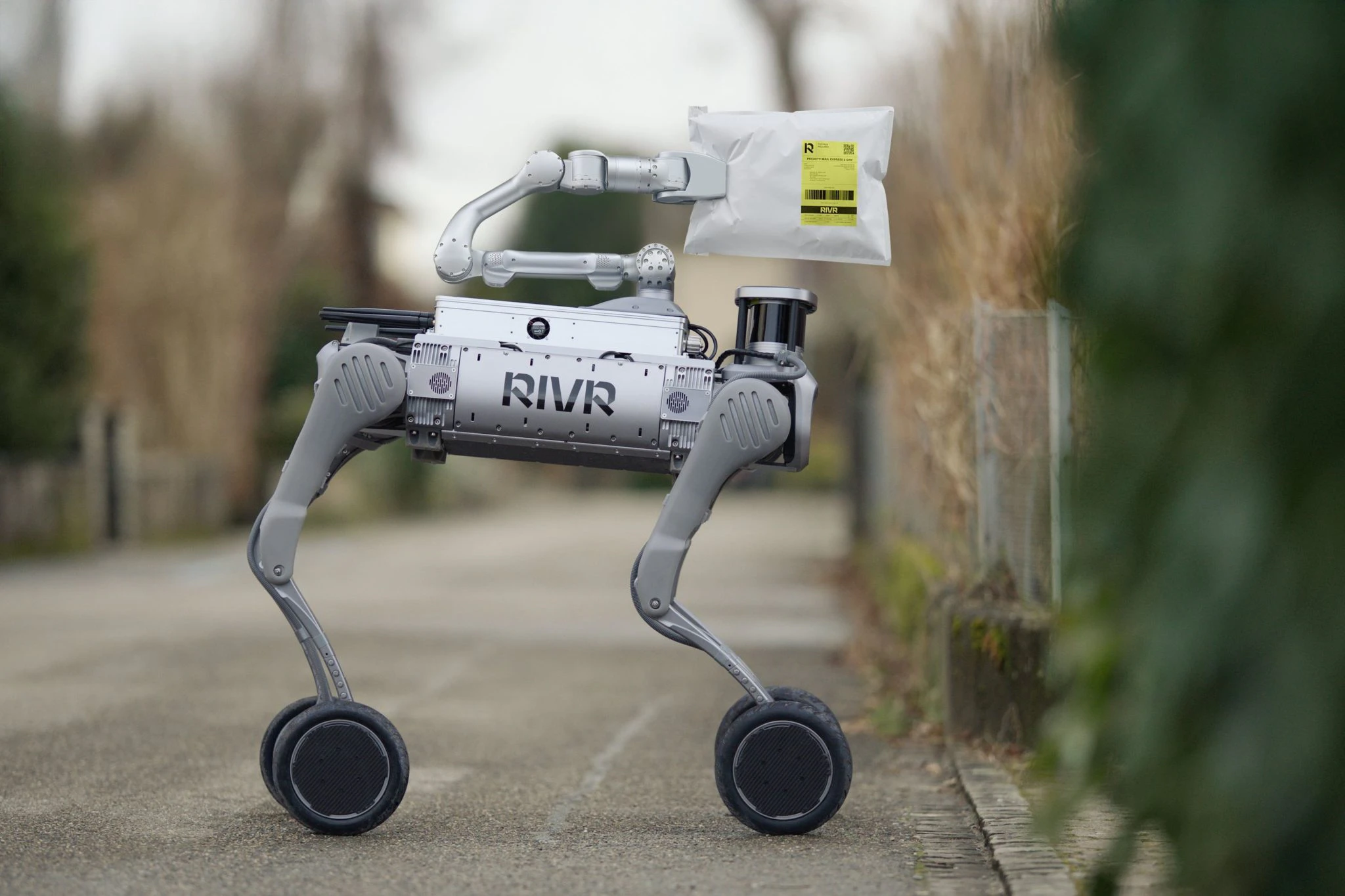
Amazon acquired Rivr, an ETH Zurich robotics spinout building stair-climbing doorstep delivery robots, per Sifted and Robotics Business Review.
Rivr's robots handle sidewalks, stairs, and porches, the messy, labor-intensive final segment between curb and customer door.
The Bet: The last 50 feet of delivery is strategic infra, not a commodity task for gig workers.
So What? Owning the doorstep changes the economics and data of delivery. If you control not just the route but the physical interface with the home, stairs, gates, porches, you can standardize drop-off, reduce damage and theft, and collect high-fidelity data on dwell times and customer behavior. That compounds into better routing, tighter delivery windows, and new service layers at the door.
For anyone relying on human couriers, food, grocery, parcel, pharmacy, your cost structure and customer experience are now being benchmarked against a stack where robots handle the most variable, injury-prone segment. This isn't about replacing drivers wholesale; it's about peeling off the hardest, most expensive parts of the route and automating them.
The Risk: Urban environments are adversarial, vandalism, weather, regulation, and accessibility concerns can slow or localize deployment. Over-indexing on a single form factor or geography before proving robustness and regulatory alignment is an execution risk.
Action: • If you're in last-mile or on-demand delivery, run a quick unit economics comparison: what happens to your margin if the last 50–100 meters per stop are effectively free and standardized? • Start mapping your delivery footprint by "robotability", dense urban, suburban, vertical living, and identify 1–2 zones where a pilot with a robotics partner would be viable. • If you're a retailer or CPG brand, ask your logistics partners how they plan to integrate with robot-delivered experiences at the doorstep, including packaging, returns, and upsell surfaces.
FORM FACTOR / BUILT ENVIRONMENT
Mark Cuban vs. humanoids, the real split is retrofit vs. co-design
Mark Cuban argued that the humanoid robot push will fail in 5–10 years, suggesting that environments will instead be built around robots rather than robots mimicking humans in existing spaces, per Business Insider.
His core claim: the winning path is co-designed spaces optimized for robots, not forcing robots into human-native layouts.
The Bet: Brownfield retrofits lose to greenfield, robot-native environments over a 5–10 year horizon.
So What? If Cuban is right, the key variable isn't whether robots have legs or wheels, it's whether your physical footprint is adaptable. Operators with large brownfield facilities, warehouses, factories, retail, hospitals, are on a clock. You either adapt workflows and layouts to today's form factors or you budget for capex-heavy rebuilds that assume robot-native design.
This reframes robotics procurement. Buying a humanoid to "fit into existing workflows" is a hedge against capex and disruption. Betting on co-designed environments is a bet that you'll rip out and rebuild key parts of your footprint. The structural question: are you a tenant in someone else's robot-native infra, or do you own and design it yourself?
The Risk: Overcommitting to greenfield robot-native builds too early can strand capital if standards or winning form factors shift. Conversely, clinging to brownfield retrofits can leave you with a patchwork of bespoke integrations that don't scale.
Action: • Inventory your top 5 physical sites by revenue or throughput and classify them: "optimize for retrofit" vs. "likely rebuild in 5–10 years." • For any site in the rebuild bucket, start capturing data now on flows, dwell times, and error rates, this becomes the design input for robot-native layouts. • When evaluating robotics vendors, ask explicitly how their roadmap assumes environment changes, and what design support they offer for co-optimizing space and robots.
SOVEREIGN / REGIONAL COMPUTE
India's Yotta shows hyperscale AI is now a regional asset class
Indian AI data center operator Yotta is aiming to secure roughly $500M–$600M at about a $4B valuation, then file initial IPO paperwork within weeks, per Bloomberg.
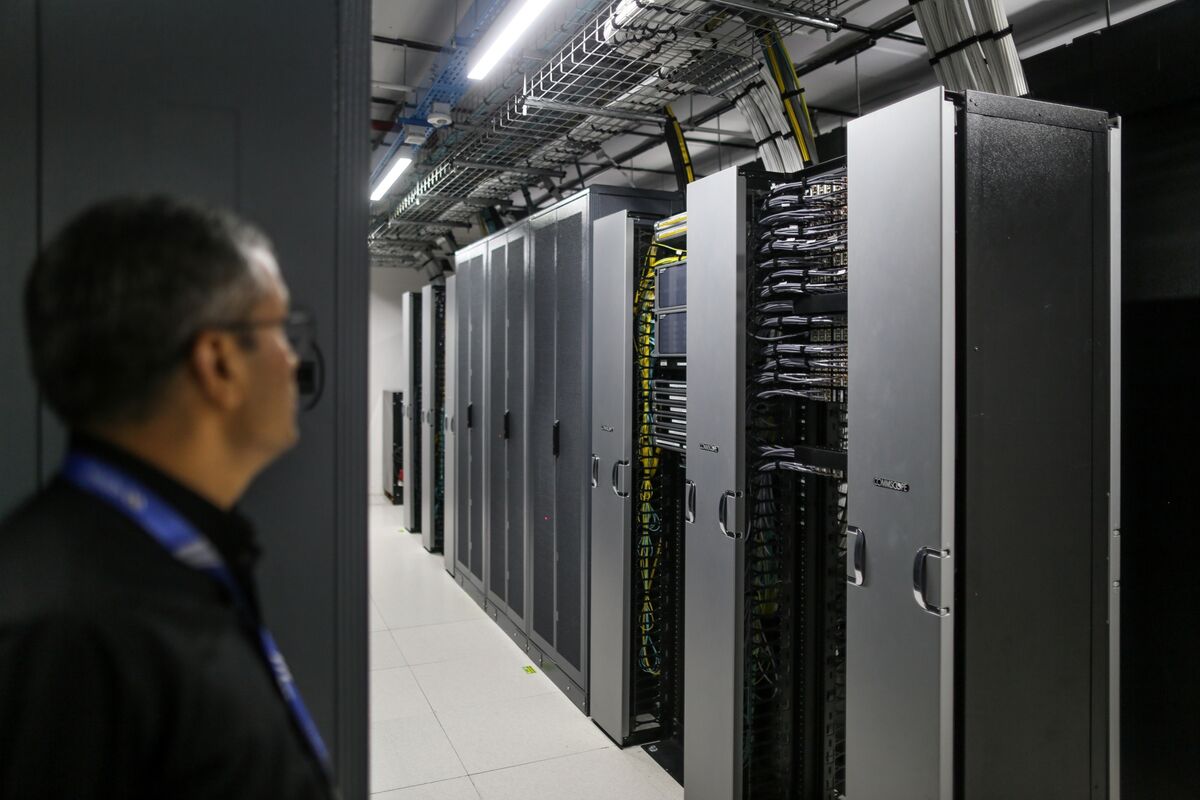
Yotta runs India’s largest Nvidia cluster, positioning itself as domestic hyperscale AI infra rather than just another colo provider.
The Bet: Regional AI compute will be financed and valued as strategic infra, not just as a cloud reseller.
So What? AI compute is no longer just a US–China duopoly story. A $4B valuation on an India-focused operator signals that domestic GPU capacity is being treated as a national and regional asset, with its own capital markets story. For builders in or serving India, this changes the default: you now have a credible local alternative to global clouds for latency-sensitive, data-resident workloads.
This also pressures pricing and partnership dynamics. Global clouds will have to compete not just on services but on proximity, regulatory comfort, and integration with local ecosystems. For enterprises, the architecture question becomes: which workloads sit on sovereign or regional clusters, and which stay on global hyperscalers?
The Risk: Overbuilding regional capacity ahead of demand can compress returns and trigger price wars. There's also execution risk around power, cooling, and regulatory stability, especially in markets where infra buildouts can be uneven.
Action: • If you operate in India, map your AI workloads by data sensitivity and latency, and identify which ones could move to a domestic provider like Yotta in the next 12–24 months. • Use Yotta's valuation as a negotiation data point with global clouds, especially around GPU pricing and regional availability. • If you're a SaaS or platform vendor serving India, design your deployment options to be cloud-agnostic across at least one global and one domestic AI infra provider.
CONTRARIAN SIGNAL
AI spend isn't out of control, your governance is
The dominant narrative from yesterday: AI costs are exploding, boards are nervous, and markets are punishing "AI without a business model." The instinctive response is to clamp down on AI budgets, slow experimentation, and demand more business cases before anyone touches a GPU.
That's backwards.
The real problem isn't that AI spend is too high, it's that it's unmanaged, un-instrumented, and decoupled from ownership. Huang's 50% token-burn benchmark and the $66B Alibaba/Tencent repricing are two sides of the same coin: capital wants AI to be either clearly leveraged or clearly constrained. What it won't tolerate is "mysterious infra line item with no owner."
If you respond by cutting AI budgets across the board, you protect today's margins at the expense of tomorrow's leverage. The better move is to make AI spend legible and accountable, down to the team and, in some cases, the individual, and then double down where the ROI is obvious.
The Takeaway: Don't starve AI, instrument it. Treat AI dollars like headcount: owned, justified, and tied to outcomes, not a shared slush fund to be trimmed when markets get jumpy.
THE QUESTION FOR TODAY
Token burn is becoming a performance metric. Public markets are punishing AI without a revenue story. Robots are moving from the warehouse to your front steps. Regional GPU clusters are turning into sovereign assets. Your physical and digital infra were designed for a pre-AI, pre-robot, pre-token world.
Are you still optimizing within those old constraints, or are you redesigning your stack for the world your balance sheet will actually live in?
See exactly how this impacts your specific industry and function. Upgrade to PRO to get bespoke tactical breakdowns generated instantly for your operating model.
Go deeper with the Weekly Signal
This is the daily take. The Weekly goes further — full strategic analysis across 8–10 sections, each with a signal read and operator action items. Source panel included.
Sign up free → then upgrade