
Data center capex is being securitized. National silicon stacks are decoupling. Cloud platforms are quietly rebuilding the web’s core primitives with AI as the default developer.
At the same time, policy is being used as a go-to-market lever, from age verification fronts to visa throttling, while community norms around AI are fragmenting in public. The “AI wave” is no longer about model releases; it’s about who controls the rails: power, chips, infra software, and regulation.
If your 2026 plan still treats AI as a feature on top of existing infrastructure and governance, you’re misreading the shift. The game is moving down-stack and off-balance-sheet, into power purchase agreements, sovereign chip ecosystems, and policy architectures that will quietly pick winners.
BLUF
At Neue Alchemy, we support leaders navigating inflection points, when tech, capital, and policy converge. If your roadmap is already in motion and you're pressure-testing execution, we're open to conversations.
We also reserve capacity for education, SMBs, and mid-market leaders, those starting, mid-flight, or seeking outside perspective before systems harden.
INFRASTRUCTURE / COMPUTE
AI data centers are now a structured asset class, and underbuilding is the bigger risk
Inside the data center financing boom, and the teams Wall Street is building to win it Wall Street banks are standing up dedicated teams to structure and finance large-scale data center projects, per Business Insider. These desks are packaging power, land, and racks into infrastructure-style deals, not traditional IT capex.
The Bet: AI demand will stay high enough, long enough, that multi-year, project-financed capacity will clear at attractive returns.
So What? Compute is being financialized like toll roads and LNG terminals. Your real counterparty for capacity is shifting from cloud sales teams to project finance committees that care about offtake, power contracts, and regulatory risk. If you’re assuming “we’ll just rent more GPUs later,” you’re competing with entities that are pre-buying the physical substrate years in advance and locking in priority.
The Risk: If AI workloads normalize faster than expected or power constraints bite harder, some of this capacity could be stranded or repriced, tightening terms for late entrants. Operators who sign long, rigid offtake without flexibility will eat the downside.
Action: • Map your AI roadmap to physical constraints, power, land, and latency, and identify where you need dedicated capacity versus opportunistic cloud. • Start a conversation this week with your CFO and treasury about project-style financing options for critical infra, even if you’re sub-scale today. • If you’re a SaaS or infra vendor, build offerings that make your workloads “bankable”, predictable usage, clear offtake, and strong credit, so you slot cleanly into these financing structures.
Neoen to build France’s largest battery amid strained power grid Neoen is developing what will be France’s largest grid-scale battery to stabilize a power system strained by renewables and rising demand, per Bloomberg. The project is explicitly framed as a response to volatility and capacity constraints.
The Bet: Storage, not just generation, is the gating factor for both decarbonization and compute expansion.
So What? Grid-scale storage is becoming a strategic dependency for AI operators, not an ESG footnote. If your workloads are power-hungry, training, inference, or GPU-heavy analytics, your resilience and cost profile will increasingly depend on whether your region has serious storage online. The players who treat storage developers as partners, co-siting, co-investing, or at least co-planning, will get better uptime, better pricing, and more political cover.
The Risk: Policy or permitting delays can push storage projects years out, while AI demand is measured in quarters. Betting on “future storage” without interim hedges exposes you to brownouts, curtailment, or punitive peak pricing.
Action: • Ask your cloud and colo providers this week how much of their capacity is backed by dedicated storage, and where. Don’t accept hand-wavy “renewables mix” answers. • If you’re siting your own data center or heavy compute, add storage availability and permitting timelines to your location scoring model. • For non-infra operators, treat power volatility as a second-order risk: model what happens to your unit economics if inference costs spike 30–50% during peak hours.
Profile of Microsoft CFO Amy Hood and the data center pause A Bloomberg profile, via Techmeme, highlights how Microsoft’s decision to pause some data center expansion last year is now cited as a driver of its current supply crunch and growth bottleneck.
The Bet: Traditional capex discipline, smoothing spend and waiting for clearer demand, still applies in an AI infra cycle.
So What? The lesson isn’t about one company. It’s that AI infra has flipped the usual capex logic: under-building is now more expensive than over-building if you’re in the platform business. Lost growth, lost developer mindshare, and forced prioritization of workloads are the new “cost of capital.” If you’re a platform or infra provider, your default should be to over-provision strategic capacity, power, land, and network, and then find ways to monetize the slack.
The Risk: Over-correcting into blind overbuild without a clear demand thesis or differentiated offering can leave you with commodity capacity in a market that rewards integrated stacks and ecosystem gravity.
Action: • Revisit your 3-year infra plan this week: where are you implicitly assuming you can “add later” instead of pre-committing? Flag those as strategic risk, not just budget items. • If you’re not a hyperscaler, look for ways to piggyback on others’ overbuild, secondary markets, subleasing, or regional partnerships, instead of trying to match them one-for-one. • Build internal triggers for when to greenlight additional capacity, tied to developer adoption, backlog, or specific customer commitments, so you’re not making ad hoc calls.
SOVEREIGN SILICON / NATIONAL STACKS
China’s GPU ecosystem is now a parallel universe, not a side show
IDC: Chinese GPU and AI chipmakers captured ~41% of China’s AI server market IDC data shows domestic Chinese GPU and AI chip vendors captured roughly 41% of China’s AI server market in 2025, while Nvidia held 55% with about 2.2M cards shipped, per Reuters. That’s a sharp erosion of Nvidia’s historical dominance in the world’s largest AI demand center.
The Bet: China can build a self-sufficient AI hardware stack fast enough to offset export controls and keep domestic AI growth on track.
So What? We now have two structurally distinct AI hardware ecosystems: a US-centric one anchored on Nvidia, and a China-centric one anchored on domestic vendors. Software, pricing, performance norms, and optimization strategies will diverge. If your infra strategy assumes “Nvidia everywhere,” you’re ignoring a parallel universe that will shape global benchmarks, frameworks, and expectations, especially for cost and energy efficiency.
The Risk: Cross-border companies trying to straddle both ecosystems will face integration tax, duplicated tooling, fragmented vendor support, and compliance risk around export controls and data flows.
Action: • If you operate in or sell into China, build a first-class path for domestic accelerators in your stack, drivers, kernels, monitoring, and support, not a half-supported port. • If you’re global, explicitly decide whether you’re “Nvidia-first” or “bimodal” and staff accordingly; pretending you can abstract it away at the API layer is wishful thinking. • For investors and boards, start asking portfolio companies how exposed they are to a single silicon vendor or geography, and what their Plan B hardware stack looks like.
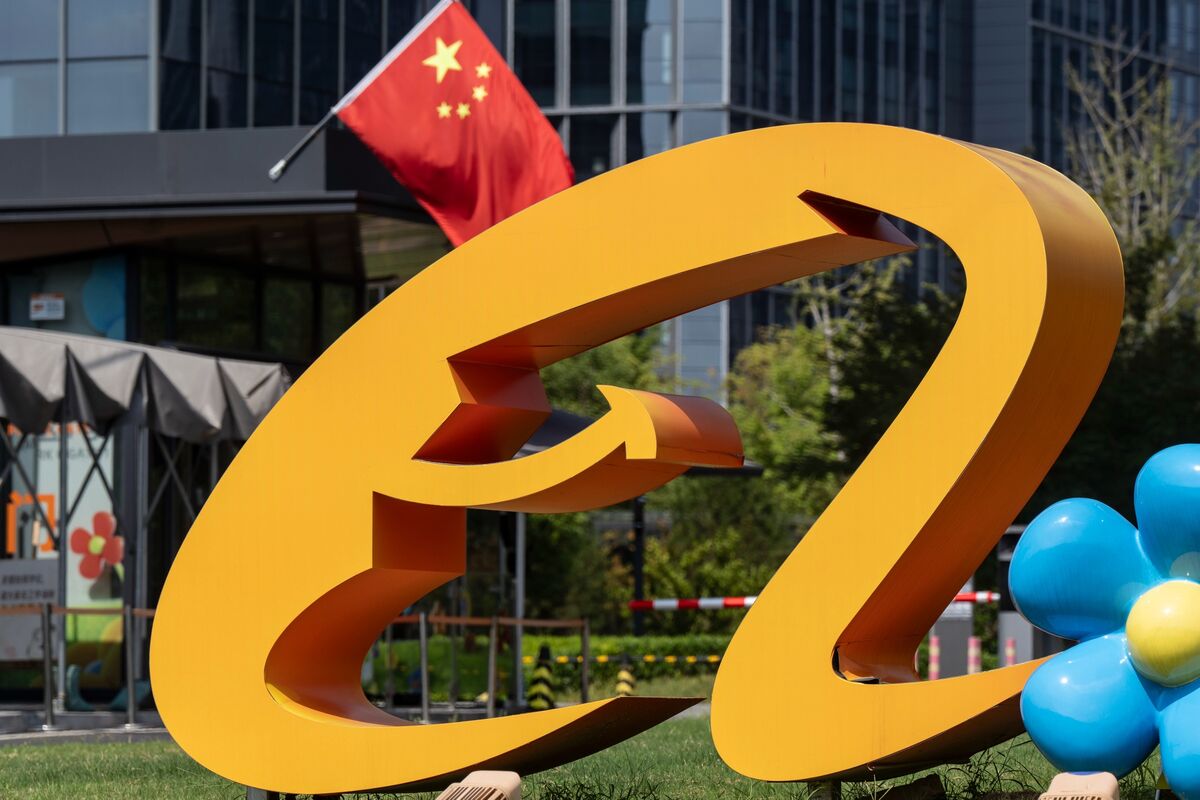
Alibaba’s Qwen3.6-Plus and rapid proprietary model cadence Alibaba released Qwen3.6-Plus, its third proprietary, closed-source AI model in three days, claiming “drastically enhanced” agentic coding capabilities, per Bloomberg. The models are tightly integrated with Alibaba Cloud as a development and automation platform.
The Bet: Local, vertically integrated LLM stacks will be the default for enterprise coding and automation in China, and cloud providers will own that layer.
So What? Alibaba is turning its cloud into an AI dev platform, not just renting compute, but owning the coding agents, workflows, and integration surfaces. In China, that means the default “copilot” for developers and operators will be local, regulated, and deeply wired into domestic infra. For cross-border vendors, the differentiation surface shrinks: governance, ecosystem reach, and specific vertical depth, not raw model capability, will be where you can still win.
The Risk: If proprietary stacks race ahead of open standards, enterprises can get locked into idiosyncratic agent frameworks and tooling that are hard to port or audit, especially across jurisdictions.
Action: • If you build dev tools or automation in China, assume Qwen and peers are table stakes; design around them, not against them. • For global SaaS and infra, make your governance, observability, and compliance story legible to Chinese enterprises, that’s where you can justify cross-border integration. • Internally, stop treating “agentic coding” as a science project; benchmark what your teams can do today with existing tools and set explicit adoption targets.
PLATFORM / WEB STACK
Cloudflare just put a price on legacy web stacks, and AI cut the build time
Cloudflare debuts EmDash, an MIT-licensed, TypeScript-based CMS built on Astro Cloudflare launched EmDash, a TypeScript-native, serverless CMS built on Astro and released under an MIT license, as a “spiritual successor” to WordPress, per Techmeme. The company says it was rebuilt in a week using AI.
The Bet: The next-gen web stack is serverless, JS/TS-native, and AI-assisted, and the legacy PHP + plugin + managed hosting model is ripe for replacement.
So What? This is a direct shot at the WordPress-era ecosystem, agencies, plugin vendors, and managed hosts, and a proof point that AI-assisted development can compress greenfield build times dramatically. If a major infra provider can ship a production-grade CMS in a week with AI in the loop, the cost and time benchmarks for “custom” web work just reset. For operators, your web presence is now a low-hanging modernization target: security, performance, and maintainability all improve when you move off heavyweight, stateful stacks.
The Risk: Rushing into AI-assisted rewrites without clear architecture and testing discipline can swap known, battle-tested flaws for subtle, harder-to-detect ones, especially around auth, data handling, and multi-tenant behavior.
Action: • Audit your public-facing sites this week: list every WordPress instance, plugin-heavy CMS, and bespoke PHP app still in production. • Pick one non-critical property and scope a serverless + AI-assisted rebuild, treat it as a pilot to set new internal benchmarks for speed and cost. • If you’re an agency or dev shop, reposition now: sell migration, performance, and workflow integration on top of these new stacks, not custom CMS builds.
Game loses online mode after server partner pivots to AI A game is shutting down its online mode because its server partner pivoted to another business, AI, leaving the title without backend support, per Gizmodo. The core experience depended on a third-party infra vendor whose roadmap diverged.
The Bet: Infra vendors can and will reallocate capacity to higher-margin AI workloads, even if it strands existing customers.
So What? This is platform risk in miniature. Your backend providers are not static utilities; they have their own strategic arcs, and AI is pulling them toward more lucrative, compute-heavy use cases. If your product’s core loop depends on a single third-party backend, you’ve effectively outsourced a chunk of your product roadmap to someone else’s strategy deck. In an AI-constrained world, expect more of this: quiet deprecations, repricing, and “strategic pivots” that ripple up into your user experience.
The Risk: Overreacting by trying to own every layer of your stack in-house will slow you down and burn capital. The answer isn’t zero dependency, it’s explicit dependency management.
Action: • Inventory your critical third-party infra this week: auth, matchmaking, real-time messaging, storage, inference. Rank by “blast radius if it disappeared in 90 days.” • For anything above a medium blast radius, identify at least one alternative vendor or an in-house fallback path, even if it’s degraded. • Add vendor roadmap alignment as a standing agenda item in QBRs; ask directly how AI demand is changing their priorities and pricing.
POLICY / TALENT / GOVERNANCE
Policy is becoming a go-to-market lever, and talent constraints are automation fuel
Group pushing age verification for AI is backed by OpenAI A group advocating for age verification requirements on AI services is backed by OpenAI, though that connection wasn’t initially transparent, per Gizmodo. The proposal would shape who can access AI tools and under what conditions.
The Bet: Safety regulation can double as a distribution and moat strategy, incumbents with compliance muscle will benefit.
So What? Age verification is being framed as child safety, but structurally it’s about raising the fixed cost of operating consumer AI. Larger players with legal, policy, and trust & safety teams can absorb that overhead; smaller entrants will struggle. Policy is becoming part of the go-to-market stack, a way to shape funnels, not just guardrails. If you’re building consumer AI, you can’t outsource policy to trade groups and hope for the best; the rules of engagement are being written by companies with direct commercial interests.
The Risk: If the ecosystem perceives these efforts as self-serving, backlash can harden regulators against industry input and accelerate more rigid, less nuanced rules.
Action: • Map your user base by age and jurisdiction this week; know exactly how exposed you are to age-gating requirements. • Stand up a minimal internal policy function, even part-time, that tracks and engages with these proposals directly, not just via associations. • Design your product so that “verified” and “unverified” experiences can diverge gracefully, rather than bolting on compliance later.
Meta, Google, Amazon slash H-1B petitions after visa crackdown Major US tech companies have sharply reduced H-1B visa applications under a stricter, more expensive regime, per Business Insider. The cost and friction of importing talent are up; filings are down.
The Bet: It’s cheaper and more predictable to automate and upskill domestically than to fight a tightening immigration regime.
So What? US tech’s historical pressure valve, importing talent at scale, is closing. That pushes organizations toward two moves: deeper investment in internal training and more aggressive deployment of AI to cover mid-skill engineering and ops work. If your hiring plan assumes you can backfill gaps with international talent, you’re mispricing both time and risk. The constraint is structural, not cyclical.
The Risk: Over-indexing on automation without parallel investment in human capital can hollow out institutional knowledge and create brittle systems that few people truly understand.
Action: • Reforecast your 12–24 month hiring plan this week assuming materially lower access to H-1B talent; identify roles where AI tooling can realistically absorb part of the workload. • Allocate explicit budget and time for internal upskilling, especially in AI tooling, code review, and systems thinking, rather than treating it as “nice to have.” • If you rely heavily on international talent, diversify pathways: nearshore hubs, remote-first roles, and partnerships with universities and bootcamps.
r/programming bans all discussion of LLM programming The r/programming subreddit, one of the largest programming communities, temporarily banned all LLM-related content, citing community fatigue and fragmentation, per Hacker News. The moderators framed it as a response to overwhelming AI content crowding out other topics.
The Bet: Developer communities need explicit boundaries around AI discourse to preserve identity and signal quality.
So What? AI tooling is not being absorbed into developer culture smoothly. There’s a visible split between “AI-native” and “AI-skeptical” engineers, and community spaces are starting to enforce norms by fiat. If you assume your engineering org will naturally converge on healthy AI usage, you’re ignoring the social layer. Without an explicit stance on how AI-assisted work is reviewed, credited, and discussed, you’ll get shadow usage, quiet resistance, and inconsistent quality.
The Risk: Top-down mandates, “everyone must use X copilot” or “no AI in code”, without buy-in can backfire, driving the conversation underground and eroding trust.
Action: • Run a quick pulse survey this week on how your engineers are actually using AI tools, not what you think they’re doing. • Draft and circulate a one-page “AI in engineering” stance: where it’s encouraged, where it’s restricted, and how to handle attribution and review. • Create at least one sanctioned forum, guild, channel, or brown bag, where engineers can share AI workflows and concerns without it dominating every discussion.
CAPITAL / ECOSYSTEM
Capital is re-rating who gets funded, and who gets left holding the bag
UK flagship fund-of-funds backing female investors and founders hits £130M first close A UK-backed fund-of-funds focused on female investors and founders announced a £130M first close, per Sifted. The vehicle is explicitly designed to channel capital to underrepresented GPs and portfolio companies.
The Bet: Gender imbalance in venture is a mispricing, and structured capital can arbitrage it.
So What? This isn’t a PR grant; it’s a capital allocation thesis. LPs are formalizing the idea that “pattern matching” has left returns on the table and are building dedicated pipes to correct it. For founders and emerging managers, the bar is shifting from “convince a generalist fund to care” to “plug into a thesis-aligned capital stack.” If you’re still explaining away homogenous cap tables and teams as “just how the market is,” you’re going to look out of step, and possibly less attractive to these new pools of capital.
The Risk: If these vehicles get treated as side pockets rather than core allocation, they risk being siloed and under-leveraged, reinforcing, rather than dismantling, the idea of a “separate track.”
Action: • If you’re a founder, map which funds and fund-of-funds have explicit theses around underrepresented teams; prioritize them in your outreach. • If you’re a GP, audit your own sourcing and selection patterns, and be ready to show LPs concrete changes, not just statements. • For operators, recognize that your future competitors may be funded by capital that explicitly underwrites non-traditional profiles; adjust your hiring and partnership filters accordingly.
Over 100 startups left waiting for cash after EU-funded body collapses An EU-funded body, EIT Manufacturing, went into liquidation, leaving over 100 startups uncertain about expected funding, per Sifted. Many had built runway assumptions around grants and support that are now in question.
The Bet: Public and quasi-public capital is stable enough to anchor early-stage funding stacks.
So What? This is a harsh reminder: if your runway depends on a single public program, you don’t have a funding stack, you have a single point of failure. Sovereign and EU-linked capital is not risk-free; it carries governance, political, and operational risk like any other counterparty. Founders need to underwrite public funding with the same rigor they apply to customers and suppliers, and boards should treat concentration in any one program as a red flag.
The Risk: Overreacting by avoiding all public capital would be a mistake; it’s still a powerful lever. The risk is in unpriced dependency, not in the instrument itself.
Action: • If you’re a founder in Europe, list every grant, subsidy, and public program you rely on, with amounts and timing; flag any single source above 25% of your expected runway. • Build contingency plans for delayed or canceled public funding, bridge options, scope reductions, or alternative revenue, before you need them. • As an investor or board member, add “public capital dependency” to your standard risk review and push for diversification where it’s high.
CONTRARIAN SIGNAL
AI infra isn’t scarce, discipline is
The dominant narrative is “we’re running out of GPUs and power.” Hyperscalers are supply-constrained, banks are scrambling to finance data centers, and national grids are under strain.
The deeper story is different: capital is available, technology is catching up, and storage and domestic silicon are coming online. The real bottleneck is operators still treating AI infra like discretionary IT spend, subject to annual budget cycles and incrementalism, instead of as strategic inventory that must be over-provisioned and actively managed.
The organizations that win this cycle won’t be the ones who complain loudest about shortages. They’ll be the ones who pre-commit, overbuild in the right places, and design their products and capital structures around an assumption of abundance they control, not scarcity they suffer.
The Takeaway: If your AI roadmap is gated by “waiting for capacity,” that’s not a market problem, it’s a strategy problem.
THE QUESTION FOR TODAY
Compute is being securitized by Wall Street. China is standing up a parallel GPU and model ecosystem. Cloud platforms are quietly rewriting the web stack with AI in the loop. Policy is being used as a distribution and moat strategy. Developer and talent norms are fragmenting under the pressure.
Are you still planning as if AI is a feature on someone else’s platform, or are you treating infra, policy, and talent as first-class levers in your own strategy?
⸻
See exactly how this impacts your specific industry and function. Upgrade to PRO to get bespoke tactical breakdowns generated instantly for your operating model.
Go deeper with the Weekly Signal
This is the daily take. The Weekly goes further — full strategic analysis across 8–10 sections, each with a signal read and operator action items. Source panel included.
Sign up free → then upgrade