
Quantum timelines pulled forward. Memory and GPU pricing broke old TCO assumptions. AI left the cloud and moved into your pocket. Labor put AI on the bargaining table. And synthetic idols prepared to IPO.
The throughline: surfaces and timelines are both compressing.
Surfaces, because AI is no longer a single assistant or API. It’s in ad-buying control rooms, offline dictation, quantum-secure key managers, and robot-backed K‑pop groups. Every one of those is a new place where behavior, spend, and risk concentrate.
Timelines, because what used to be “someday” infrastructure is now dated. Post-quantum security with a 2029 target. Quantum hardware in GA. Memory inflation through the rest of 2026. Labor contracts being renegotiated now, not after automation is “proven.”
If your plan assumes you can sequence these, first get AI productivity, then worry about security, then revisit hardware, then deal with labor, it’s already wrong.
You’re not managing a roadmap anymore. You’re managing a stack of simultaneous renegotiations: with your users, your workers, your vendors, and your future self.
BLUF
At Neue Alchemy, we support leaders navigating inflection points, when tech, capital, and policy converge. If your roadmap is already in motion and you're pressure-testing execution, we're open to conversations.
We also reserve capacity for education, SMBs, and mid-market leaders, those starting, mid-flight, or seeking outside perspective before systems harden.
SECURITY / CRYPTOGRAPHY
Post-quantum just got a date, and tooling to match
Cloudflare accelerated its post-quantum security rollout, now targeting full PQC protection across its services by 2029, per The Quantum Insider. The move is a response to new research suggesting practical quantum attacks on current cryptography are closer than previously assumed.
In parallel, Quantum XChange launched Phio TX Management Console, a centralized platform for orchestrating quantum-safe key delivery across large networks, per The Quantum Insider. It’s designed to manage keys, policies, and monitoring for hybrid and quantum-safe links at scale.
The Bet: Long-lived sensitive data from today will be vulnerable to “harvest now, decrypt later” attacks well within the useful life of that data, and enterprises will pay for operationalized PQC, not just algorithms.
So What? PQC is no longer a research slide, it has an implementation deadline and an ops stack. If Cloudflare is working backward from 2029, your encryption, key management, and vendor dependencies that touch long-lived data need similar timelines. The constraint is shifting from “what scheme do we use?” to “how do we rotate, monitor, and govern keys across thousands of endpoints without breaking everything.”
The Risk: Most organizations are still inventory-blind, they don’t know which data and systems actually need PQC first. Vendors will happily sell PQC-branded products into environments that can’t absorb the operational complexity, creating a false sense of safety and real fragility.
Action: • Inventory your long-lived secrets and data, anything that must stay confidential past 2035, and map which networks and vendors touch them. • Ask your CDN, VPN, and key management providers for their PQC roadmap and specific 2027–2029 milestones; adjust contract terms if there is no credible plan. • Stand up a small PQC tiger team this quarter, security plus network plus app owners, and pilot orchestration tools like Phio TX on one non-critical segment to learn the operational failure modes now.
COMPUTE / HARDWARE ECONOMICS
The AI supercycle is now a memory and storage problem
Framework warned customers of “volatility and cost increases through the rest of 2026” for RAM and SSDs, just as some GPUs saw sudden price hikes, per TechRadar Pro. The company pointed to supply constraints and AI-driven demand across the memory stack.
At the same time, Google’s new offline AI dictation app showed high-quality, on-device language cleanup, turning rambling speech into polished text without a network connection, per TechRadar Pro. That capability implies increasingly capable models running locally on consumer hardware.
The Bet: The industry is assuming that pushing more AI to the edge is the release valve for cloud compute pressure, but that just shifts the bottleneck to device memory, storage, and upgrade cycles.
So What? Your 2025-era TCO models that treated RAM and SSD as cheap, stable line items are now wrong. AI workloads are inflating demand for high-bandwidth memory and fast storage across both data centers and devices, and the cost curve is bending up, not down, in the near term. On-device AI also changes your product calculus, you can’t assume “always-online” UX or free cloud inference when users expect offline quality.
The Risk: If you keep signing multi-year SaaS or cloud AI contracts priced on old hardware assumptions, margin compression will show up quietly in infra and device refresh budgets. Teams that over-index on cloud-only AI experiences will lose users in bandwidth-constrained or privacy-sensitive environments where offline-capable competitors feel faster and safer.
Action: • Re-run your 2026–2028 infra and device TCO with +20–30% scenarios on RAM/SSD and non-linear GPU pricing; stress-test AI feature roadmaps against those curves. • For any new AI-heavy product, design an explicit split between on-device and cloud inference, decide what must run locally and what truly needs the cloud. • Lock in memory and storage pricing where possible via forward contracts or vendor agreements, and prioritize hardware SKUs that can handle local models for your field and edge use cases.
LABOR / GOVERNANCE
AI is now a bargaining chip, not a future-of-work panel
Unionized staff at ProPublica went on strike over AI, layoffs, and wages, per The Verge. The union is explicitly treating AI deployment in editorial workflows as a core bargaining issue alongside compensation and job security.
Separately, Anthropic restricted access to its Claude Mythos system, an AI tuned to find security flaws, after realizing it could be misused by attackers, per Mashable. Access is now limited to vetted partners and internal teams.
The Bet: AI risk, to jobs and to security, is now a negotiated asset. Workers and vendors both expect a say in where and how high-leverage models are deployed.
So What? AI is no longer an internal tooling decision owned by IT and product. It’s a labor-relations and governance issue that will show up in contracts, strikes, and regulatory scrutiny. For security, the Mythos move underlines a broader pattern: dual-use AI capabilities will live behind gates, and access will be a strategic differentiator, both for attackers and defenders.
The Risk: If you roll out AI into content, knowledge, or operational workflows without a formal engagement with staff, especially in unionized or quasi-union environments, you’re inviting work stoppages and reputational damage. On the security side, over-reliance on gated vendor tools without building internal capability leaves you exposed if access is throttled or policy shifts.
Action: • Map where AI touches unionized or organized labor in your org; schedule explicit listening sessions and start drafting AI usage clauses for future CBAs and employment agreements. • Create an internal AI governance council with representation from legal, HR, security, and line workers, not just engineering, and give it real veto power over deployments. • For security teams, inventory dual-use AI tools in your stack, tighten access controls, and build a plan to develop or source equivalent defensive capabilities if vendor access changes.
QUANTUM / DEEP TECH
Quantum moves from science project to pilotable surface
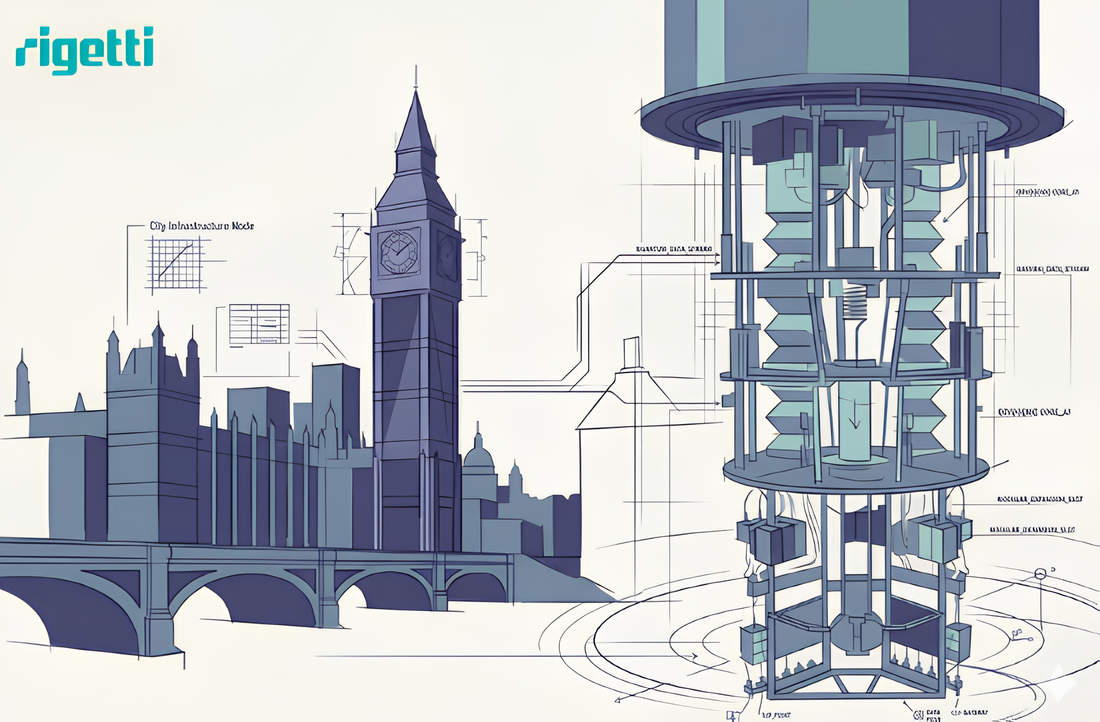
Rigetti announced general availability of its 108‑qubit quantum system, accessible via AWS and its own cloud, per The Quantum Insider. Enterprises can now run real workloads, optimization, simulation, cryptography experiments, on hardware that’s no longer confined to a lab.
Multipeak and RAQS partnered to deploy quantum systems into enterprise environments, pairing commercialization and physics expertise to deliver quantum as a service, per The Quantum Insider. The focus is on practical deployments rather than pure research collaborations.
The Bet: Quantum value will arrive incrementally, via specific workloads and services contracts, not as a single “breakthrough moment” where everything flips.
So What? Quantum is now something your R&D and infra teams can actually touch. That changes the question from “is quantum real?” to “which of our problems are worth a 3–5 year exploration bet?” The services partnerships show how this will land: bundled with consulting, integration, and managed access, not as bare-metal boxes you buy and rack.
The Risk: It’s easy to burn cycles on quantum theater, pilots that never leave the lab, vendor POCs that don’t map to real business metrics, and internal hype that distracts from nearer-term wins. There’s also a risk of vendor lock-in around proprietary toolchains and APIs before standards stabilize.
Action: • Identify 1–2 classes of problems in your org with long R&D tails, complex scheduling, portfolio optimization, materials or drug simulation, and nominate them for quantum exploration. • Stand up a small “quantum pod” with one technical lead and one domain owner; give them a modest budget and a 12–18 month mandate to run pilots with providers like Rigetti or RAQS. • Insist on clear success criteria for any quantum engagement, baseline against classical methods, and document what you learned even if the result is “not yet better.”
MEDIA / SYNTHETIC TALENT
Galaxy is turning idols into infinitely scalable IP
Galaxy, a South Korean company blending AI characters with life-size robots to create K‑pop-style idols, is preparing for an IPO and aiming to disrupt the traditional idol system, per Bloomberg via Techmeme. Its model uses AI-generated personalities and performances embodied in robots that can tour, meet fans, and produce content without human throughput constraints.
The company’s pitch is clear: idols as software-defined IP, endlessly replicable, always available, and controllable, rather than human talent with physical and contractual limits.
The Bet: The next generation of entertainment franchises will be synthetic from day one, with human involvement as production input, not the core product.
So What? If you’re in media, sports, or any personality-driven business, your competitive set now includes entities that don’t sleep, don’t age, and can localize to every market simultaneously. The economic model is different: upfront capex in robotics and models, then near-zero marginal cost per “performance.” This doesn’t just change fan engagement, it changes how you think about rights, revenue splits, and brand risk.
The Risk: Audiences may reject fully synthetic idols at scale, or regulators may step in around likeness rights, labor displacement, or safety in physical deployments. There’s also a non-trivial operational risk in running fleets of humanoid robots in public spaces, safety, maintenance, and failure modes are very real.
Action: • Audit your portfolio of talent, IP, and formats for where synthetic or hybrid characters could extend reach without diluting brand, and where human authenticity is the core value. • Start small: experiment with AI-augmented or virtual co-hosts, characters, or mascots in low-risk channels before committing to full synthetic franchises. • If you’re not in media, treat this as a proxy for synthetic “faces” of your brand, begin drafting policies on synthetic spokespeople, disclosures, and crisis response when a model misbehaves.
IN PRACTICE
Most teams are still treating these developments as separate threads, security on one track, hardware on another, labor and media on the side.
That’s a mistake.
The operators who win this cycle will treat AI, quantum, and synthetic media as one integrated surface: a set of capabilities that all draw on the same scarce resources, trust, capital, and attention, and all introduce new classes of risk.
The practical move is to build a cross-functional “frontier stack” steering group, 5–7 people who own AI, PQC, quantum, and synthetic media decisions as a portfolio, not as siloed experiments. Give them a shared budget, shared risk register, and a mandate to say no.
For the full breakdown, reach out for a Field Report.
CONTRARIAN SIGNAL
Offline AI is not a feature, it’s a governance escape hatch
The narrative around Google’s offline dictation is productivity and convenience, polished notes without the cloud. That’s true, but it misses the structural shift.
When high-quality models run on-device, they exit your observability and control plane. You don’t see prompts. You don’t see outputs. You don’t get the telemetry that’s been propping up a lot of “AI analytics” and safety tooling. And your ability to enforce policy through network chokepoints erodes.
Offline AI is privacy for the user, and opacity for the operator.
If you’re still assuming you can govern AI usage via central APIs and network filters, you’re already behind. The real control points move to endpoint configuration, OS-level policy, and culture, what people choose to do with powerful tools in their pocket that you can’t see.
The Takeaway: Treat offline-capable AI as a shadow IT supercharger. Update your governance model to assume powerful, invisible assistants at the edge, or accept that your “AI policy” is mostly theater.
THE QUESTION FOR TODAY
Your data will be vulnerable to new classes of attack within the useful life of what you’re storing now. Your hardware and cloud cost curves are bending upward just as you commit to AI-heavy roadmaps. Your workers and partners are starting to negotiate over AI as if it were compensation and safety equipment. Your customers are about to carry offline, unobservable AI into every meeting, factory, and store.
Are you still planning as if you control where and how AI shows up in your organization, or are you redesigning your strategy for a world where you don’t?
⸻
See exactly how this impacts your specific industry and function. Upgrade to PRO to get bespoke tactical breakdowns generated instantly for your operating model.
Go deeper with the Weekly Signal
This is the daily take. The Weekly goes further — full strategic analysis across 8–10 sections, each with a signal read and operator action items. Source panel included.
Sign up free → then upgrade