
Ford turned EV batteries into an AI energy business and added a quarter to its market cap in 48 hours. Apple started shifting legacy silicon to Intel so TSMC can prioritize AI wafers. Microsoft pulled a hard left turn on internal AI tooling, consolidating developers onto Copilot. Waymo quietly expanded robotaxis to an area larger than Rhode Island. And a new 3D memory architecture promised to blow past the AI memory wall.
The throughline: AI is no longer a “software” category. It’s a supply chain, wafers, watts, and workflows, and capital is rewarding whoever controls the chokepoints.
The second throughline: control is consolidating. Platforms are standardizing on their own assistants, OS vendors are hoarding the surface, and even transportation networks are becoming closed autonomy zones.
If your 2026 plan assumes “we’ll pick the best model and plug it in,” you’re misreading the game. The real decisions now are: whose supply chain are you in, whose energy are you riding on, and whose assistant owns your user’s first tap.
INFRASTRUCTURE / ENERGY
Ford Energy launches to supply battery storage to AI data centers
Ford created a new subsidiary, Ford Energy, to provide grid-scale battery storage to AI data centers, and its stock jumped as much as 25% in two days after the announcement, per Financial Times. The unit repurposes Ford’s EV battery capabilities into stationary storage for hyperscalers and AI-heavy workloads.
The Bet: The highest-margin use of Ford’s battery and manufacturing stack is no longer cars, it’s becoming part of the AI power backbone.
So What? Energy is now a first-class AI input, not a back-office line item. When an automaker can unlock tens of billions in market cap by pointing batteries at data centers, it tells you where the real scarcity premium sits. If you run large-scale AI workloads, your supplier map is outdated, utilities and cloud are no longer the only gatekeepers; industrials with batteries and grid access are now strategic partners.
The Risk: This assumes regulators, utilities, and communities tolerate more grid capacity being diverted to data centers instead of transport or residential use. It also assumes Ford can operate like an infra provider, with uptime, SLAs, and balance-sheet discipline, not just a product OEM.
Action:
- Add non-traditional energy players, automakers, industrials, storage OEMs, to your data center supplier RFP list this quarter.
- Map your AI workload growth against local grid constraints and storage options; treat battery-backed capacity as a competitive advantage, not a nice-to-have.
- If you’re an OEM with batteries or power electronics, spin up a small team to model “AI infra as a customer” and quantify the revenue vs. capex trade.
CHIPS / MEMORY
Apple shifts legacy silicon to Intel as TSMC tilts toward AI
Intel has begun testing production of “low-end/legacy iPhone, iPad, and Mac processors” for Apple, as Apple expects TSMC’s resources to tilt further toward AI and high-margin parts, per Ming-Chi Kuo. The work is reportedly on Intel’s 18A process, with TSMC capacity increasingly reserved for newer, AI-relevant designs.
The Bet: Advanced-node capacity is too valuable to spend on legacy consumer chips when AI and premium devices are fighting for the same wafers.
So What? The wafer war is here. If Apple is willing to move even part of its stack off TSMC to free up cutting-edge capacity, every other buyer at 3 nm and below is now competing with AI training runs, not just smartphones and PCs. For operators, this means chip supply risk is now structural, your “we’ll just buy more GPUs next year” assumption is wrong if you’re not a top-priority customer for the fabs.
The Risk: Intel still has to prove 18A at scale and on schedule. Any yield or performance issues push risk back onto Apple’s product roadmap, and signal that even the biggest buyers can’t fully hedge TSMC dependence.
Action:
- Ask your silicon vendors directly how much of their forward allocation is exposed to AI demand and what priority tier you’re in.
- If you’re designing custom accelerators, revisit node choice, a slightly older node with guaranteed supply can beat a bleeding-edge part you can’t get.
- Build explicit “chip scarcity” scenarios into your 18–36 month AI roadmap, including what you do if capacity tightens just as your models scale.
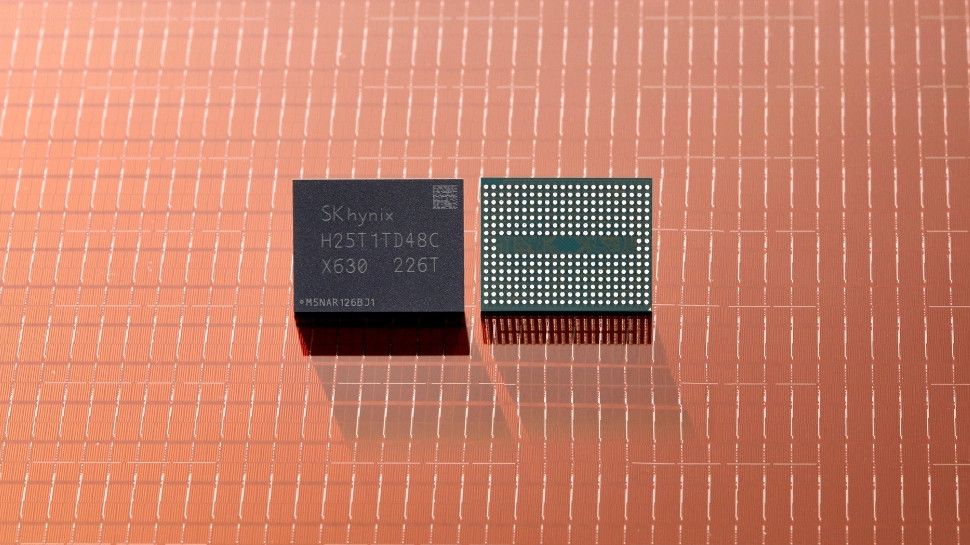
New 3D memory architecture promises to smash AI memory wall
Researchers detailed a new 3D memory architecture that revives IGZO-based camera tech to create a NAND + DRAM hybrid with claims of cheaper, faster memory and “unlimited endurance,” per TechRadar Pro. The design targets the current AI bottleneck around memory bandwidth, latency, and wear.
The Bet: The next efficiency frontier isn’t more FLOPs, it’s collapsing the distance between compute and a high-endurance, high-density memory tier.
So What? If this class of memory ships at scale, the constraint on large models shifts again, away from memory bandwidth and endurance, back toward power and networking. That reorders infra capex: fewer dollars on exotic memory hierarchies, more on interconnects and energy. For anyone planning their own racks or accelerators, your 3–5 year hardware roadmap is now more fragile; a real 5–10x improvement in memory economics can obsolete your current design before it’s fully depreciated.
The Risk: Lab benchmarks don’t equal production. Manufacturing complexity, integration with existing controllers, and ecosystem support can stall this in the “promising research” bucket for years, long enough that you over-rotate your plans on vapor.
Action:
- Ask your cloud and hardware vendors what their 3–5 year memory roadmap looks like, and how they’re hedging against disruptive architectures.
- For in-house hardware teams, model what a 5x cheaper, higher-endurance memory tier would do to your accelerator design and TCO; keep at least one “memory-disrupted” scenario in your planning.
- Avoid locking into proprietary memory solutions with long contracts unless you’re being compensated for the tech risk.
PLATFORMS / ASSISTANTS
Microsoft consolidates internal devs onto GitHub Copilot CLI
Microsoft plans to remove most of its Claude Code licenses and push its developers toward GitHub Copilot CLI, after previously promoting Claude Code internally, per The Verge. Thousands of engineers are expected to shift tooling as the company standardizes on its own stack.
The Bet: AI coding assistants are strategic control points, and belong inside the platform’s own ecosystem, not in a rival’s.
So What? This is vertical integration in practice. Once AI assistants become core to how code is written, debugged, and deployed, platform owners will not tolerate strategic dependence on external models. For operators, the lesson is simple: if your primary assistant lives inside someone else’s platform, expect periodic rug pulls, retraining cycles, and subtle feature steering toward the platform’s interests.
The Risk: Forced migrations can create internal backlash and productivity dips, especially if the replacement doesn’t match existing workflows or quality. Over-optimizing for strategic control can undercut near-term developer velocity.
Action:
- Inventory all AI assistants and coding tools in use across your org, and map them to their underlying platform owners.
- Build a “vendor shock” playbook: how you’ll handle a 90-day forced migration in any critical AI tool, including training, policy updates, and security review.
- Where possible, decouple your workflows from any single assistant, standardize on protocols (e.g., code review gates, logging) rather than specific UX.
OpenAI brings remote Codex control to ChatGPT mobile
OpenAI added remote access to Codex in the ChatGPT mobile app, letting users control Codex sessions running on a connected computer directly from their phone, per 9to5Mac. Developers can now manage coding tasks and builds from a mobile interface without opening a laptop.
The Bet: The coding agent is a persistent companion, not a desktop tool, and should be reachable wherever the developer is.
So What? Your dev surface just escaped the IDE. “Check on my build” from a phone is the first step toward continuous, agent-managed dev loops that run in the background of a developer’s day. That changes risk: production-adjacent actions can now be triggered from a pocket UI, often over less-secure networks and with less context. It also changes productivity patterns, micro-iterations all day instead of focused coding blocks.
The Risk: Security and compliance controls built around workstation assumptions, IP allowlists, device posture checks, session monitoring, don’t automatically extend to mobile-triggered agent actions. One misconfigured permission can turn into a production incident initiated from a coffee shop.
Action:
- Update your access control and audit policies to explicitly cover mobile-initiated dev actions and agent commands.
- Require SSO, strong MFA, and device compliance checks for any mobile app that can touch build, deploy, or repo operations.
- Educate your engineering teams this week on what is and isn’t allowed from mobile, and instrument logs so you can see agent-triggered changes by device and user.
OpenAI vs. Apple narrative highlights assistant surface geopolitics
Coverage framed OpenAI as “falling behind” and looking to blame Apple for controlling the assistant surface, per Gizmodo. The core tension: OS vendors own default placement and deep integration, while model providers want direct user relationships.
The Bet: Whoever owns the default assistant slot on the device owns the user, and the downstream commerce and data.
So What? This is no longer a pure model quality race; it’s distribution and default status. If your product depends on being the “brain” behind an assistant, you’re now in platform geopolitics. OS vendors will prioritize their own assistants or tightly controlled partnerships, and everyone else becomes an app, a second-class citizen fighting for attention.
The Risk: Betting your roadmap on deep integration with any single OS or assistant stack exposes you to policy shifts and commercial renegotiations you don’t control. A change in default settings can erase your funnel overnight.
Action:
- Build at least one distribution path that does not rely on OS-level default placement, web, cross-platform clients, or embedded in other products.
- If you’re negotiating assistant integrations, push for explicit guarantees around placement, branding, and data access, and model the downside if they’re revoked.
- Revisit your product assumptions: are you an assistant, or are you a feature inside someone else’s assistant? Adjust your go-to-market accordingly.
AUTONOMY / MOBILITY
Waymo expands robotaxi coverage beyond Rhode Island’s size
Waymo’s robotaxi coverage area is growing and will soon exceed 1,400 square miles, larger than Rhode Island, across its operating cities, per Gizmodo. The expansion deepens service in Phoenix, San Francisco, and Los Angeles, with more contiguous zones.
The Bet: Autonomous ride-hail is ready to move from pilot novelty to a real urban transport fabric in specific metros.
So What? Once coverage passes a psychological threshold, “I can get a robotaxi almost anywhere I go in this city”, behavior changes. For mobility, logistics, and retail operators, that means you can start treating AVs as a reliable, cheap, always-on transport layer inside these zones. Site selection, delivery windows, and staffing models that assume human driver constraints are now mispriced in these geographies.
The Risk: Regulatory shifts, high-profile incidents, or local political pushback can stall or roll back coverage. Over-indexing on AV availability without redundancy plans can strand customers and inventory.
Action:
- If you operate in Waymo metros, run a quick analysis of routes and shifts that could move to AVs in the next 12 months, even as a partial pilot.
- For new retail or micro-fulfillment sites, add “AV accessibility” as a siting criterion alongside rent and foot traffic.
- Negotiate experimental SLAs with AV providers now, while they’re still hungry for enterprise use cases and data.
Consumer robot dog raises data exfiltration and security concerns
A consumer “robot dog” deployed to guard chickens failed at basic security tasks and raised concerns about sending data back to China, per Gizmodo. The device underperformed physically while collecting and transmitting sensor data from private property.
The Bet: Cheap, networked autonomy can be pushed into consumer and small-business environments without robust sensing, governance, or data controls.
So What? This is the autonomy tension in one story: physical presence without trustworthy sensing and governance is a liability, not an asset. For operators deploying robots on private property, warehouses, yards, campuses, the threat model now has two axes: physical underperformance and network-level espionage. A robot that can’t do its job but can still map your facility and stream video is a net negative.
The Risk: Many buyers and even some security teams still treat robots as “fancy cameras” rather than full-fledged networked computers with sensors and actuators. That underestimation creates blind spots in procurement, vendor review, and incident response.
Action:
- Treat any robot deployment as both an OT and IT asset, run it through the same security review you’d apply to a new connected camera system and a new server.
- Demand clear documentation from vendors on data flows: what’s stored locally, what’s sent to the cloud, and where that cloud is physically and legally located.
- Pilot robots in tightly controlled zones first, with network segmentation and strict logging, before scaling across sensitive facilities.
CAPITAL / TALENT
Ford’s AI energy pivot and Cerebras’ IPO show hardware is the trade
Cerebras’ IPO delivered outsized returns for Benchmark, one of the best AI infra trades of the cycle, despite the fund historically “not doing hardware,” per TechCrunch. Combined with Ford’s stock reaction to Ford Energy, the pattern is clear: hardware, power, and fabs are where equity markets are rewarding AI exposure.
The Bet: The durable value in AI is accruing to those who own the physical bottlenecks, chips and energy, not just the application layer.
So What? If your investment or product mandate still treats chips, power, and manufacturing as “someone else’s problem,” you’re structurally short the part of the stack that’s actually repricing. For operators, that means two things: your cost base is exposed to suppliers whose equity is being rewarded for raising prices, and your upside is capped if you stay purely in software while infra players capture the scarcity premium.
The Risk: Hardware and energy are capital-intensive and cyclical. Chasing the trade without operational competence can leave you with stranded assets when the cycle turns or tech shifts.
Action:
- If you’re a software-heavy business, identify at least one lever to get closer to the physical stack, long-term energy contracts, reserved capacity, or co-design with hardware partners.
- For investors and corp dev, revisit your “no hardware” or “no infra” filters; they’re now a blind spot, not a risk hedge.
- In board discussions, stop treating infra as a pass-through cost, treat it as a strategic variable you can shape.
xAI talent outflows show labs are people, not just models
More than 50 researchers and engineers have left xAI since the SpaceX acquisition, via layoffs, firings, and voluntary departures, with many joining Meta and The Machine Learning Company, per The Information. The departures represent a meaningful share of the team behind Grok.
The Bet: Talent is portable, and lab strategy can be reset quickly by changing the people mix, on both the losing and gaining sides.
So What? Capability is walking out the door in chunks. For anyone building on top of a specific lab’s roadmap, staff graphs now matter as much as model benchmarks. A 50+ person exodus is an instant capability transfer to incumbents and competitors, and a leading indicator of roadmap volatility.
The Risk: Over-indexing on any single lab, for APIs, partnerships, or co-development, without monitoring its internal stability leaves you exposed to sudden shifts in quality, support, and direction.
Action:
- Add “talent stability” to your vendor risk framework: track key departures, hiring velocity, and org reshuffles at your critical AI partners.
- Avoid single-lab dependence for core workloads; maintain at least one credible alternative path for your most important use cases.
- If you’re hiring, target these talent dislocations aggressively, but be clear about your own stability story; people leaving turbulence are sensitive to more of the same.
IN PRACTICE
The pattern across Ford Energy, Apple’s wafer shuffle, and Microsoft’s Copilot consolidation is the same: control the chokepoint, then standardize everything around it.
For operators, the mistake is treating these as “macro” stories instead of design inputs.
The practical move is to redraw your architecture map with three explicit layers: • Physical, chips, energy, connectivity • Control, assistants, IDEs, OS surfaces • Application, your product and workflows
Then ask, for each: where are you a price taker, and where do you have leverage.
If your entire AI strategy lives in the application layer, you’re downstream of every decision Apple, TSMC, Microsoft, and Ford make. The operators who win this cycle will pull at least one layer up, into control or physical, even if only through contracts and partnerships.
For the full breakdown, reach out for a Field Report.
CONTRARIAN SIGNAL
Assistants aren’t productivity tools, they’re distribution locks
The consensus story is that AI assistants, Copilot, ChatGPT, OS-level helpers, are about making workers more productive.
The moves yesterday say something different: they’re about locking in distribution and spend.
Microsoft isn’t just standardizing on Copilot because it’s “better” for devs, it’s consolidating telemetry, training data, and internal budgets around its own control point. OpenAI’s friction with Apple isn’t just about who has the best model, it’s about who owns the first tap on the lock screen. Even OpenAI’s Codex-on-mobile move is less about convenience and more about colonizing the micro-moments of a developer’s day.
If you keep evaluating assistants purely on feature lists and productivity claims, you’ll miss the real game: who gets to intermediate your relationship with your own users and employees.
The Takeaway: Treat assistants as strategic distribution rails, not just tools, and design your org so you’re not permanently renting your own surface area from someone else.
THE QUESTION FOR TODAY
Ford just turned EV batteries into an AI infra business and was rewarded instantly. Apple is rearranging its silicon supply to prioritize AI wafers over legacy devices. Microsoft is willing to disrupt thousands of developers to consolidate on its own assistant. Waymo is quietly turning parts of major cities into closed autonomy zones. Labs are losing and gaining dozens of frontier researchers in single moves.
Are you still planning like a software buyer in a world that’s being re-architected around physical chokepoints and assistant-controlled surfaces?
Signal + Noise is strategic intelligence, not engagement-specific advice. For guidance calibrated to your org, start with Advisory.
See exactly how this impacts your specific industry and function. Upgrade to PRO to get bespoke tactical breakdowns generated instantly for your operating model.
Go deeper with the Weekly Signal
This is the daily take. The Weekly goes further — full strategic analysis across 8–10 sections, each with a signal read and operator action items. Source panel included.
Sign up free → then upgrade