


Yesterday's signals, distilled, A look back at August 19, 2026.
Foundry prices moved.
Alternative compute vendors pushed “system SKUs,” not chips.
And the China compute story kept slipping out of the neat boxes policymakers want it to fit in.
Underneath those headlines is a more operational throughline: AI capacity is being allocated through contracts, licensing, and pricing power, not just through technical performance. The market is treating advanced manufacturing, accelerators, and deployment labor as scarce inputs that can be repriced quickly.
That changes how you plan.
If your roadmap assumes stable unit economics for silicon, elastic access to top-tier accelerators, and a linear implementation curve, yesterday was a reminder that those assumptions are now liabilities. The stack is hardening into a set of bottlenecks that can shift quarter-to-quarter.
The strategic question to carry into this week: where are you still making product and budget commitments as if compute and manufacturing are “on-demand,” when the market is increasingly pricing them as pre-allocated and repriced?
INFRASTRUCTURE / SILICON SUPPLY
Foundry scarcity is back in the P&L
Samsung Foundry raises 4nm/5nm prices up to 15% for new orders Samsung is raising prices for advanced 4nm and 5nm chipmaking services by as much as 15% for new orders, driven by AI demand and tight capacity at TSMC, per Reuters.
This isn’t a “Samsung story.” It’s a reminder that leading-edge capacity remains a control point, and that control point can express itself as price, not just lead time.
So What? If you’re building anything that depends on custom silicon, edge inference ASICs, specialized accelerators, even high-volume embedded parts that need advanced nodes, your cost baseline just moved. The second-order effect is roadmap fragility: a 10–15% swing at the foundry layer can cascade into unit economics, pricing, and even whether a custom chip still beats an off-the-shelf accelerator strategy.
This also pressures procurement behavior. When advanced-node pricing rises, the “good enough” node becomes more attractive, and teams start re-optimizing around packaging, memory, and software efficiency instead of chasing the newest process.
The Risk: Price hikes don’t always stick, large buyers can negotiate, and demand can shift. But operators shouldn’t plan on relief as a strategy. The risk is locking a product plan to a cost curve that no longer exists.
Action:
- Re-run your custom silicon vs. merchant silicon model with a +15% foundry cost sensitivity and document the breakpoints.
- Ask your manufacturing partners for updated lead-time and pricing bands by node, then map which SKUs are exposed.
- Identify one “node fallback” design path (even if it’s suboptimal) so a pricing shock doesn’t become a roadmap reset.
INFRASTRUCTURE / COMPUTE ARCHITECTURES
The rack becomes the product
Cerebras launches CS-4 rack system built on WSE-3 Turbo and Nexus Cerebras unveiled CS-4, a server rack powered by three WSE-3 Turbo chips and built around its new Nexus architecture, with first shipments starting this quarter, per Reuters.
The important detail is packaging: this is being sold as a rack-level system, not a component.
The Bet: Buyers will increasingly procure “AI capacity” as integrated systems with predictable performance envelopes, not as a pile of parts.
So What? GPU scarcity created a habit: teams benchmarked whatever they could get, then built software around it. As supply normalizes unevenly, and as alternative architectures mature, the procurement unit shifts upward. The question becomes: what rack can I deploy, what does it run well, and what does it cost per unit of useful work in my workload mix.
For operators, this changes evaluation discipline. You can’t compare a non-GPU architecture to a GPU by reading spec sheets. You need workload-specific benchmarks, latency, throughput, memory behavior, failure modes, and integration cost. The “integration cost” part matters because the rack is only cheaper if your team can actually use it without building a bespoke platform.
The Risk: System SKUs can hide lock-in in the control plane, tooling, orchestration, observability, and model compatibility. The risk is buying performance and inheriting a platform you can’t staff.
Action:
- Benchmark at the rack level using your real inference traces, don’t accept generic chatbot benchmarks as decision-grade.
- Inventory which parts of your stack assume CUDA-specific behavior and quantify the porting cost.
- Add an exit plan to any non-GPU pilot: what you keep (software patterns, eval harnesses) even if the hardware doesn’t scale.
NATIONAL COMPUTE / EXPORT CONTROLS
Compute ceilings are porous, and the policy perimeter is moving
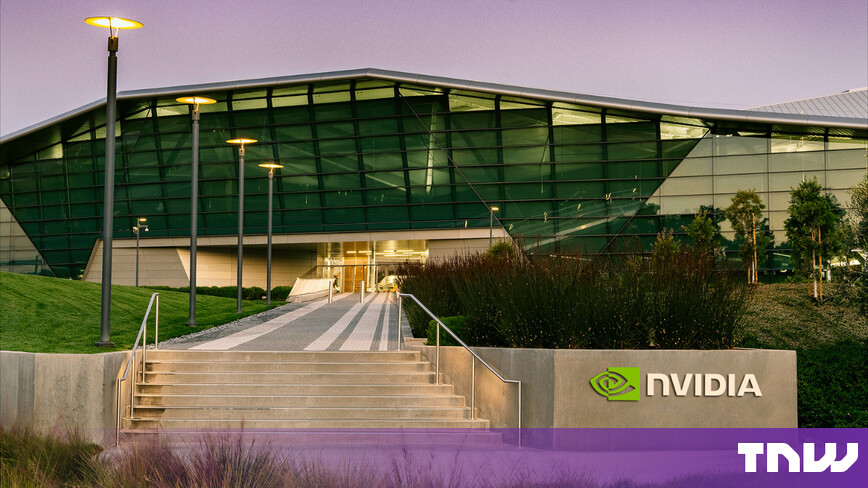
Beijing reportedly allows ByteDance and Tencent to receive ~10,000 Nvidia H200 chips each Beijing allowed ByteDance and Tencent to each receive about 10,000 Nvidia H200 chips at their mainland China facilities in recent weeks, per Financial Times.
Whether you view this as an exception, a workaround, or a managed release valve, the operational implication is the same: “China can’t get frontier-class compute” is not a safe planning assumption.
So What? A batch of ~10,000 H200s is not symbolic. It’s enough to materially expand training and serving capacity for large consumer surfaces, recommendation, search, assistants, video tooling, especially when paired with optimization and distillation strategies. For non-China operators, this tightens competitive timelines: product iteration speed and model deployment cadence in China may remain closer to global frontier pace than many teams have budgeted for.
It also reframes export controls as a governance problem, not a binary switch. If hardware access is partially negotiable, then the durable moat is less “who has the chips” and more “who has the distribution, data loops, and deployment discipline.”
The Risk: We don’t yet know the durability of this access, whether it’s repeatable, limited, or subject to sudden reversal. The risk is overcorrecting into panic. The right posture is scenario planning with explicit triggers.
Action:
- Update your competitive model: assume Chinese consumer AI leaders can access intermittent frontier-class capacity and plan differentiation above the chip layer.
- Add a “compute access volatility” scenario to your China strategy, what changes if capacity expands 2× vs. contracts 50%.
- If you sell software into China-adjacent markets, review your dependency on “compute scarcity” as a wedge, it may not hold.
ENTERPRISE GTM / IMPLEMENTATION LABOR
Agents are being deployed inside services teams, not instead of them
Google Cloud deploys context-creating agents for forward-deployed engineer work while hiring hundreds of FDEs Google Cloud is deploying context-creating AI agents within its tools to automate tasks handled by forward-deployed engineers, while also hiring hundreds of forward-deployed engineers, per The Information.
This is the near-term pattern most teams will actually live through: augmentation plus headcount, not a clean substitution.
So What? Forward-deployed work is where enterprise AI succeeds or dies, data access, workflow mapping, security posture, and the unglamorous glue that turns a model into a system. If a major cloud provider is using agents to compress that work, it’s a signal that the implementation surface is now a product surface.
For operators selling complex software, this creates a new competitive axis: time-to-value is increasingly determined by how well you can generate and maintain customer context, schemas, permissions, business rules, and “what good looks like”, and how safely you can let automation act on it. The services org becomes a hybrid: humans doing judgment and relationship work; agents doing repetitive context assembly, documentation, and change propagation.
The Risk: Context-creating agents can also create context debt, incorrect assumptions that propagate quickly across customer environments. The risk is scaling the wrong understanding faster than you can audit it.
Action:
- Map your implementation workflow and identify the top 3 “context assembly” tasks that are repetitive and error-prone, pilot internal agents there first.
- Add an audit trail requirement for any agent that writes configs, policies, or data mappings in customer environments.
- Re-forecast services capacity assuming a hybrid model: fewer hours per deployment, but higher demand volume if time-to-value improves.
CAPITAL FLOWS / PUBLIC MARKETS
Physical AI is becoming a public-market narrative
Unitree’s China listing draws investor attention to humanoid robotics Investors are betting on China’s humanoid robotics category as Unitree hits public markets, per Bloomberg.
This matters less as a single-company event and more as a financing signal: humanoids are being treated as an asset class.
So What? Public-market underwriting changes the cadence of the ecosystem. It funds supply chains, manufacturing scale-up, and channel partnerships earlier than venture alone can. For industrial and logistics operators, that means pilots may get cheaper and more available, because vendors can finance inventory, support, and iteration.
But it also means the category will be pushed toward visible deployment metrics. The market will reward shipped units and contracted rollouts, not just demos. That pressure can accelerate real-world learning loops, especially in constrained environments like warehouses, factories, and campuses where tasks are repeatable and safety envelopes can be controlled.
The Risk: Public narratives can pull product roadmaps toward what’s legible to investors rather than what’s operationally reliable. The risk for buyers is becoming a beta site without contractual protection.
Action:
- Identify 2–3 bounded workflows where a humanoid form factor could plausibly fit (material handling, inspection, night shift coverage) and write a one-page pilot spec.
- Require uptime, support response times, and safety incident reporting in any pilot contract, treat it like industrial equipment, not a software trial.
- Track vendor financing health and supply-chain maturity alongside model capability, deployment risk is often operational, not algorithmic.
CONTRARIAN SIGNAL
The real constraint isn’t compute. It’s integration capacity.
Yesterday’s loudest stories were about chips, foundry prices up, alternative racks shipping, H200s moving through policy seams.
But the quieter signal was labor.
If forward-deployed engineering is being compressed with agents while headcount still rises, the bottleneck is not “can we run the model.” It’s “can we safely integrate the model into a messy environment fast enough to capture value.” That’s a services constraint, a governance constraint, and a productization constraint.
Compute matters. But integration capacity is what turns compute into revenue.
The Takeaway: The teams that win the next 12 months won’t just secure capacity. They’ll industrialize deployment, repeatable context capture, auditable automation, and faster time-to-value without increasing risk.
THE QUESTION FOR TODAY
Foundry pricing can move 15% in a quarter. Accelerator access can expand through exceptions and overseas routing. Alternative architectures are shipping as racks, not parts. And enterprise deployment is being redesigned around internal agents plus human operators.
Where is your plan still assuming the stack is elastic, when the market is treating it as allocatable?
What is your first concrete fallback when your primary compute or manufacturing assumption breaks?
Signal + Noise is strategic intelligence, not engagement-specific advice. For guidance calibrated to your org, start with Advisory.
See exactly how this impacts your specific industry and function. Upgrade to PRO to get bespoke tactical breakdowns generated instantly for your operating model.
Go deeper with the Weekly Signal
This is the daily take. The Weekly goes further — full strategic analysis across 8–10 sections, each with a signal read and operator action items. Source panel included.
Sign up free → then upgrade