
Yesterday's signals, distilled, A look back at August 25, 2026.
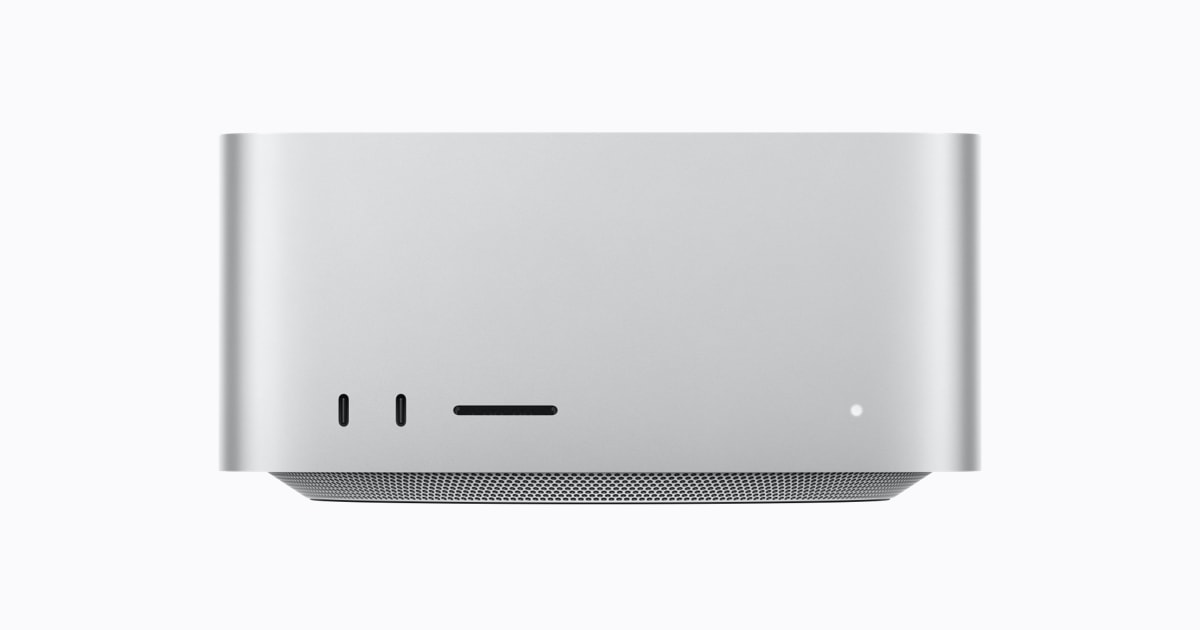
Apple pushed the desktop back into the AI conversation. Not as nostalgia, but as architecture: unified memory, bandwidth, and packaging choices that make local inference and memory-bound workflows feel normal again.
At the same time, the frontier-model layer kept moving from “capability” to “operational exposure.” Anthropic’s default-on shared memory is a product decision that turns assistants into durable knowledge assets. That’s useful. It’s also a new class of data retention, access control, and offboarding problem.
Security capital followed the exposure. A $140M raise for adversarial testing is a clean marker that model risk is becoming a standalone procurement line item, closer to pen testing and SOC spend than “nice-to-have safety tooling.”
And one more boundary tightened: social data access. The Nitter takedown is not about one open-source project. It’s about the shrinking space for anonymous, low-friction ingestion of platform data, especially for teams who quietly built pipelines on “public” content.
The strategic question operators should sit with this week: where are you implicitly relying on “statelessness” and “publicness” as design assumptions, and what breaks when those assumptions disappear?
INFRASTRUCTURE / EDGE COMPUTE
Apple’s desktop silicon makes local AI a first-class deployment target
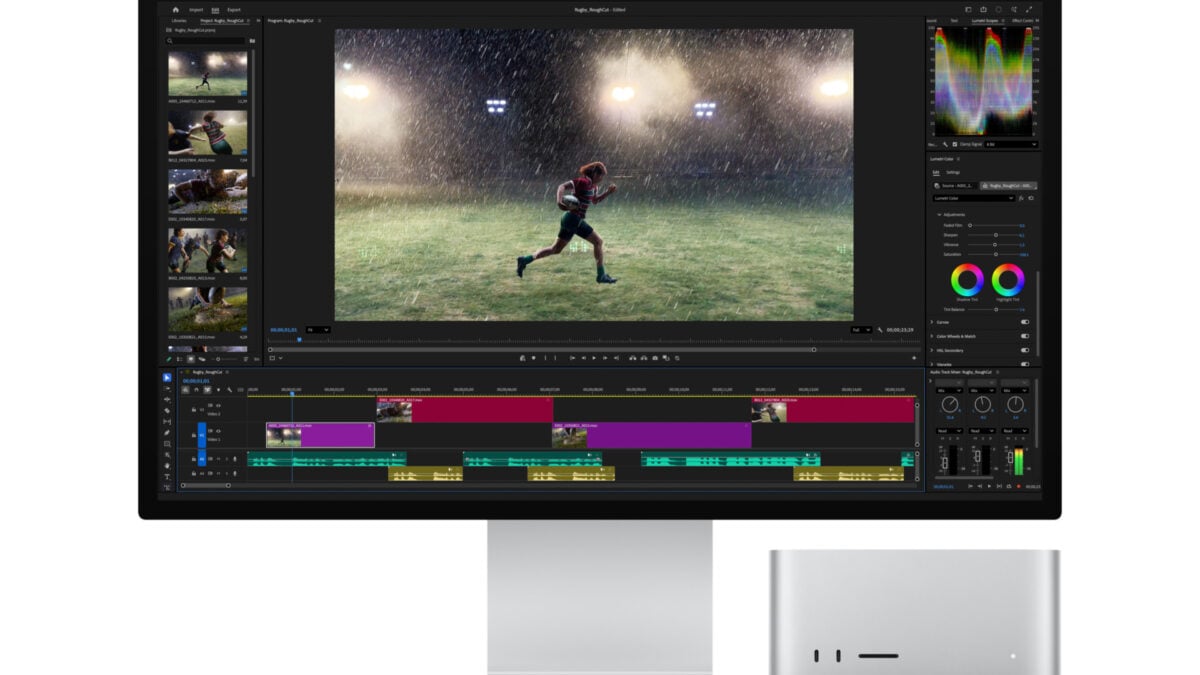
Apple, New Mac Studio with M5 Max and M5 Ultra Apple introduced a new Mac Studio lineup built around M5 Max and M5 Ultra, positioning the desktop as a primary machine for pro workflows that include AI, 3D, and video production, per Apple Newsroom.
This is paired with a broader desktop refresh cadence, Mac mini and Mac Studio returning to stores on Sept. 22, suggesting Apple expects meaningful demand for desktop-class local compute, via Bloomberg.
The Bet: A meaningful share of “AI work” will be done on-device, either for privacy, latency, cost, or simply because the hardware is now good enough.
So What? For operators, this is less about Apple winning benchmarks and more about the deployment surface expanding. If your product roadmap assumes inference happens in the cloud by default, you’re increasingly choosing that, not inheriting it. The Mac Studio becomes a reference box for creators, small labs, and internal tooling teams that want high-memory, high-bandwidth local runs without standing up a cluster.
This also changes support and QA realities. When customers can run heavier models locally, they will. That creates a new class of “it works on my machine” variance, different memory ceilings, different thermal envelopes, different performance cliffs. The teams that treat local inference as a supported tier, not a hobby, will reduce churn and support load.
The Risk: Local-first can become a fragmentation tax if you don’t define what’s supported. The other risk is false confidence, teams may ship features that assume local privacy guarantees while still leaking data through logging, telemetry, or tool calls.
Action:
- Define a “local inference supported tier” for your product, hardware targets, model sizes, and expected latency.
- Instrument and document what data leaves the device when local features are enabled, logs, crash reports, tool calls, and analytics.
- Update procurement guidance for teams doing ML and media work, standardize on 1–2 desktop configs instead of ad hoc buying.
MODEL OPERATIONS / GOVERNANCE
Default-on memory turns assistants into durable enterprise assets, and liabilities
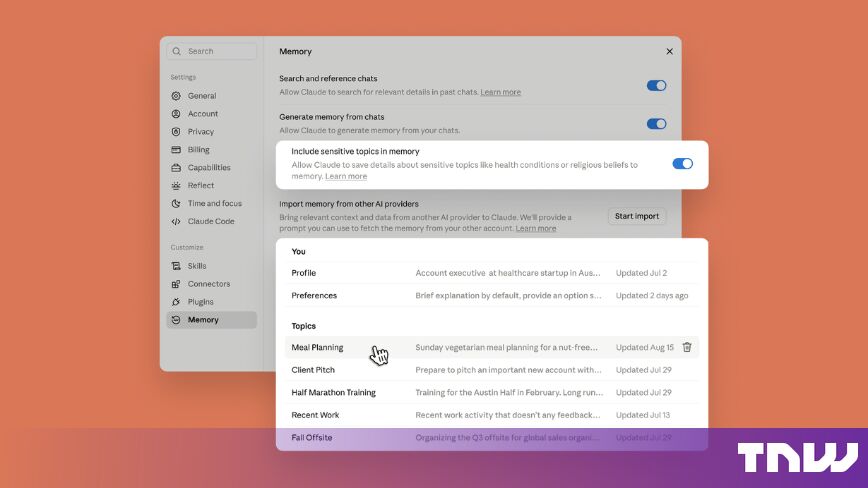
Anthropic, Claude chat and Cowork shared memory, on by default Anthropic merged Claude chat and Cowork memory into a unified system that’s enabled by default, per The Next Web.
This is a product posture shift: the assistant is no longer a stateless interface. It’s a persistent collaborator that accumulates context across surfaces.
The Bet: Users will trade some privacy and control for continuity, because continuity is what makes the assistant feel like a real operator inside a workflow.
So What? Memory is not a feature. It’s a data model. Once it’s default-on, you’ve effectively created a new knowledge repository that sits outside your traditional systems of record, email, docs, ticketing, CRM. That repository will contain sensitive operational context precisely because it’s useful: customer details, internal decisions, half-formed strategy, credentials pasted in a hurry, and the “why” behind actions.
For enterprise operators, the immediate implication is governance scope creep. Your identity and access model now needs to cover assistant memory: who can see it, who can export it, how it’s retained, and what happens when an employee leaves. Offboarding is no longer just disabling accounts, it’s also unwinding what the assistant “knows” that was accumulated under that identity.
The Risk: Default-on memory can create accidental retention. If your compliance posture depends on deletion schedules, legal holds, or data residency constraints, you need to know whether assistant memory is treated as a first-class governed store or an opaque convenience layer.
Action:
- Map where assistant memory sits relative to your data classification policy, treat it like a system of record until proven otherwise.
- Add an offboarding step: review, export (if required), and delete assistant memory tied to departing employees and shared workspaces.
- Require vendors to answer three questions in writing: retention period, admin visibility controls, and audit/export capabilities for memory.
SECURITY / RED-TEAMING
Model risk is becoming a standalone budget line
Alice, $140M raise to stress-test frontier models Alice raised $140 million to stress-test models shipped by major labs, per The Next Web.
Bloomberg framed the same development as part of a broader push to secure advanced models as they progress, via Bloomberg.
The Bet: External adversarial testing becomes normal procurement, because internal evals won’t be trusted as sufficient once models are embedded in high-stakes workflows.
So What? This is a category formation signal. As models become more agentic and more embedded, the failure modes stop being “bad answers” and start being operational incidents: data exfiltration through tool use, prompt injection through third-party content, policy bypasses, and reputational blowups from edge-case behavior.
Third-party red-teaming becomes valuable in two ways. First, it’s a real control, fresh adversaries find what your internal team misses. Second, it’s a governance artifact, something you can show auditors, customers, and boards when the question becomes “what did you do to reduce foreseeable risk.”
For builders, this changes the go-to-market checklist. Security review will increasingly include model behavior under adversarial conditions, not just SOC 2 and encryption at rest.
The Risk: Red-teaming can degrade into theater if it’s not tied to remediation and re-testing. The other risk is scope mismatch, testing the model but not the system, when the system (tools, permissions, connectors, memory) is where the real exploit paths live.
Action:
- Budget for third-party adversarial testing for any workflow that touches customer data, money movement, or privileged internal systems.
- Write a “model incident runbook” this week, what you log, who gets paged, how you revoke tools/keys, and how you communicate externally.
- Expand your threat model from “prompt + model” to “prompt + model + tools + memory + connectors”, then test that full chain.

DATA ACCESS / PLATFORM BOUNDARIES
The scraping gray zone keeps shrinking
Nitter, Cease-and-desist letters; Nitter.net offline Nitter, an open-source front end that enabled reading X without an account, said X sent cease-and-desist letters demanding a takedown; Nitter.net is now offline, per TechCrunch.
The Bet: Platforms will enforce access control through legal pressure and technical friction, because data exhaust is now monetizable and strategically sensitive.
So What? If your product, research, or model-eval pipeline relies on “public web” social data, you need to treat that dependency like a vendor relationship, not an assumption. The cost isn’t just API fees. It’s legal review, compliance posture, and the operational risk of sudden pipeline failure.
This also pushes teams toward two alternatives: (1) licensed data arrangements with explicit terms, or (2) building products that don’t require continuous ingestion from contested platforms. Both options change roadmaps and budgets.
The Risk: Teams may overcorrect and stop monitoring social channels entirely, creating blind spots in trust & safety, brand risk, and customer intelligence. The goal is compliant continuity, not ignorance.
Action:
- Inventory every workflow that depends on X data, monitoring, research, training, evals, customer support, and label it “mission-critical” or “nice-to-have.”
- Put a compliant data path on the roadmap, API, reseller, or licensed provider, then assign an owner and a timeline.
- Add a “data source kill switch” plan, what happens operationally when a platform feed disappears overnight.
CONTRARIAN SIGNAL
Local AI is not a cloud replacement. It’s a governance workaround.
The loud story is performance, bigger unified memory, more bandwidth, better chips.
The quieter story is control. Local inference is attractive because it reduces the number of places sensitive data can leak, be retained, or be subpoenaed. It also reduces the number of vendors in the loop. For regulated teams, that’s not ideology. It’s a way to ship features without waiting for every cloud and model provider to meet your exact compliance posture.
But local-first doesn’t remove governance. It relocates it. Your risk moves from “what did the vendor do” to “what did our endpoint fleet do”, device management, logging discipline, key handling, and support boundaries.
The Takeaway: Local AI will grow fastest where governance is the bottleneck, not where cloud is “too slow.”
THE QUESTION FOR TODAY
Apple is making desktop-class local compute feel normal again. Assistants are accumulating durable memory by default. Security spend is moving toward third-party model red-teaming. Platform data access is tightening through legal and technical enforcement. The stack is getting less “elastic” and more “bounded”, by hardware, by policy, by contracts.
Where are you still designing your product and operations as if AI is stateless and data is public?
Signal + Noise is strategic intelligence, not engagement-specific advice. For guidance calibrated to your org, start with Advisory.
See exactly how this impacts your specific industry and function. Upgrade to PRO to get bespoke tactical breakdowns generated instantly for your operating model.
Go deeper with the Weekly Signal
This is the daily take. The Weekly goes further — full strategic analysis across 8–10 sections, each with a signal read and operator action items. Source panel included.
Sign up free → then upgrade