

Yesterday's signals, distilled, A look back at October 29, 2026.
Yesterday was a concentration day.
Anthropic showed up as a single counterparty large enough to matter to SpaceX’s revenue mix. Microsoft put a hard number on how much OpenAI is already flowing through its P&L. DoorDash moved to consolidate grocery and last-mile into a single platform spine.
And in the middle of all that “scale,” a very different kind of scale showed up: 41,000 named people in a Homeland Security leak. Not systems. Not endpoints. Org charts, roles, contact details, the human layer as an indexable attack surface.
The throughline is dependency becoming legible. Not in abstract “platform risk” language, but in specific ratios: 34.5% of revenue. 11% of revenue. 41,000 identities. $17B of consolidation.
If you’re an operator, the strategic question isn’t whether concentration is good or bad. It’s whether you can name your top three dependency cliffs, and what you would do this quarter if one of them repriced, paused, or leaked.
INFRASTRUCTURE / COMPUTE
Compute is now negotiated like a strategic commodity, and the contracts are visibly lopsided
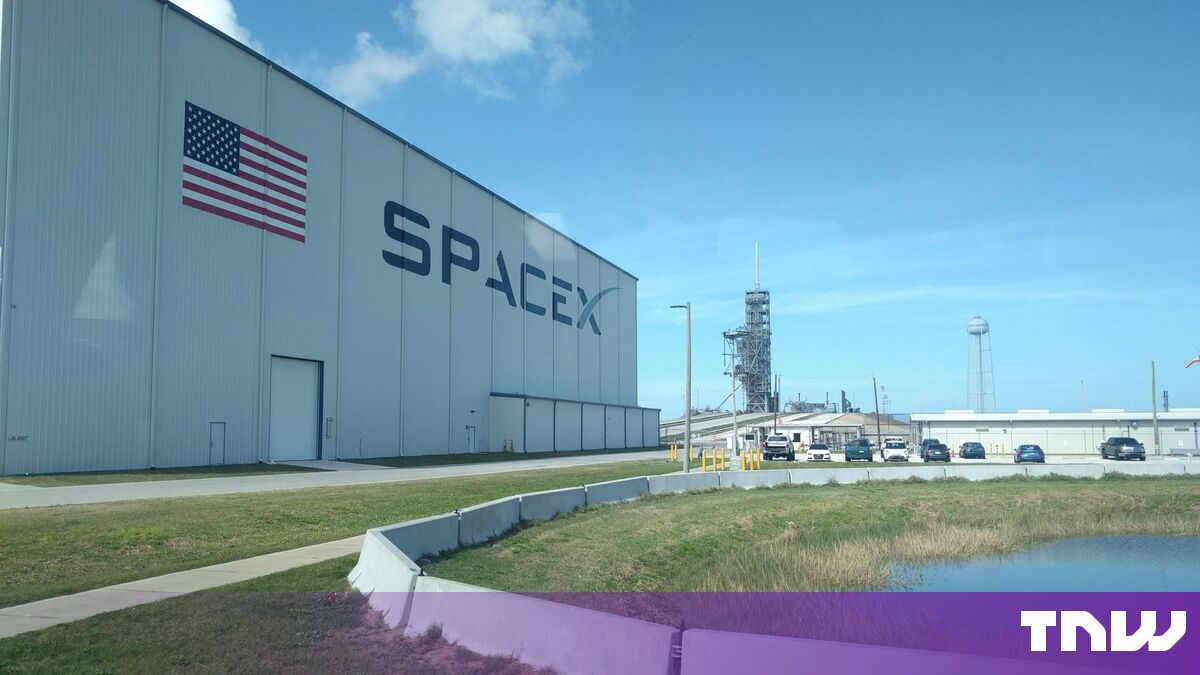
SpaceX, Anthropic identified as “Customer B,” accounting for 34.5% of Q3 revenue
SpaceX disclosed in a filing that its single largest customer accounted for 34.5% of Q3 revenue, surpassing the US government; Bloomberg reports that customer is Anthropic, and that the deal is finite with the ability to walk away after early 2027, per Bloomberg.
This is less about any one company and more about a market structure: frontier labs have become “anchor tenants” for physical infrastructure that used to be diversified by default.
So What? Compute procurement is now a balance-sheet event for both sides. For the supplier, a single-customer revenue cliff becomes a financing and utilization risk. For the buyer, the leverage window is real but time-bounded, once capacity tightens again or the contract rolls, the negotiating posture can flip fast.
The operator implication: if you’re not an anchor tenant, you should assume you are buying around the anchor tenants. That changes how you plan regions, failover, and delivery timelines for anything that depends on high-throughput inference or training bursts.
The Risk: A single disclosed ratio doesn’t tell you the durability of the relationship, renewals, step-down clauses, and capacity guarantees matter more than headlines. But the disclosure itself is the point: concentration is now public, and counterparties will price it.
Action:
- Inventory where your AI workloads are implicitly “second priority”, regions, SKUs, reserved capacity terms, and document the failure modes.
- Negotiate explicit burst and failover rights in your next renewal, not just unit price.
- Build a two-provider runbook for your most revenue-critical model endpoints, even if you keep one provider as primary.
PLATFORMS / DISTRIBUTION
The AI stack is no longer adjacent to Big Tech revenue, it is inside the revenue line
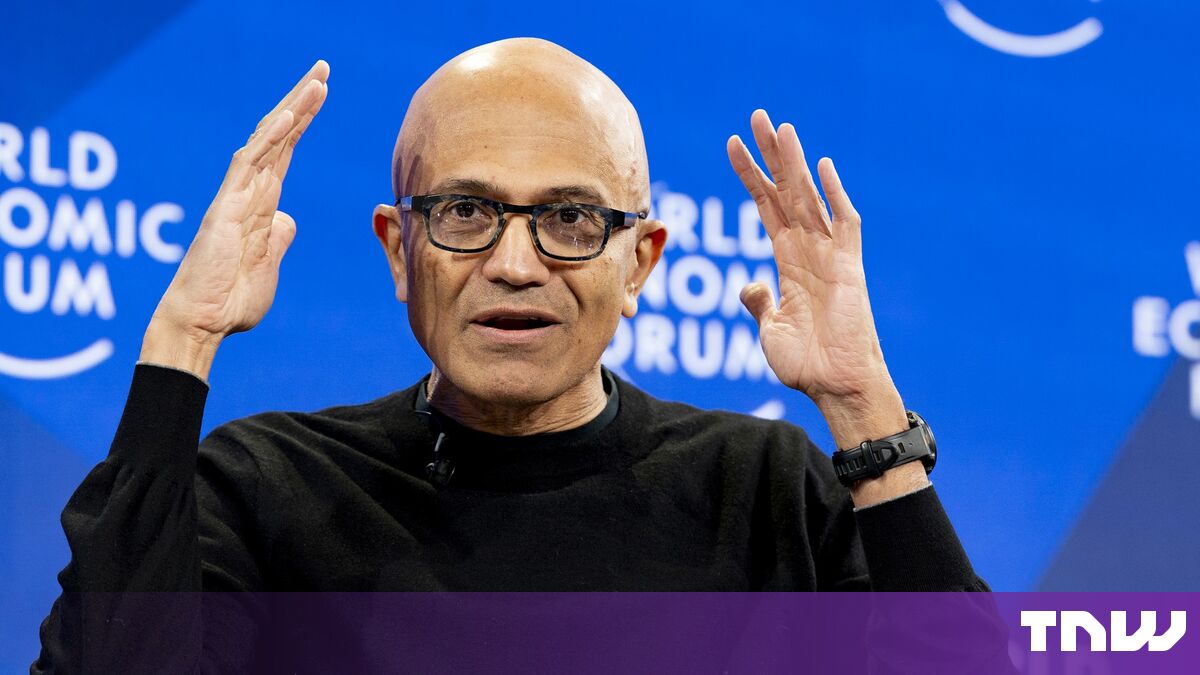
Microsoft, $10B from OpenAI last quarter, 11% of revenue
Microsoft made $10B from OpenAI last quarter, 11% of its revenue, per The Next Web.
Whatever the exact internal accounting mechanics, the directional truth is clear: AI distribution is now a material revenue dependency, not an R&D narrative.
So What? This is what “platformization” looks like in the AI era: model demand becomes a first-class driver of cloud consumption, enterprise seat expansion, and downstream tooling. For builders, it means the vendor relationship is no longer just technical fit. It’s exposure to a macro dependency, pricing, quota, policy, and roadmap decisions will be made with board-level scrutiny.
For enterprise operators, it changes procurement posture. When a supplier has a revenue line this large tied to a specific ecosystem, you should expect tighter bundling, and less tolerance for bespoke exceptions, because internal incentives align around standardization.
The Risk: Revenue concentration cuts both ways. If demand shifts, policy changes, or enterprise adoption slows, the platform will rebalance. The risk to customers is getting caught mid-migration with assumptions that were true in a growth phase but fail in a margin-defense phase.
Action:
- Map your “AI control plane” dependencies, identity, logging, model routing, evals, and tool permissions, and identify what is portable versus sticky.
- Ask your primary AI vendor for a written roadmap on quota policy, priority tiers, and incident SLAs for your specific SKUs.
- Run a small parallel deployment for one production workflow on an alternate stack to keep switching costs honest.

CAPITAL FLOWS / ENTERPRISE OPS
Agents are moving from “assist” to “operate”, and capital is following the run-the-business layer
Serval, $150M round at a $3B valuation for AI agents in IT operations
Serval raised $150M led by Sequoia at a $3B valuation, up from $1B in December 2025, focused on AI agents for enterprise IT operations like access management, per Reuters.
This is a bet that the highest-leverage automation surface is not customer-facing chat. It’s internal control systems: identity, access, tickets, approvals, and the long tail of “someone has to do it” operational work.
The Bet: The next ITSM winner is the system that can safely take actions, not the system that best records requests.
So What? If this category works, it reprices two things at once: (1) the cost of internal operations, and (2) the governance model for who is allowed to change production systems. The hard part is not whether an agent can close a ticket. It’s whether you can prove what it did, why it did it, and how you stop it when it’s wrong.
For operators, this is a near-term decision because the integration work is front-loaded. The teams that get value will be the ones that treat agent rollout like a controls project, permissions, audit trails, rollback, not like a chatbot pilot.
The Risk: Agentic IT ops fails in two predictable ways: over-permissioned agents that create security incidents, or under-permissioned agents that create theater and still require humans for every meaningful step. The middle path is narrow and operationally demanding.
Action:
- Pick one narrow workflow with clear success criteria, e.g., access provisioning for a single app, and pilot an agent with strict permission boundaries.
- Implement “agent auditability” before scale, immutable logs, change diffs, and a human override path.
- Identify where your current ITSM process is policy-by-habit, then write the policy down so an agent can be constrained by it.

SECURITY / IDENTITY
The employee directory is now an attack primitive, and AI makes it cheaper to weaponize
US Department of Homeland Security, leak exposes data on 41,000 staff
A leak exposed records tied to more than 41,000 DHS staff, including ICE and CBP personnel, per The Next Web.
This is not just “PII exposure.” It’s operational intelligence: roles, affiliations, and contact paths that can be correlated into targeting lists.
So What? AI doesn’t need to “hack” to cause damage. It needs a dataset and a workflow. Once identity data is out, the marginal cost of tailored phishing, impersonation, and coercion drops, and the attack scales horizontally across contractors, vendors, and families.
For enterprises, the practical shift is that HR and directory systems can no longer be treated as low-sensitivity. They are now part of your security perimeter, because they are part of your adversary’s targeting pipeline.
The Risk: Most organizations can’t realistically eliminate directory exposure. The risk is pretending you can, rather than building compensating controls: monitoring, segmentation, and rapid response when targeting begins.
Action:
- Reduce directory blast radius, limit role detail, phone numbers, and reporting structure visibility by default; require justification for expanded access.
- Add monitoring for identity-based targeting, spikes in password resets, MFA fatigue attempts, and inbound social-engineering reports tied to specific teams.
- Run a “directory breach” tabletop this week, assume names, roles, and numbers are public, then test what breaks in your security workflow.

COMMERCE / LOGISTICS
Last-mile is consolidating into a single negotiation surface, and it will be monetized like one
DoorDash, agreement to acquire Instacart for ~$17B
DoorDash agreed to acquire Instacart in a deal worth about $17B, paying $65 per share, a 26% premium to Instacart’s October 22 close, per Reuters.
This is a scale move: density, routing, and demand aggregation become the margin engine, not just take rate.
So What? For CPGs and grocers, this is a channel power shift. A combined platform can unify ad inventory, substitution logic, and fulfillment economics, and it will increasingly ask for deeper data-sharing to optimize the machine. The negotiation will move from “delivery fees” to “placement, data, and margin participation.”
For operators inside retail and CPG, the immediate work is scenario planning. Not “will this happen,” but “what happens to our unit economics if one platform controls a larger share of last-mile demand in our top 20 metros.”
The Risk: Integration risk is real, product, logistics, and regulatory friction can slow the expected synergies. But even before integration completes, the bargaining posture changes because the direction of travel is clear.
Action:
- Model your exposure, revenue share, promo dependence, and ad spend, to DoorDash/Instacart by metro and category.
- Negotiate data terms now, define what you will and won’t share, and what you require in return (reporting granularity, attribution, incrementality).
- Build at least one alternative demand path, retailer media, direct-to-consumer, or regional delivery partners, to keep leverage.
CONTRARIAN SIGNAL
Concentration is being sold as efficiency. It’s also a single-point-of-failure strategy.
The default narrative is that consolidation and anchor-tenant contracts are how the system gets built: big checks fund infrastructure, big platforms create density, big ecosystems standardize tooling.
All true.
But the operational reality is that concentration creates “silent coupling”, your roadmap becomes dependent on counterparties whose incentives you don’t control. When the coupling is financial (11% of revenue), contractual (finite deals), or human (41,000 identities), the failure modes stop being theoretical. They become calendar events.
The takeaway isn’t to avoid concentration. It’s to price it correctly, in architecture, procurement, and incident planning.
The Takeaway: If you can’t name your dependency cliffs in one page, you don’t have a strategy. You have a set of vendor relationships.
THE QUESTION FOR TODAY
Compute is being contracted like power. AI distribution is showing up as a material revenue line. Agents are moving into internal control systems. Identity datasets are becoming targeting infrastructure. Last-mile is consolidating into fewer negotiation surfaces.
Where are you currently assuming “the platform will be there”, and what is your plan if it reprices, pauses, or leaks?
Signal + Noise is strategic intelligence, not engagement-specific advice. For guidance calibrated to your org, start with Advisory.
See exactly how this impacts your specific industry and function. Upgrade to PRO to get bespoke tactical breakdowns generated instantly for your operating model.
Go deeper with the Weekly Signal
This is the daily take. The Weekly goes further — full strategic analysis across 8–10 sections, each with a signal read and operator action items. Source panel included.
Sign up free → then upgrade