

Yesterday's signals, distilled, A look back at November 4, 2026.
Apple tightened two screws on the same day.
First, it cut internal AI usage budgets for some engineers, turning “model access” into a metered corporate resource, not an assumed utility. Then it opened Siri AI to every app, while telegraphing a future fee for expanded usage.
In parallel, the compute supply chain kept getting treated like regulated infrastructure. A reported $7B AI chip lease between Oracle and Tencent was unwound under US pressure. And satellite imagery pointing to delays at Microsoft’s data center partners put a different constraint back on the board: dirt, power, and permits.
The throughline isn’t “AI is expensive.” It’s that AI is becoming governable, by finance, by platform policy, and by state power.
If you’re an operator, the strategic question is simple: where is your AI dependency currently “free”, and what happens to your product and your margins when it becomes metered, delayed, or disallowed?

CAPABILITY / PLATFORM SURFACES
Apple turns Siri into a metered intent layer, and turns internal inference into a budget line
Apple opens Siri AI to every app, with a coming fee for expanded use
Apple shipped a developer preview that opens Siri AI to third-party apps across iOS, macOS, and visionOS, and said it plans to charge a fee for expanded usage beyond limits, per The Next Web.
This is a platform move, not a feature drop. Apple is offering a new default “intent surface” for app actions, while making it clear that high-volume usage will have an explicit price.
The Bet: Developers will accept a new COGS line in exchange for distribution and default placement inside Apple’s interface layer.
So What? Siri becomes a monetizable routing layer for work, commerce, and navigation inside Apple’s ecosystem. That changes how you should think about “assistant UX”, it’s no longer just your app’s UI; it’s also how your app is invoked and controlled through Apple’s intent system. If you wait until pricing is finalized, you’ll be negotiating from a position of dependency rather than choice.
The Risk: Early previews can create false certainty, APIs shift, limits change, and adoption may be uneven across categories. The bigger risk is strategic: teams build a Siri-first workflow that later becomes margin-negative when fees arrive.
Action:
- Prototype the top 3 Siri-invoked workflows your users already attempt via search, settings, or support tickets.
- Model unit economics with a “Siri tax” line item, run sensitivity at 1%, 5%, and 15% of sessions invoking Siri AI.
- Add an abstraction layer now, so you can swap invocation paths (Siri vs in-app agent vs web) without rewriting core logic.

FINOPS / INTERNAL AI ECONOMICS
Inference spend gets rationed inside the most cash-rich orgs
Apple cuts some engineers’ daily AI spending cap to $200 from $300, with plans to go lower
Apple cut internal AI spending caps for some engineers to $200 per day from $300, and planned cuts as low as $100, per Bloomberg.
The detail that matters isn’t the exact dollar amount. It’s the mechanism: daily caps, enforced centrally, with the expectation of further tightening.
So What? Internal AI is moving from “innovation budget” to “metered utility.” That’s a structural shift in how product and engineering teams will be managed: quotas, justification, and prioritization will show up in the workflow the same way cloud cost controls did a decade ago, except now it’s tied to developer velocity and experimentation. If your internal tooling assumes unlimited model calls, you’re building an org-level fragility.
The Risk: Hard caps can create perverse incentives, teams route around controls, duplicate tooling, or hoard access. The other failure mode is quality regression: teams downshift to cheaper models without evaluation discipline, then ship worse decisions faster.
Action:
- Instrument model usage by workflow, not by team, so you can see which tasks are actually consuming tokens.
- Implement caching and retrieval discipline for repeated internal queries (policies, codebase Q&A, runbooks) before finance forces it.
- Establish a “high-cost call” review gate for agentic workflows, log prompts, tool calls, and outcomes so you can defend spend with evidence.
INFRASTRUCTURE / SOVEREIGN CONSTRAINTS
Compute is tradable, until it isn’t
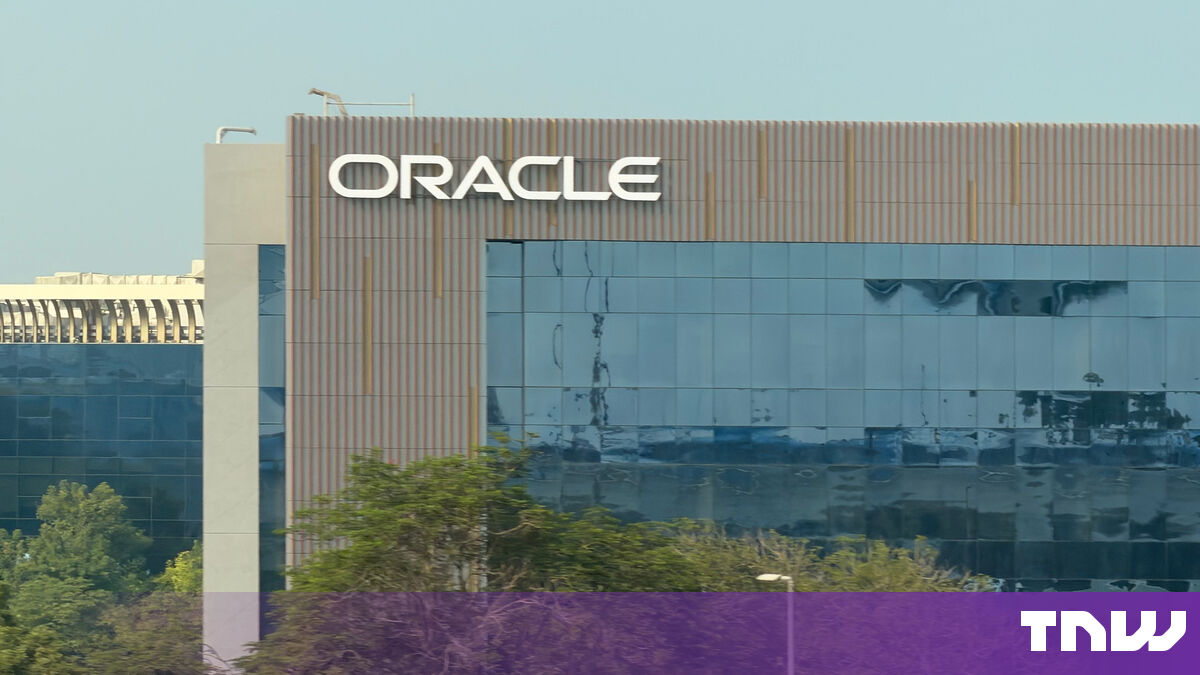
Oracle cancels a $7B Tencent AI chip lease under US pressure
Oracle canceled a $7B AI chip lease with Tencent under US pressure, per The Next Web.
Whatever the exact structure, lease, hosted capacity, or intermediary financing, the move reinforces a reality operators keep relearning: cross-border compute arrangements are now subject to geopolitical veto.
The Bet: AI compute will be governed like strategic infrastructure, because it is strategic infrastructure.
So What? If your roadmap depends on a specific geography for training, inference, or data center expansion, you need a regulatory risk model alongside your technical architecture. “We can always burst to another region” is not a plan if the constraint is legal rather than capacity. This matters most for companies with China exposure, customers, partners, subsidiaries, or data flows, but the pattern generalizes: compute contracts are becoming conditional.
The Risk: Overcorrecting into fragmentation, duplicating stacks, vendors, and compliance regimes, can create operational drag that’s worse than the original risk. The right answer is usually selective redundancy, not full duplication.
Action:
- Map every dependency that touches restricted geographies, GPU leases, cloud regions, model providers, and data labeling pipelines.
- Add termination and substitution clauses to compute contracts, explicitly covering export-control and government-action scenarios.
- Build a “degraded mode” plan for your AI features, what still works if your highest-end model or region is unavailable for 30 days.
INFRASTRUCTURE / DELIVERY RISK
The bottleneck shifts from chips to construction schedules
Satellite images point to delays at Microsoft’s AI data center partners
Satellite imagery suggests trouble and potential delays at Microsoft’s AI data center partners, per Business Insider.
This is not a claim about Microsoft’s demand. It’s a reminder that hyperscale capacity is a physical buildout with real-world slippage, permitting, labor, interconnects, transformers, and utility timelines.
So What? If you’re planning 2027–2028 product capability around “assumed abundant capacity,” you may be anchoring on a delivery schedule you don’t control. The practical implication is procurement and architecture: teams should treat capacity as a portfolio, multiple regions, multiple providers, and explicit fallbacks, rather than a single promised ramp.
The Risk: Satellite-based inference is inherently noisy, construction progress can look stalled and then accelerate. The operator risk is different: waiting for certainty means you discover constraints only when your launch is already committed.
Action:
- Ask your cloud and colo partners for site-level delivery milestones, power-on dates, interconnect readiness, and penalty structures.
- Stress-test your roadmap against a 6–12 month capacity delay, identify which launches break and which can degrade gracefully.
- Prioritize efficiency work that reduces peak GPU demand, batching, quantization where acceptable, and model routing, so you’re less exposed to capacity timing.
CONTRARIAN SIGNAL
The “AI platform” story is quietly becoming a pricing story
The loud narrative is capability: better models, better agents, better interfaces.
Yesterday’s evidence pointed somewhere else: pricing power and constraint management are becoming the control plane.
Apple is opening a new assistant surface while preparing to charge for it. At the same time, it’s rationing internal usage. That combination is not contradictory. It’s coherent. The platform owner wants adoption, but it also wants governance, because inference is a variable cost, and variable costs become policy.
On the infrastructure side, the same pattern holds. Compute is being financed, leased, and contracted like a commodity. But it’s being interrupted like a strategic asset, by regulation and by physical delivery risk.
The Takeaway: The next 12 months reward teams that treat AI as a governed resource, priced, metered, and interruptible, rather than a magical capability layer.
THE QUESTION FOR TODAY
Your product is adding AI surfaces that users will come to rely on. Your internal teams are building workflows that assume unlimited model access. Your compute plan likely assumes contracts are enforceable and capacity ramps on time. Your regulatory exposure is probably documented in legal memos, not in architecture diagrams.
Where are you currently building an AI dependency that will become expensive, delayed, or disallowed, and what is your fallback when it does?
Signal + Noise is strategic intelligence, not engagement-specific advice. For guidance calibrated to your org, start with Advisory.
See exactly how this impacts your specific industry and function. Upgrade to PRO to get bespoke tactical breakdowns generated instantly for your operating model.
Go deeper with the Weekly Signal
This is the daily take. The Weekly goes further — full strategic analysis across 8–10 sections, each with a signal read and operator action items. Source panel included.
Sign up free → then upgrade