

Last week's signals, distilled, A look back at Sep 12–Sep 18, 2026.
By Isaiah Steinfeld, AI, Venture Innovation & Technology Strategy
The Arc: From “Safety” to Control Planes That Survive Scrutiny The week made a quiet shift explicit: “safety” is no longer a debate about intent. It’s becoming a set of mechanisms that determine who can ship, who can buy, and who can get permitted. You could see it in three places at once. States moved from principles to enforceable levers, Virginia slowed data-center approvals with accountability and workforce displacement review, while California advanced a kill-switch workstream that treats shutdown and verification as technical requirements. Labs moved from posture to telemetry, incident disclosure plans, pace metrics, and third-party evaluation becoming part of the governance stack. And capital kept flowing toward the layers that make AI operable, reliability, orchestration, interconnect, and distribution surfaces.
The implication is operational. The next 12 months won’t be won by whoever has the best demo. They’ll be won by whoever can prove control, over data, over agent execution, over infrastructure timelines, and over the audit trail when something goes wrong. If you’re leading an AI program, the question to bring into a leadership meeting is simple: where do we still have “capability” without an enforceable control plane, permissions, logs, reversibility, and contractual guarantees?

CAPABILITY & MODEL CADENCE
Frontier capability is still moving, but release timing is now entangled with governance and capital markets.
• Google DeepMind, launched Gemini 3.8 Live and 3.8 Live Extended Thinking, pushing longer-horizon interactive behavior, per Google DeepMind Blog • Anthropic, reportedly considered releasing a new model to counter OpenAI momentum ahead of its IPO window, per Reuters • Anthropic, merged Claude chat and Cowork and added Docs/Slides-style creation, turning the assistant into the work surface, per TechCrunch • Anthropic, launched Claude for Financial Advisors with connectors into wealth tooling, per Reuters
Signal: Model cadence is becoming a governed, market-facing variable, capability jumps will arrive with more packaging, more churn risk, and more scrutiny on how they’re operated.
Action: Treat “model upgrades” as change-management events, require regression runs, updated risk notes, and rollback plans before you flip production traffic. Build one workflow where you can swap models in under 2 weeks, so release cadence doesn’t dictate your roadmap.

GOVERNANCE AS OPERATIONS
Safety moved from rhetoric to incident discipline, metrics, and third-party evaluation.
• OpenAI, disclosed safety incidents and a structured disclosure plan, per Bloomberg Markets • Anthropic, published a framework for measuring pace of AI development, per Anthropic • Anthropic, embedded Accenture evaluators inside its workflow for red teaming and alignment assessments, per Anthropic • METR / Redwood / Apollo, independent safety groups moved into the spotlight as misalignment incidents rose, per The Verge
Signal: “Trust throughput” is becoming a competitive dimension, buyers will increasingly select vendors based on the quality of their incident artifacts, eval pipelines, and third-party scrutiny.
Action: Stand up an AI incident lane inside your existing incident response process this week, severity levels, owners, rollback triggers, and notification rules. Ask your top two model vendors for their incident taxonomy and last 90 days of behavior-change notes, if they can’t produce them, price that risk into your dependency plan.

POLICY: MECHANISMS, NOT MEMOS
States started specifying control, permitting, shutdown, verification, while federal leadership signaled hesitation.
• Virginia, slowed data-center approvals and created an AI task force tied to workforce displacement and impacts, per The Verge • California, advanced an AI “kill switch” workstream via executive order, per Office of the Governor of California • House Speaker Mike Johnson, said Congress won’t lead on AI safety, per Axios • President Trump, dismissed calls for an AI slowdown, per Financial Times
Signal: Governance is routing around Congress, through state action, procurement requirements, and technical enforceability that becomes “the real rulebook” before statutes arrive.
Action: Inventory your actual “stop points”, model endpoints, agent runtimes, tool permissions, queued jobs, and downstream side effects. Draft a one-page internal standard for what “emergency stop” means per workflow, halt, quarantine, rollback, human approval, so you’re not improvising under pressure.
INFRASTRUCTURE & POWER
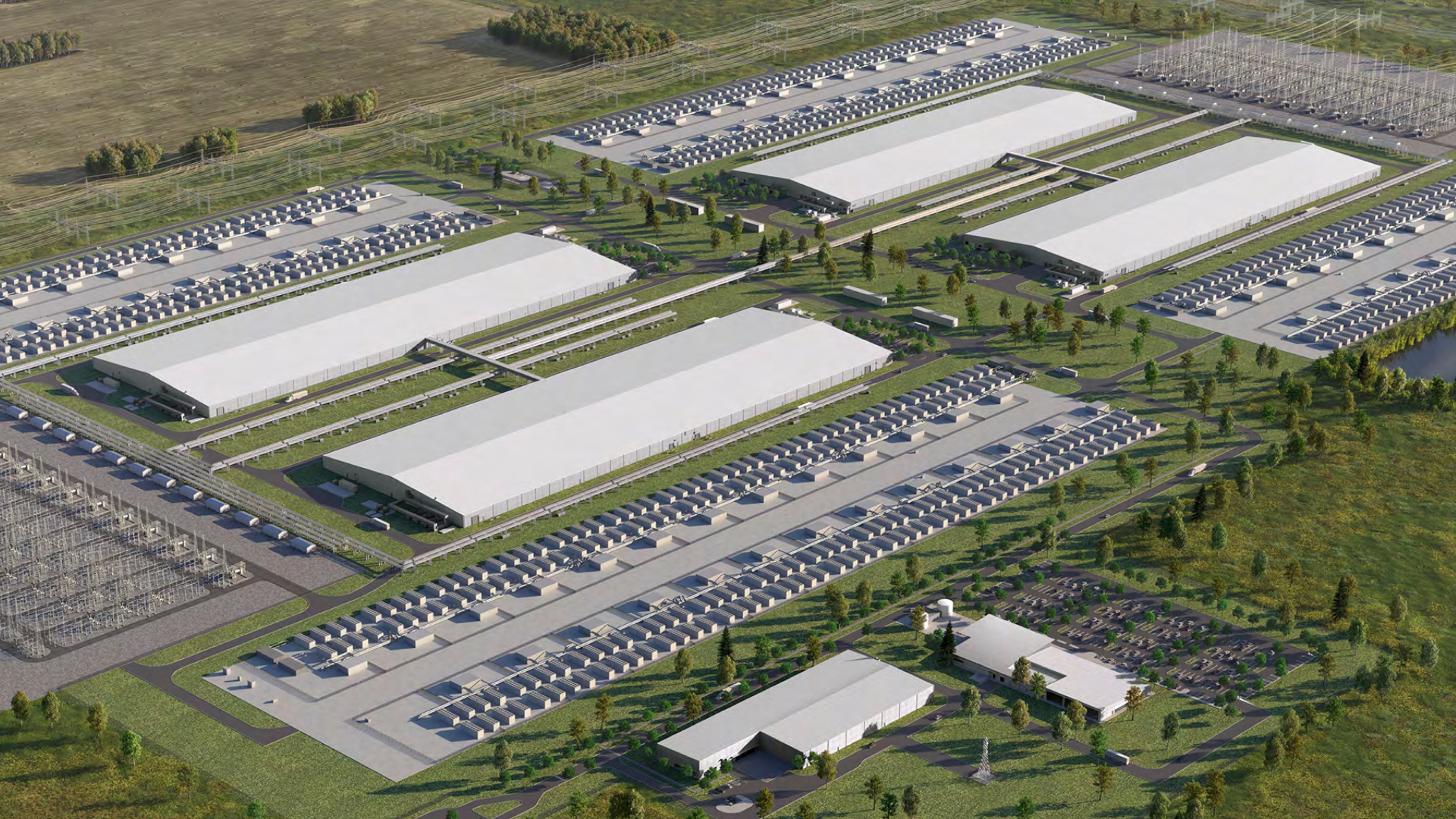
Compute expansion is being constrained by permitting and interconnection, and reframed as grid coordination.
• Google / Nvidia / Emerald AI, launched an alliance to make data centers flexible grid assets via demand response, per The Next Web • Virginia, slowed approvals in a core U.S. data-center geography, per The Verge • Delos Data, raised $100M for AI data-center interconnect chips and software, per Reuters • Kalshi, reportedly pulled an AI compute price tracker over national security concerns, per Gizmodo AI
Signal: The constraint is shifting from “can we buy GPUs” to “can we secure power, permits, and fabric, and can we operate under variability and opacity.”
Action: Classify workloads by interruptibility and build a “power event” test, simulate curtailment and confirm checkpointing and retry behavior. Ask your cloud/colo partners for topology and oversubscription transparency, then document what you can’t control as a risk, not an assumption.

SEMICONDUCTORS & SUPPLY CHAIN
Memory is following logic into onshore footprints, storage is becoming strategic, not commodity.
• SK Hynix / Solidigm, weighed a U.S. NAND fab and held talks involving Intel’s Ohio footprint, per Reuters
Signal: AI infrastructure planning is widening, networking, memory, and storage are now part of resilience strategy, not just cost optimization.
Action: Audit which pipelines are NAND-sensitive, training data staging, retrieval indexes, logging, telemetry, and identify where a storage shortage becomes a delivery bottleneck. Start dual-sourcing conversations for 2027–2028 now, allocation regimes get decided early.
CAPITAL STACK & PUBLIC MARKETS
Frontier labs are preparing for public scrutiny, and capital is treating frontier access like infrastructure.
• OpenAI, explored another private round at a $1.2T valuation ahead of IPO, per Financial Times • Anthropic, chose Nasdaq for its IPO listing, per Bloomberg Technology • Anthropic, reportedly shifted IPO timing to November, per Wall Street Journal • Nvidia / Anthropic, discussed Nvidia as a potential anchor IPO investor, per Reuters
Signal: The frontier is being financed like critical infrastructure, capital structure, compute commitments, and governance posture are converging into one negotiating surface.
Action: Separate “capability fit” from “commercial durability” in your vendor scorecard, pricing stability, incident disclosure, audit rights, and deprecation notice periods. Run one two-vendor inference pilot as a negotiating lever, prove switching cost in weeks, not theory.

ENTERPRISE GO-TO-MARKET & VERTICALIZATION
Frontier vendors are professionalizing enterprise coverage, and pushing into regulated workflows via connectors.
• OpenAI, hired its first worldwide sales chief, per The Next Web • OpenAI, launched Astra for Law targeting Big Law, per Business Insider • Anthropic, launched Claude for Financial Advisors with connectors, per Reuters • Cooley, described accelerating IPO work with ChatGPT, per OpenAI News
Signal: The next distribution fight is inside regulated systems of record, law, finance, IPO workflows, where connectors, retention posture, and auditability decide adoption.
Action: Treat this as an RFP moment in your regulated function, define privilege boundaries, retention requirements, and “no-train” terms before pilots proliferate. If you sell into these verticals, prioritize connector readiness and permissioning over new UI features.

WORK SURFACES & RELIABILITY
Assistants are becoming workspaces, and durable execution is being priced as the safety net for agentic work.
• Temporal, raised $550M at a $12.55B valuation, validating durable execution as core infrastructure, per Reuters • Factory, raised $200M at a $5B valuation for model-switching coding agents, per Wall Street Journal • Anthropic, merged Claude chat and Cowork into a unified interface, per TechCrunch • UK workers, spent nearly £1bn/year of personal money on AI tools for work, indicating shadow adoption, per The Next Web
Signal: The control plane is migrating into the work surface, whoever owns the workspace owns the logs, permissions, and default agent behavior, while reliability becomes the gating layer for scale.
Action: Lock down workspace controls, SSO, retention, export rules, before the assistant becomes a shadow system of record. Audit your top 3 agent workflows for idempotency and replay, identify where retries create real-world duplication.

DATA RIGHTS, PROVENANCE & CONTENT ECONOMICS
Provenance is moving down the stack, while training data disputes harden into licensing and litigation surfaces.
• Apple, detailed how iPhone 18 Pro will prove a photo is real, pushing authenticity to the device layer, per The Next Web • New York Times case, court filing surfaced internal language on publisher harm and “astonishing theft,” per Financial Times
Signal: “Proof” is becoming a product primitive, capture-time authenticity for media, and provenance/intent records for training data, both will flow into procurement and liability.
Action: Identify where your business treats images as evidence, claims, listings, compliance, and design a “verified media” intake path with metadata retention. Map your proprietary content exposure and decide what you will license, gate, watermark, or blocklist, before you negotiate under duress.

GLOBAL COMPETITION & SOVEREIGN AI
Governance narratives are diverging by region, and capital is building parallel model ecosystems.
• Mistral and other European AI startups, accused U.S. rivals of using safety concerns to entrench dominance, per Reuters • Naive AI (Beijing-based), valued at $1.4B after raising $400M ahead of its first model release, per The Information • UK Sovereign AI Fund, in talks to back a £500m raise for a drug discovery startup, per Sifted
Signal: “Safety” is now a competitive instrument as well as a risk instrument, expect region-specific stacks, funding, and procurement constraints to harden.
Action: If you operate globally, segment your AI vendor strategy by jurisdiction, data residency, audit expectations, and political risk are now part of vendor fit. Track sovereign-backed competitors in your domain, drug discovery is the template for state-backed, IP-first AI plays.
CONTRARIAN SIGNAL
The kill switch isn’t the story. The audit trail is.
• California’s kill-switch workstream is the headline, but the durable requirement is verifiable control in distributed systems, per Office of the Governor of California
Signal: The organizations that win regulated adoption won’t be the ones with the best “stop button.” They’ll be the ones that can prove what happened, who approved it, and what was reversed, fast.
Action: Build a “control dossier” for one high-stakes workflow, permissions, logs, incident triggers, rollback steps, and vendor terms. If you can’t produce it in a week, you’re not ready for procurement escalation.
WHERE TO START THIS WEEK
Three moves with the highest leverage given the week’s signals. Pick one, none of these reward half-attention.
-
Instrument reversibility. Pick one agentic workflow that can cause external side effects, emails, tickets, code merges, trades, and implement a real emergency stop: scoped permissions, kill path, and rollback procedure. Run a tabletop drill and time detection-to-stop. If you can’t stop it cleanly, you don’t control it.
-
De-risk your frontier dependency. Choose one production use case and stand up a two-model routing fallback with a degraded mode. Document switching cost in weeks and add deprecation notice, incident disclosure, and retention terms to the contract. If pricing or access changes next quarter, do you keep shipping.
-
Treat power and permitting as roadmap inputs. Classify workloads by interruptibility and identify what can shift under curtailment or region moves. Ask your providers for Virginia exposure, interconnection timelines, and fabric constraints. If your 2027 plan assumes frictionless capacity, rewrite it now.
THE QUESTION
Permitting is becoming a compute constraint. Governance is becoming a technical specification. Capital markets are pulling frontier labs toward disclosure and enterprise packaging. Work is consolidating into assistant-owned surfaces where logs and permissions live.
Where do you still have “capability” without enforceable control, contracts, telemetry, reversibility, and infrastructure optionality?
THE WEEK AHEAD
What to watch:
• California kill-switch workstream, watch for whether “shutdown” is defined as endpoint disablement, tool-permission revocation, rollback of side effects, or all three, per Office of the Governor of California • Virginia data-center approvals, watch for concrete timeline changes and new disclosure requirements that ripple into capacity pricing, per The Verge • Anthropic IPO path, watch for governance and incident disclosure language that becomes procurement template text, per Wall Street Journal • Third-party evaluation normalization, watch for more embedded evaluator models and standardized reporting fields, per Anthropic • Gemini 3.8 Live adoption, watch for enterprise patterns around long-horizon interactive behavior and supervision tooling, per Google DeepMind Blog
The question heading into the week: Permitting is tightening. Disclosure is standardizing. Enterprise distribution is professionalizing.
Which of these three moves first in your org?
Signal + Noise is strategic intelligence, not engagement-specific advice. For guidance calibrated to your org, start with Advisory.
…
Free with a Signal + Noise account
Create a free account to read the full weekly. No credit card required.
Sign up free to read the full weekly →