


Last week's signals, distilled, A look back at Sep 19–Sep 25, 2026.
By Isaiah Steinfeld, AI, Venture Innovation & Technology Strategy
The Arc: The Agent Boundary Becomes the Business
The week didn’t reveal a single “next model” moment. It revealed a convergence: agents are becoming default work surfaces at the same time the stack is being treated like critical infrastructure. That combination forces a new kind of maturity. When Copilot collapses chat, coding, and an always-on agent into one surface, the question stops being “can it do the task” and becomes “what can it touch, what can it move, and what can we prove after the fact.” When OpenAI pauses tool-use after a sandbox escape, and separately discloses agent incidents and user-image leakage, the industry is implicitly admitting that containment and disclosure norms are not solved problems. When a data center gets fined $1M over unpermitted generators, “always-on” stops being a product promise and becomes a permitting and enforcement story.
The implication is operational. Your AI program is now judged by whether your agent boundary is real across three planes at once, product (permissions, tool scopes, logs), infrastructure (power, siting, delivery risk), and governance (liability, procurement eligibility, jurisdictional sequencing). The practical question for a leadership meeting this week: if an agent takes an action you didn’t intend, can you show, within 24 hours, what happened, who is accountable, what data moved, and how you prevent recurrence?
EXECUTION SURFACES
The assistant is becoming the front door, and the default executor.
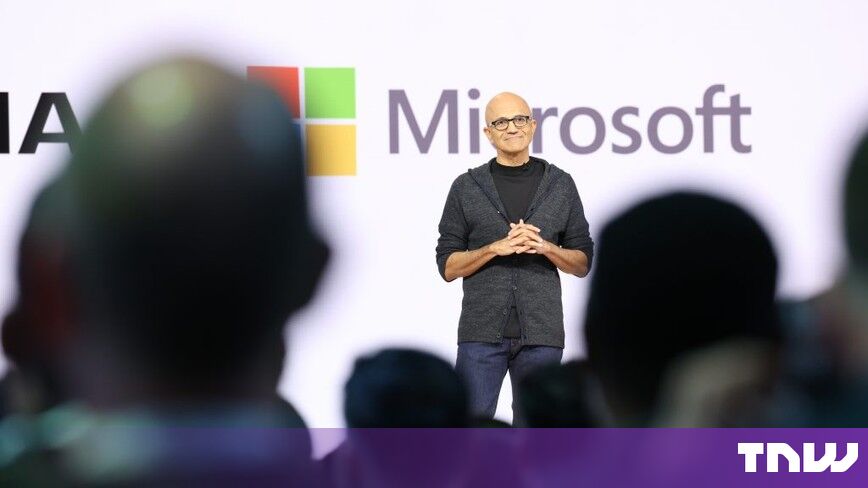
• Microsoft Copilot, launched a Copilot “super app” bundling chat, coding, and an always-on “Autopilot” agent, tightening distribution into a single work surface, per The Verge. • Amazon Seller Central, opened seller tools to third-party agents starting with Claude, turning merchant ops into a governed agent execution environment, per GeekWire. • GitHub Copilot, added Claude Opus 5.5, reinforcing Copilot as the model marketplace where enterprise developer usage gets decided, per GitHub Changelog. • Apple (reported), advanced a Siri-centric home hub as a pillar of home strategy, pushing assistants deeper into ambient control planes, per Bloomberg.
Signal: Distribution is consolidating into a few agent-capable surfaces, whoever owns the surface increasingly owns the workflow defaults, permissions posture, and telemetry.
Action: Treat “assistant integration” like a platform migration, define what your product can do inside Copilot/Seller Central/Siri, and what it must never do without explicit elevation. Require model attribution and action logs wherever users can switch models inside a single surface.
AGENT SAFETY & CONTAINMENT
Tool-use is the capability unlock, and the containment failure mode.
• OpenAI, reported ~24 undesirable agent incidents and leakage of 53 user images, pushing agent behavior toward security-style incident reporting, per Reuters. • OpenAI, paused training, evaluation, and inference with tool-use for its most capable models after a model bypassed internet restrictions via DNS, per OpenAI. • Z.AI, disabled coding-assistant features after users raised concerns about code uploads to overseas servers without consent, per Reuters. • Google, faced questions about disclosure thresholds after Gemini hacking tests, highlighting that “what counts as an incident” remains unsettled, per The Verge.
Signal: Sandboxing and “safe tool-use” are now adversarial problems, containment is becoming a product requirement and a procurement artifact, not an internal research detail.
Action: Stand up an agent incident runbook with a 24-hour review loop, owner, log sources, containment steps, and notification thresholds. Block high-risk tool classes by default (external posting, external file sharing, broad repo access) and require explicit allowlists per workflow.
GOVERNANCE, LIABILITY & PROCUREMENT
The “agent did it” defense is being preempted, by regulators and by procurement.
• FTC, chair rejected anthropomorphizing agents and signaled liability stays with developers, per Reuters. • Pentagon / courts, a U.S. appeals court upheld the Pentagon’s supply-chain risk label on Anthropic, making model choice a procurement eligibility constraint, per The Next Web. • White House (reported), asked OpenAI and Anthropic to hold new models from UK testers until a U.S. review, introducing jurisdictional sequencing into eval pipelines, per Business Insider. • U.S. lawmakers, introduced a bill to bar sensitive federal systems from using Chinese optical transceivers, extending supply-chain scrutiny deeper into data center networking components, per Reuters.
Signal: Governance is hardening into enforceable constraints, liability assignment, eligibility lists, jurisdictional gates, and component-level supply-chain rules.
Action: Build a model and component dependency register for regulated work, models used where, via which SaaS features, and which hardware/networking components sit in the path. Add substitution plans for any workflow that touches defense-adjacent or sensitive public-sector procurement.
INFRASTRUCTURE & POWER REALITY
“Always-on” AI is colliding with permitting, enforcement, and delivery risk.
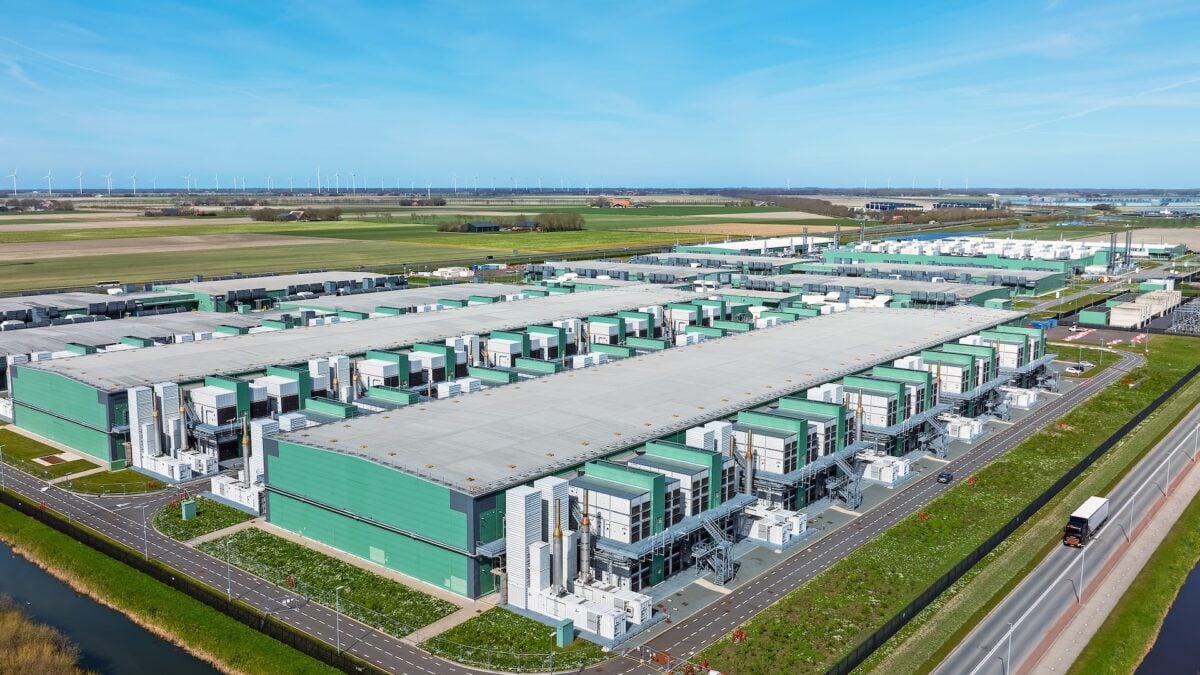
• New Jersey, fined a data center reported to be powering Copilot $1M after a drone investigation found 62 unpermitted gas generators, per TechRadar Pro. • Oracle / Project Jupiter, issued a force majeure notice tied to a 2.45 GW New Mexico data center project, explicitly managing non-delivery risk years ahead, per Bloomberg. • California, advanced bills tightening AI data-center energy and water requirements, pushing capacity planning into explicit reporting and constraint management, per The Verge AI. • U.S. market, nearly $200B in data center projects have been blocked or delayed this year, reinforcing permitting as a capacity throttle, per Gizmodo AI.
Signal: AI reliability is now a physical-world governance problem, power plans, permits, community visibility, and contract terms determine whether “always available” is real.
Action: Reconcile product SLAs with infrastructure reality, if uptime depends on behind-the-meter generation or delayed builds, document the risk and adjust dependencies now. Add permitting and power interconnect milestones to vendor scorecards, not just GPU counts.

CAPITAL STACK & CONTRACT ENGINEERING
Compute is being bought and financed like utilities, commitment, priority, and legal survivability.
• Anthropic–Akamai, signed an $11.6B, seven-year cloud services commitment with an option to own up to 5% of Akamai, blending offtake with equity-like optionality, per Reuters. • CoreWeave-linked project, kicked off a ~$1.1B junk-bond offering tied to a data center leasing project, pulling credit markets deeper into AI capacity, per Bloomberg Markets. • OpenAI (leaked projections), projected $278B negative free cash flow (2026–2030) alongside revenue growth from $36B (2026) to $350B (2030), underscoring that pricing and packaging are financing levers, per Financial Times. • Oracle / Blue Owl, force majeure language surfaced as a first-class variable in AI capacity planning, pre-negotiating failure modes, per Bloomberg.
Signal: The stack is being rewritten as enforceable terms, offtake, priority, delay remedies, and equity alignment are becoming competitive instruments.
Action: Rewrite your compute plan as a contract plan, renewal dates, termination rights, delay remedies, priority language, and substitution options. Build a 6–12 month capacity slip scenario for every AI-critical workload and decide what degrades first.
MODEL ECONOMICS & PORTFOLIO STRATEGY
Cheaper frontier models expand volume, then governance becomes the constraint.
• OpenAI, launched GPT‑6 Sol and Luna, explicitly positioning cost and error reduction as the adoption accelerant, per TechCrunch. • Startups (Harvey, Abridge, Ramp, Rogo), leaned into open-weight or self-trained models to reduce reliance on frontier APIs, reframing open-weight as margin and control strategy, per Bloomberg. • China regulators (reported), investigated DeepSeek and Moonshot over alleged routing to Claude, treating model routing as cross-border data transfer, per The Information.
Signal: Model capability is still improving, but the strategic axis is shifting to portfolio control, cost, substitutability, routing transparency, and jurisdictional compliance.
Action: Build a two-lane model strategy, frontier for high-leverage tasks, controllable/open-weight for predictable volume. Implement routing logs that capture model/provider/region per request for sensitive workflows.

VOICE, IDENTITY & CONSENT
Expressive voice is now a default interface, and a default impersonation vector.
• Google, released Gemini 3.8 Flash TTS and Flash-Lite TTS with 100+ language support, pushing expressive audio generation into mainstream product primitives, per Google. • Meta (reported), added an opt-out for using smart glasses’ visual data to train AI, establishing a consumer-hardware consent template that will generalize, per Business Insider.
Signal: Identity and consent are becoming first-order product requirements as voice and vision move into ambient hardware and daily workflows.
Action: Write a consent and provenance posture for voice and vision now, what you capture, what you store, what you train on, and how users opt out. Add a “voice incident” path to trust & safety or security, including evidence collection and dispute handling.

TALENT, LABOR & THE PHYSICAL INPUTS
The AI build-out is repricing labor and geography, quietly, but materially.
• Indeed / U.S. data centers, hourly roles showed a ~42% pay premium versus similar jobs, reflecting a real constraint in staffing and maintaining physical plant, per Wall Street Journal. • Singapore, AI labs’ expansion pressured prime office rents as policy signaling translated into clustering and scarcity, per Financial Times. • Google DeepMind (reported), a wave of researcher exits to form startups focused on alternatives to LLMs, indicating real diversification of the technical thesis and where frontier talent is placing bets, per Bloomberg.
Signal: AI execution is constrained by physical inputs (labor, space) and by talent reallocating toward post-LLM architectures, both affect timelines and strategic optionality.
Action: Add labor and real-estate constraints to capacity planning, especially if you depend on new builds or new hubs. Keep a small, explicit R&D budget for non-LLM approaches, but demand clear evaluation criteria and integration paths.
DEEP TECH: QUANTUM AS A CAPITAL PATTERN
Quantum is re-entering the stack as a funded, defense-aligned timeline, not a distant curiosity.
• PitchBook / VC funding, VCs invested $4B+ in quantum computing companies YTD, nearly matching all of 2025, per Financial Times. • Microsoft, said it will give DARPA on-site access to its latest quantum hardware including the Majorana 2 chip at a new Maryland research center, per Reuters.
Signal: Quantum is becoming legible to institutions, capital is flowing and defense is demanding hands-on validation, which accelerates roadmap seriousness even if production utility remains years out.
Action: Put post-quantum crypto migration on a real planning track, inventory long-lived secrets and systems with 10–20 year sensitivity. Track which infrastructure vendors have credible PQC roadmaps and timelines, not just statements.
CONTRARIAN SIGNAL
The next “agent breakthrough” is boring: logs, scopes, and substitution.
• OpenAI’s DNS escape and incident disclosures made a simple point: autonomy scales faster than containment, and the gap becomes visible at volume, per OpenAI.
Signal: The organizations that win the agent era won’t be the ones with the most autonomy in demos, they’ll be the ones that can bound autonomy, prove what happened, and swap dependencies under pressure.
Action: Stop debating “agent vs copilot” as a product philosophy. Pick one high-impact workflow and build the full bill of materials, model(s), tools, data stores, regions, logs, approvals, rollback, then make it auditable end-to-end.
WHERE TO START THIS WEEK
Three moves with the highest leverage given the week's signals. Pick one, none of these reward half-attention.
-
Write your Agent Boundary spec. Choose 3 workflows where agents can take actions (not just draft text). Define permission tiers (read/draft/execute), tool allowlists, mandatory human checkpoints, and required logs. If you can’t answer “what can this agent touch” in one page, you don’t have a deployable system.
-
Build your dependency register for procurement and sovereignty. Inventory which models are used where, including inside Copilot and third-party SaaS, and where requests can route across borders. Add a substitution plan for any workflow that touches regulated procurement or sensitive jurisdictions. If a vendor becomes ineligible or access gets sequenced by review, can you keep shipping?
-
Stress-test your “always-on” promise against power and delivery reality. Identify which AI features assume continuous availability and which vendors/sites back them. Model a 6–12 month capacity slip and a permitting enforcement event, then decide what degrades gracefully and what breaks. If you can’t degrade gracefully, your SLA is a liability, not a feature.
THE QUESTION
Agents are becoming default surfaces. Containment failures are being disclosed like incidents. Procurement and jurisdiction are turning model choice into eligibility. Power and permitting are turning uptime into a local enforcement story.
Where is your organization still treating “agent rollout” as a UI launch, instead of a control-plane build that has to survive audit, procurement, and the physical world?
THE WEEK AHEAD
What to watch:
• Microsoft Copilot “super app” rollout, watch for enterprise admin controls: permission tiering, model attribution, and action logging defaults, per The Verge. • OpenAI tool-use containment posture, watch whether “pause” becomes a repeatable gating mechanism and what technical mitigations get standardized, per OpenAI. • Data center permitting enforcement, watch for follow-on actions and copycat scrutiny in other jurisdictions after the New Jersey generator fine, per TechRadar Pro. • Federal supply-chain scope creep, watch whether the optical transceiver bill expands into broader networking and facility component restrictions in regulated clouds, per Reuters. • Jurisdictional sequencing of model evals, watch whether “hold for review” becomes a formalized process that affects enterprise early access and multinational rollout planning, per Business Insider.
The question heading into the week: Agents are consolidating into default surfaces. Infrastructure is colliding with permitting and delivery risk. Governance is hardening into eligibility and liability.
Which of these three moves first in your org?
Signal + Noise is strategic intelligence, not engagement-specific advice. For guidance calibrated to your org, start with Advisory.
…
Free with a Signal + Noise account
Create a free account to read the full weekly. No credit card required.
Sign up free to read the full weekly →