
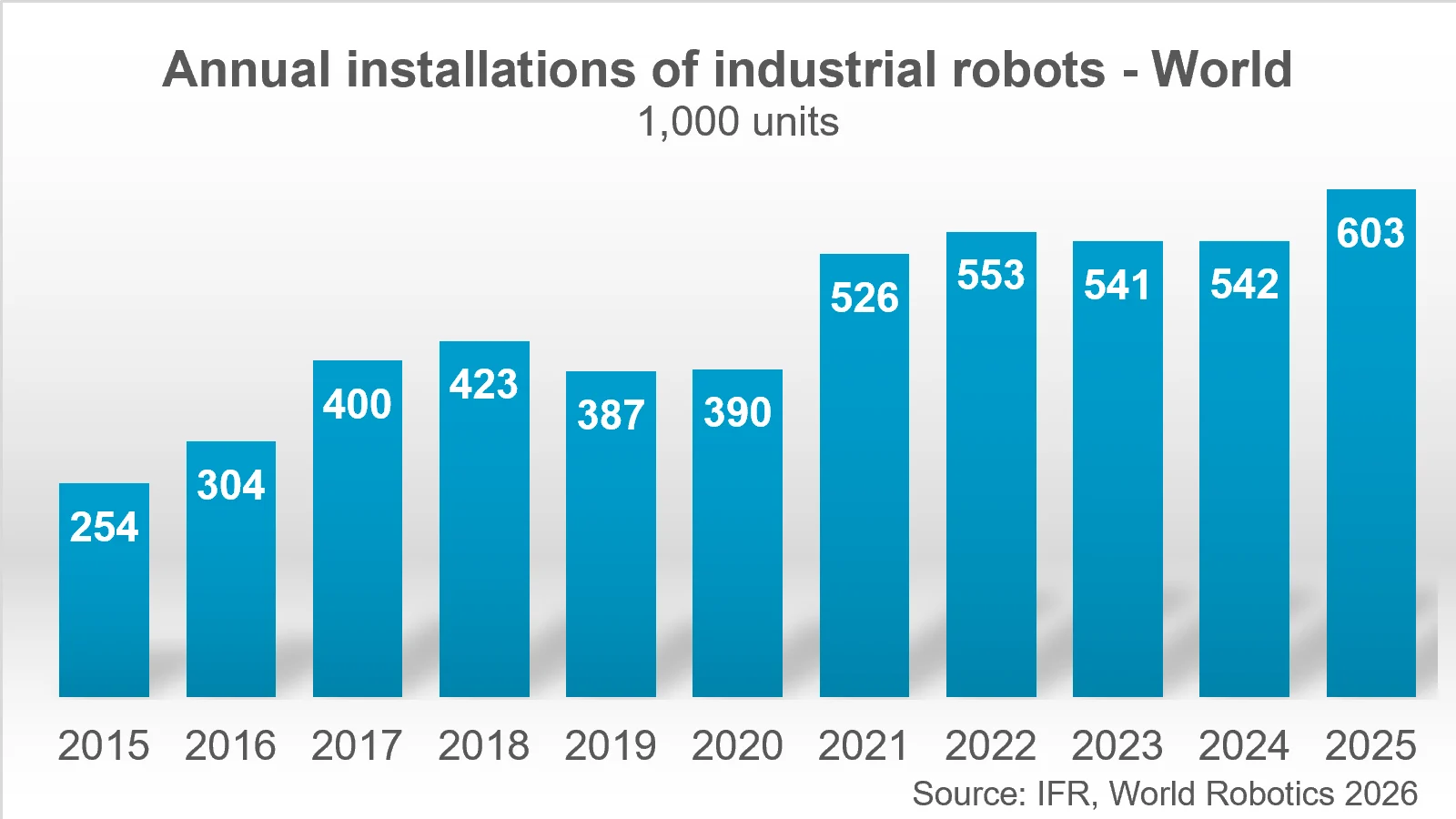
5 million robots are now at work in factories worldwide, reports the IFR
THE SO WHAT
Five million factory robots is a signal that automation is now baseline industrial infrastructure, not a pilot project. If you run a plant and don’t have a roadmap for where robots slot into your next capex cycle, you’re planning against a cost and throughput curve your competitors are already riding.
READ THE SOURCE
MORE FROM THE WIRE
 Robotics & Autonomy
Nexterity wants to automate the hard, dangerous part of pipefitting
A Pelican-case robot that tightens four bolts at once is the right kind of automation—surgical, portable, and aimed at a specific high-risk task. For industrial operators, this is the pattern to look for: point robots that slot into existing workflows without redoing the whole site.
 Robotics & Autonomy
Meet Feather, the startup building the ‘Android of robotics’ for developers
A $30,000 customizable robotics platform aimed at software developers is a bet that the constraint is not hardware, it’s developer experience. If you run automation programs, this is a cue to staff more like a software team—common platform, modular apps—rather than one-off integrator projects.
 Robotics & Autonomy
Mexican EPICS in IEEE Team Builds Portable Educational Platform
Portable robotics and STEM platforms that bypass full labs are a practical way to expand the future talent pool without waiting for capex-heavy infrastructure. If you rely on technical hiring in emerging markets, partnering with or seeding these low-cost education stacks is now a direct pipeline investment, not philanthropy.
 Robotics & Autonomy
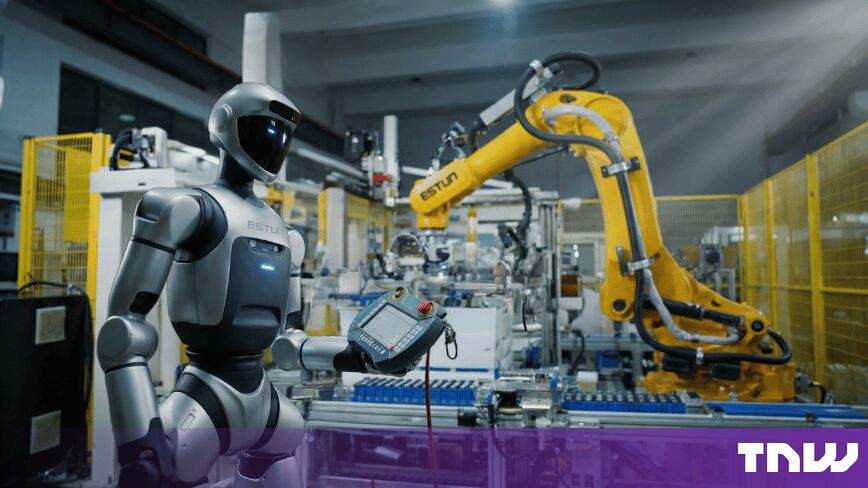
China installs 59% of new factory robots as EU installations fall 11%
China installing 354,000 of 603,000 new industrial robots in 2025 — while EU installations fall 11% — widens the automation gap in manufacturing. If you compete with Chinese producers, assume their unit costs and flexibility will keep improving and treat automation investment as a strategic necessity, not optional efficiency.