
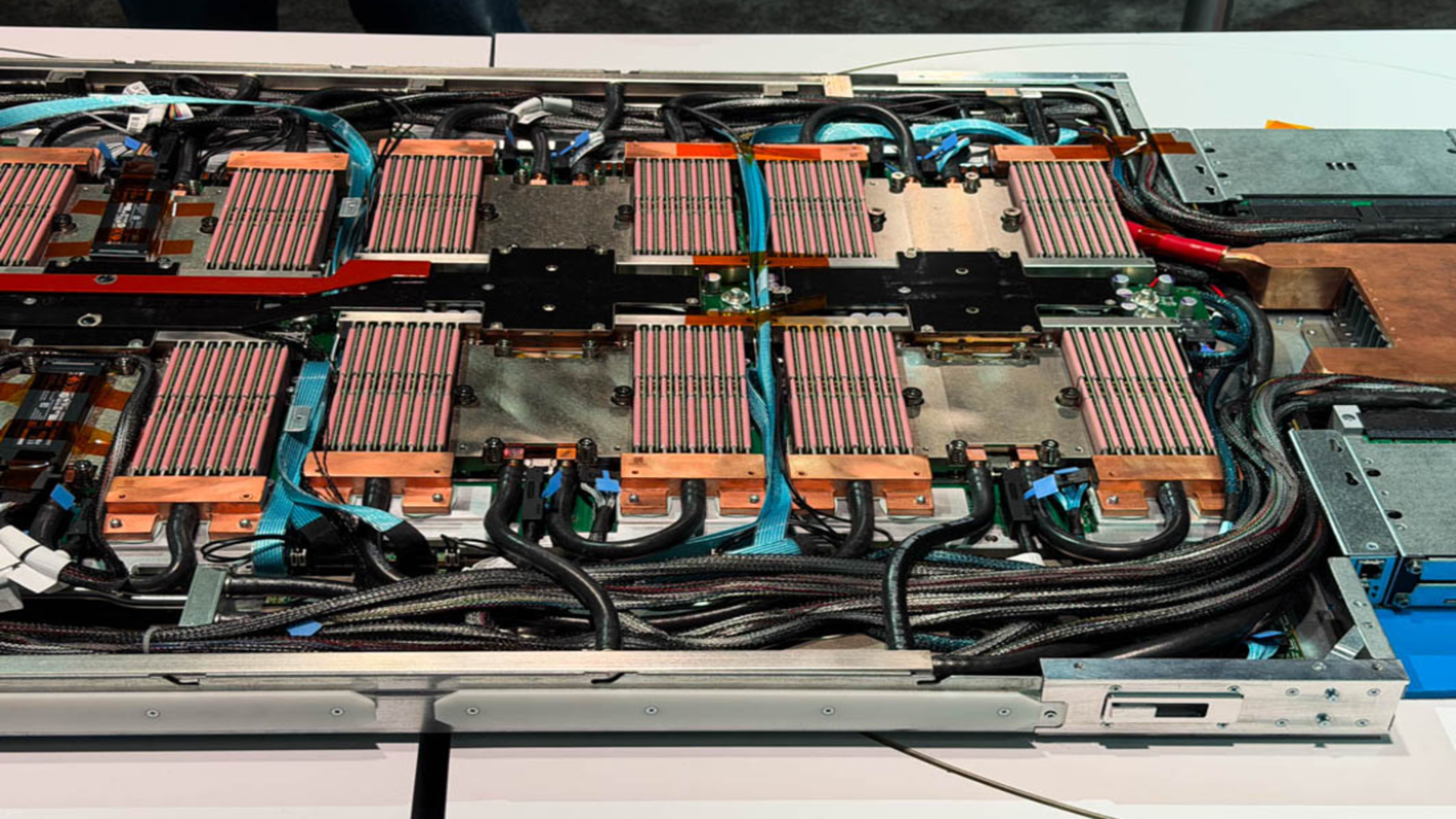
A server within a server: HP packs 81,920 CPU cores, up to 1.28PB RAM into one 42U rack using 80 multi-node motherboards — unannounced Venice is likely to be the fastest x86 CPU ever produced
THE SO WHAT
Cray GX5000 with 81,920 AMD Venice cores and 1.28 PB of RAM in a single rack shows how dense general-purpose compute is becoming relative to GPU hype. For AI-adjacent HPC workloads—simulation, data prep, feature engineering—this kind of x86 density may be a cheaper, easier-to-source lever than chasing the latest accelerator cluster.
READ THE SOURCE
MORE FROM THE WIRE
 Deep & Emerging Tech
Source: Muon Space, which operates satellite networks for climate and national security monitoring, is raising $250M; it has raised ~$181M since its 2021 launch
A $250M raise on top of ~$181M prior funding for Muon Space is another data point that climate and defense sensing are converging into a single dual-use space stack. If your product depends on earth data, assume higher cadence, higher resolution, and more government entanglement over the next 2–3 years.
Deep & Emerging TechTenstorrent CEO on Next Leg of AI Tech, Deal Interest
When Jim Keller is talking publicly about the “next leg” of AI chips, the message is that today’s accelerators are a waypoint, not an endpoint. Long-term buyers should negotiate flexibility into contracts — architectures and vendors may turn over faster than your depreciation schedule.
 Deep & Emerging Tech
Hackers stole three million dollars from Polymarket users through a compromised third-party vendor
A $3M loss at Polymarket via a compromised third-party vendor is a reminder that your weakest integration, not your core protocol, sets your real risk. If you’re running any on-chain or fintech surface, audit embedded scripts and vendors with the same rigor as your smart contracts.
Deep & Emerging TechCan Qualcomm actually compete with Nvidia? Inside its bold data-center gamble.
Qualcomm chasing a ~$40B data-center transformation with Meta already buying in shows hyperscalers want a credible second (and third) source to Nvidia. If you’re planning GPU-heavy services, assume a more heterogeneous accelerator landscape and design your stack to swap vendors without a full rewrite.