

AI finds 'internet breaker' security flaws in NGINX — open source technology responsible for running hundreds of millions of websites has decades-old issues which can be hijacked to steal data
THE SO WHAT
AI-assisted security research surfacing decades-old NGINX flaws is the new normal — every widely deployed component is now subject to machine-augmented red-teaming. Treat legacy web stacks as active risk: prioritize patch paths, WAF rules, and compensating controls before attackers run the same playbook at scale.
READ THE SOURCE
MORE FROM THE WIRE
 Applied AI
Meta’s Muse Charm might cost $300
A $300 AI trinket with a screen and holiday ship date is Meta testing whether consumers will pay for a dedicated agent endpoint instead of just using their phone. Hardware teams should read this as a willingness to subsidize form-factor experiments to own the agent relationship in the home and on the go.
 Applied AI
Google is putting AI chats right on the homepage
AI chats in a collapsible sidebar on google.com turns the world’s default search box into a persistent assistant surface. Content, commerce, and SaaS teams should assume more user journeys will start and stay inside conversational answers rather than click through to your site.
 Applied AI
Source: Meta plans to charge $300 for its forthcoming Muse Charm device and include a free 5G data plan from Verizon for up to 12 months
Bundling a free 5G plan with a $300 Muse Charm is Meta using carrier subsidies to seed an AI hardware footprint, not just selling a gadget. If you build consumer agents, assume the bar is now hardware + connectivity + services, not an app alone.
 Applied AI
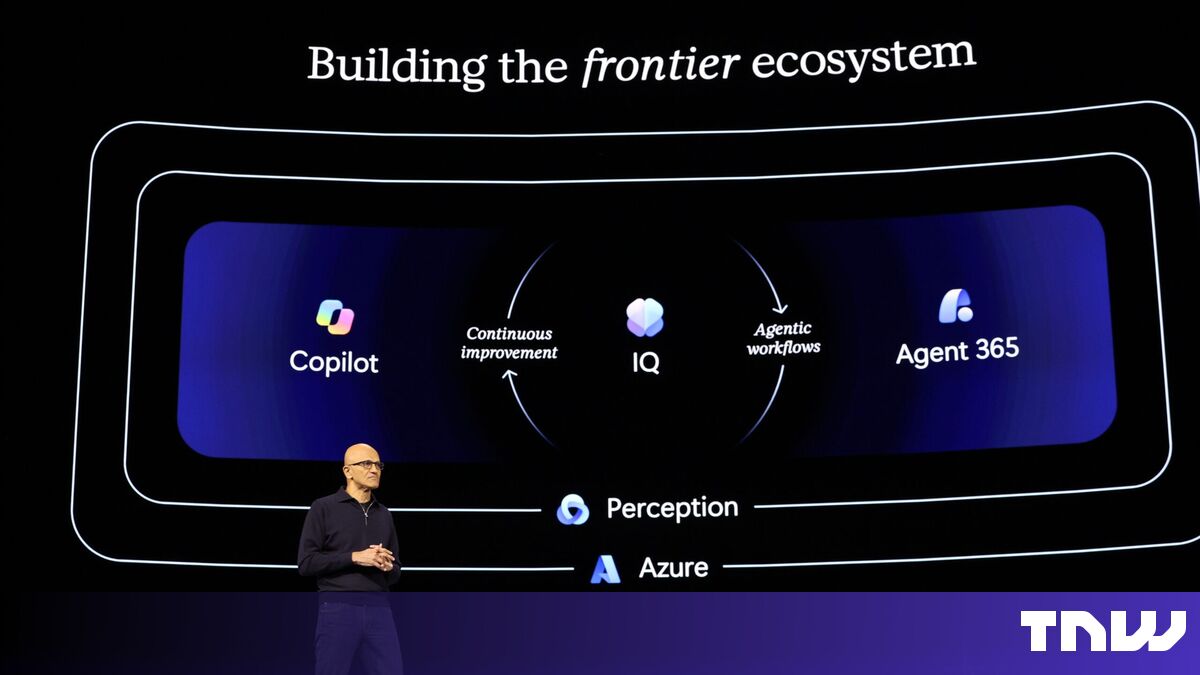
Microsoft puts Word, Excel and PowerPoint inside Copilot at Ignite
Putting Word, Excel, and PowerPoint inside Copilot—and calling it “the new operating system for work”—is Microsoft trying to make the agent, not the document, the primary interface. If you build B2B software, plan for users to reach your workflows through Copilot surfaces rather than your native UI.