
AI Robots: China Is Beating the US to $5 Trillion Market
THE SO WHAT
China’s lead in advanced physical AI hardware — from robotic hands to factory systems — suggests the next wave of automation leverage may be captured in hardware supply chains, not just software. If your operations depend on industrial robots, start mapping Chinese versus non-Chinese vendor exposure and the geopolitical risk that comes with it.
READ THE SOURCE
MORE FROM THE WIRE
 Robotics & Autonomy
US defense companies and startups have signed at least 13 deals with Taiwanese hardware companies since September 2025 to build a secure drone tech supply chain
US defense startups stitching at least 13 deals with Taiwanese manufacturers since late 2025 is a clear move to decouple drone hardware from PRC exposure. If your autonomy stack depends on off-the-shelf components, expect more pressure to prove origin, traceability, and sanction resilience.
 Robotics & Autonomy
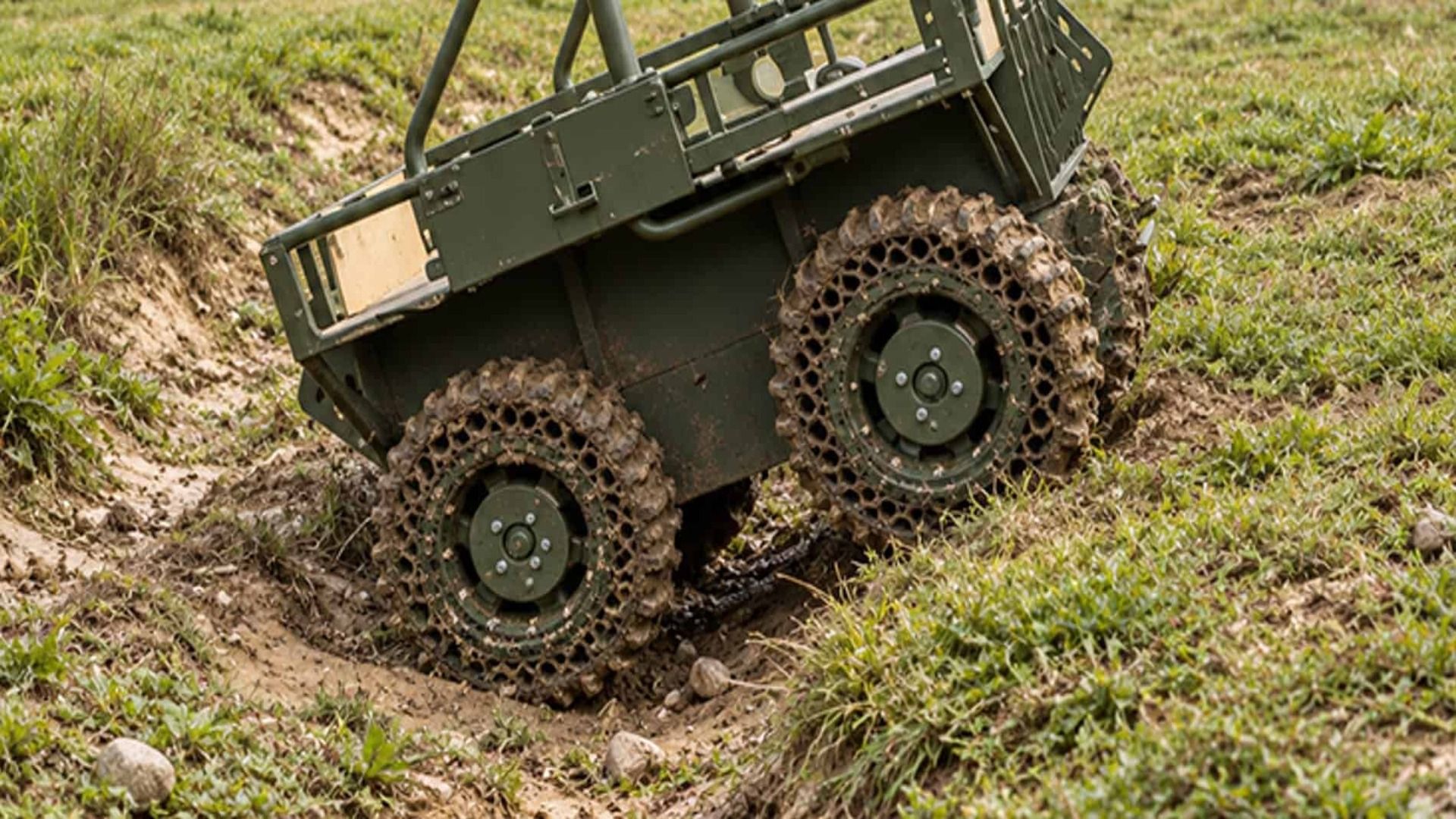
3D-printed airless wheels could be a game changer for Ukraine's ground robotic vehicles — ultralight no-deflation tyres improve resistance to punctures and explosions
Battlefield-grade, 3D-printed airless wheels at 32–56 kg per set mean ground robots can be treated more like consumables than fragile assets. If this holds up in combat, expect similar designs to flow into industrial and hazardous-environment robotics where uptime under abuse is the constraint.
 Robotics & Autonomy
NYSOFA expands partnership with Intuition Robotics to bring ElliQ to more seniors
A $2.1M, three-year expansion for ElliQ with NYSOFA is a concrete proof point that social/assistive robots can win public-sector budgets. If you build eldercare or home health services, you now have to plan for robots as a channel and touchpoint, not just a gadget on the side.
 Robotics & Autonomy
Industrial Next wants factory robots to switch tasks in minutes, not weeks
If Industrial Next can reliably retask robots for complex, delicate work in minutes, the economics of automation shift from high-volume lines to high-mix manufacturing. Plant operators should start mapping SKUs and tasks where changeover time—not hardware cost—is the main blocker to deploying robots.