
AI Startup Hark Debuts 'Proactive' Hark Pro App Ahead of 2027 Hardware Launch
THE SO WHAT
Hark is using a ‘proactive’ AI app as the software beachhead years before its hardware ships — building daily habits and data moats ahead of devices. If you’re planning AI-centric hardware, treat software and agent UX as the lead product now, not an accessory to the eventual gadget.
READ THE SOURCE
MORE FROM THE WIRE
 Applied AI
Google DeepMind launches EmbeddingGemma 2, a 740M-parameter model to map code, images, video, and audio in a shared embedding space, under an Apache 2.0 license
On-device multimodal understanding just got a serious open-source option — a 740M-parameter Apache 2.0 model that unifies text, code, images, video, and audio into one embedding space. If your product depends on proprietary embedding APIs, start testing local alternatives now to cut latency, cost, and lock-in.
 Applied AI
Teen founder reveals 'personal AI computer' that's a $3,499 Mac mini rival
A $3,499 ‘personal AI computer’ with an RTX Pro 4000 is a bet that some users will pay workstation prices to keep agents local, persistent, and private. For SaaS and infra teams, assume a subset of customers will want this “brain-in-a-box” pattern — design your agents and data flows to run cleanly on customer-owned hardware, not just your cloud.
 Applied AI
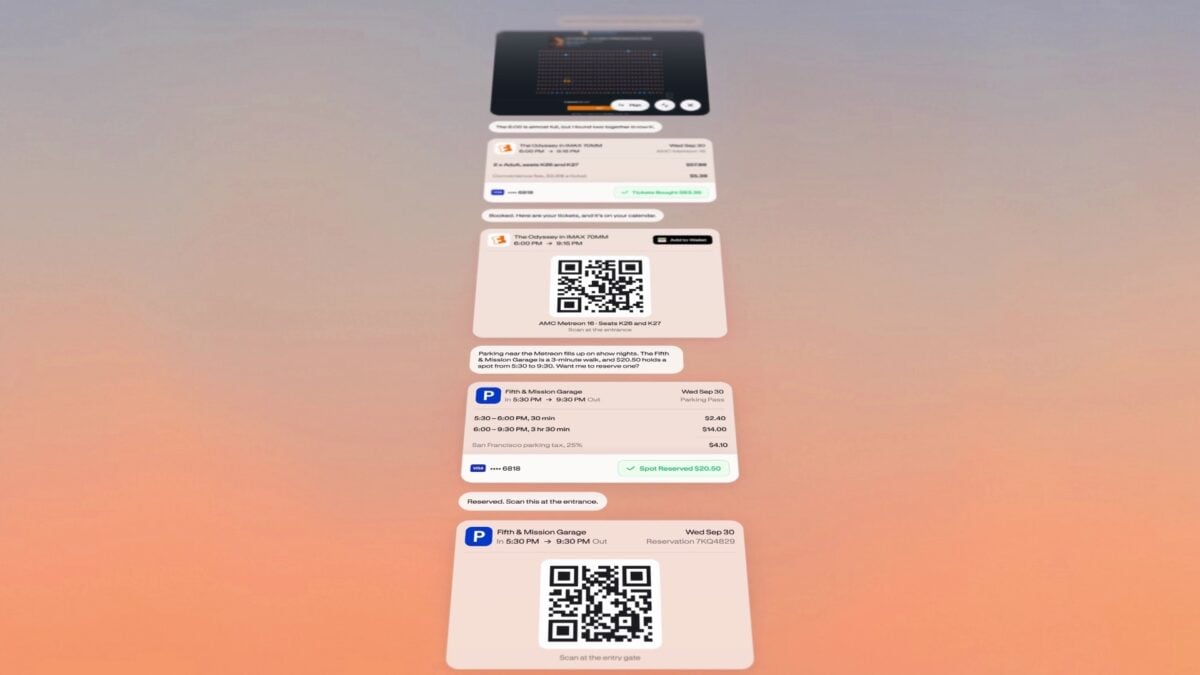
This Startup Led by an Ex-Apple Designer Thinks a GUI for AI Could Change Everything
A dedicated GUI layer for AI — Hark Pro — is a push to make agents feel like a first-class workspace, not a chat box bolted onto existing apps. If you own a productivity surface, you’re now competing with AI-native interfaces for user attention and context, so decide whether you integrate, imitate, or risk becoming a background data source.
 Applied AI
Anthropic is giving startups a free year of Claude Team and $1,000 in credits
A free year of Claude Team plus $1,000 in credits is a land-grab for early-stage mindshare — your stack choice today is what your team will default to for the next 3–5 years. If you’re a startup, take the credits but keep your abstraction layers clean so you can switch providers if pricing, performance, or policy shifts.