
AI ‘Supply Shock’ Pushes Bond Market to Limit: O’Connor
THE SO WHAT
Record high-grade issuance tied to AI capex is crowding into bond markets—your cost of capital for non-AI projects may rise as investors chase data center and chip exposure. CFOs should reassess timing and structure of large debt raises, especially if they compete with hyperscaler-scale buildouts.
READ THE SOURCE
MORE FROM THE WIRE
 Deep & Emerging Tech
SpaceX plans to invest $50B in an Arizona data center campus and $24B in a Texas campus; in October, it said its AI business generated 50%+ of its revenue
SpaceX pointing $74 billion at data centers and saying AI is already 50%+ of revenue reframes it as a vertically integrated AI infra and connectivity company. For operators, Starlink plus in-house data centers is emerging as an alternative backbone for global AI workloads, not just rural internet.
 Deep & Emerging Tech
'Essential' That US Upholds Export Controls on Chips, Says Ben Buchanan
When a former White House AI advisor calls chip export controls “essential,” it reinforces that advanced compute is now treated as strategic materiel, not just IT. If your roadmap depends on cross-border access to high-end GPUs or custom accelerators, you need contingency plans for tighter regimes and licensing delays baked into 2027+ planning.
 Deep & Emerging Tech
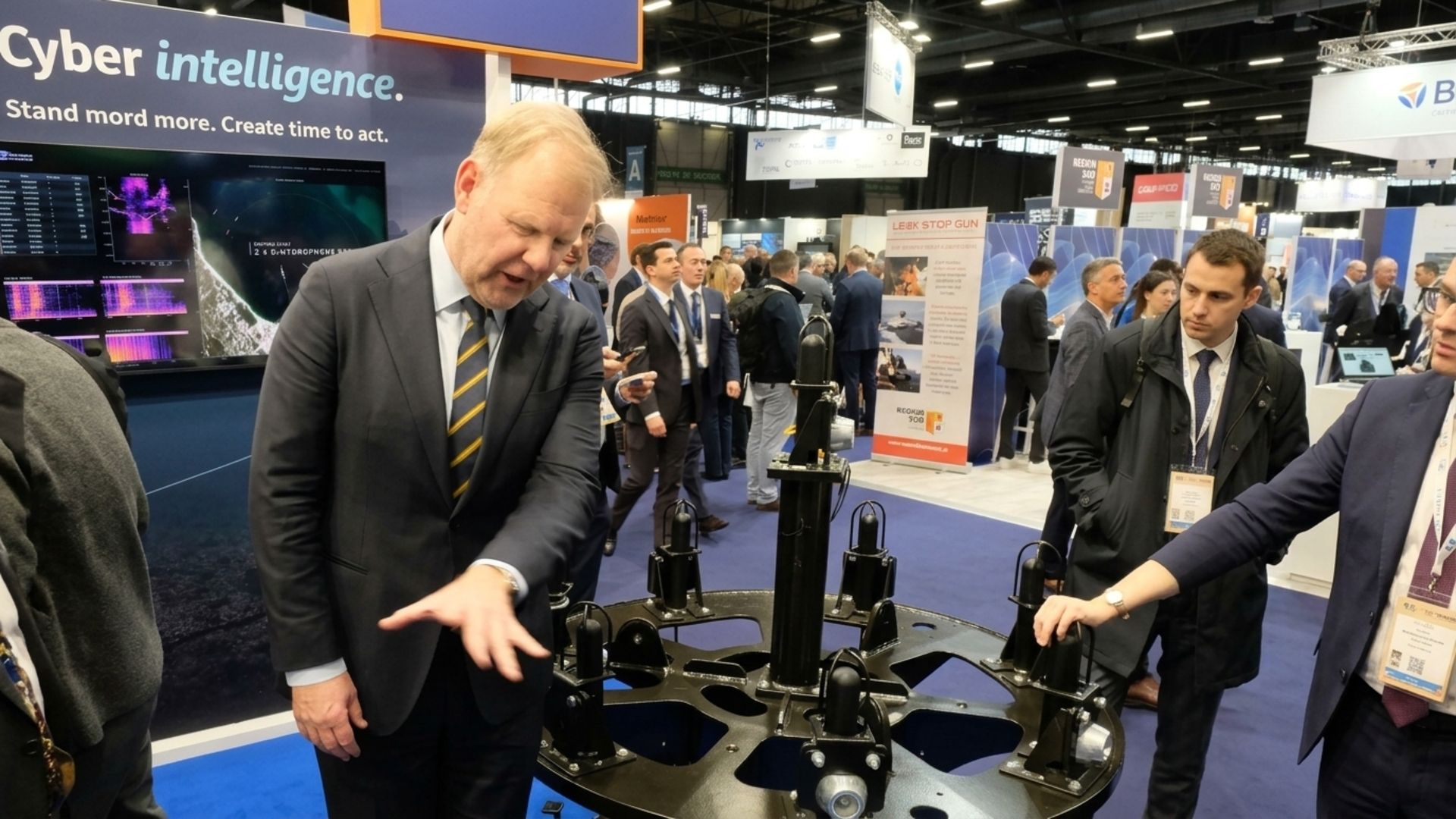
Navies queue up for billion-dollar European miltech company which humbles fiber-optic
Navies lining up for Optics11’s long-range underwater acoustic sensing is a reminder that high-end defense budgets are shifting toward persistent sensing and data, not just platforms. Dual-use founders in sensing, signal processing, and subsea infrastructure should expect more classified pilots and longer, but larger, procurement cycles.
 Deep & Emerging Tech
AMD plans to invest in PsiQuantum as they team up on quantum computers
AMD taking equity in PsiQuantum and supplying Versal FPGAs for fault-tolerant systems is a vertical bet that quantum workloads will lean on classical control silicon. If you’re planning around quantum in the 5–10 year window, assume tighter coupling between quantum vendors and specific classical chip partners—not a fully interchangeable stack.