
Analog Devices agrees to buy privately held Alif Semiconductor, which makes low-power AI processors, for $1.35B in cash, with contingent payments up to $200M
THE SO WHAT
Analog Devices putting $1.35B plus up to $200M earn-out behind Alif’s low-power AI processors underlines a clear thesis: the next growth wave is MCUs that run neural nets locally instead of shipping data to the cloud. Device makers should be revisiting silicon roadmaps now—waiting risks being locked into non-AI parts just as customers start asking for on-device intelligence by default.
READ THE SOURCE
MORE FROM THE WIRE
 Deep & Emerging Tech
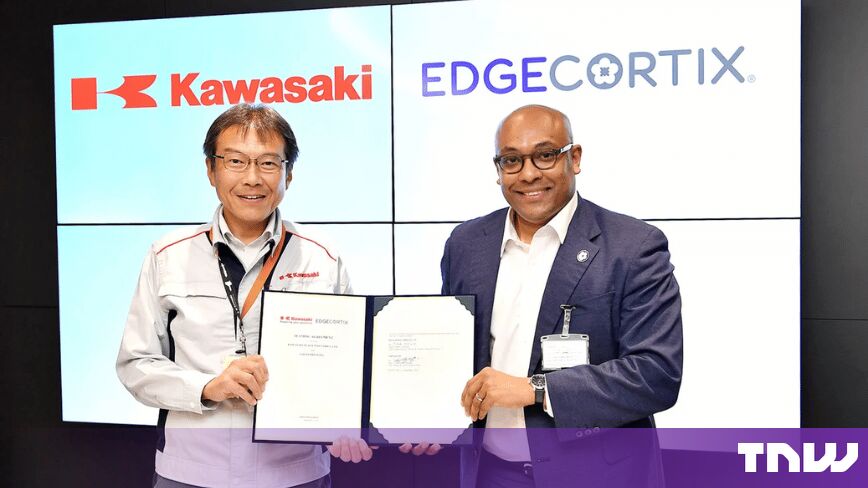
Kawasaki signed an AI chip deal with a startup the Pentagon backs
EdgeCortix landing Kawasaki’s aerial defense platforms under a 2026–2028 teaming agreement shows defense-grade AI compute is fragmenting beyond the usual US hyperscaler and GPU incumbents. If you build for edge or defense, you now have to design and optimize for a more diverse accelerator landscape—start abstracting your inference layer.
 Deep & Emerging Tech
Former IBM Executive Joerg Behrend Joins Q.ANT as VP Hardware
Q.ANT hiring an ex-IBM exec to run hardware underscores that photonic processors for AI and HPC are moving from lab curiosity toward productization. If you’re planning long-term compute strategy, start tracking photonics as a potential complement to GPUs rather than a distant science project.
 Deep & Emerging Tech
Soft freight market impacts trucking businesses
A soft freight market pushing multiple carriers into bankruptcy is a stress test for asset-heavy operators and their lenders. If you touch trucking—software, finance, or equipment—reassess customer credit risk and be ready to support consolidation rather than pure growth.
 Deep & Emerging Tech
Former Google Executive Gina Fratarcangeli Joins Qtonic Quantum
A former Google MD joining Qtonic Quantum to drive AI transformation and alliances is another data point that quantum startups are gearing up for enterprise‑grade go‑to‑market, not just lab demos. If you run infra or data strategy, it’s time to at least map where quantum‑adjacent offerings might plug into your stack over the next 3–7 years.