
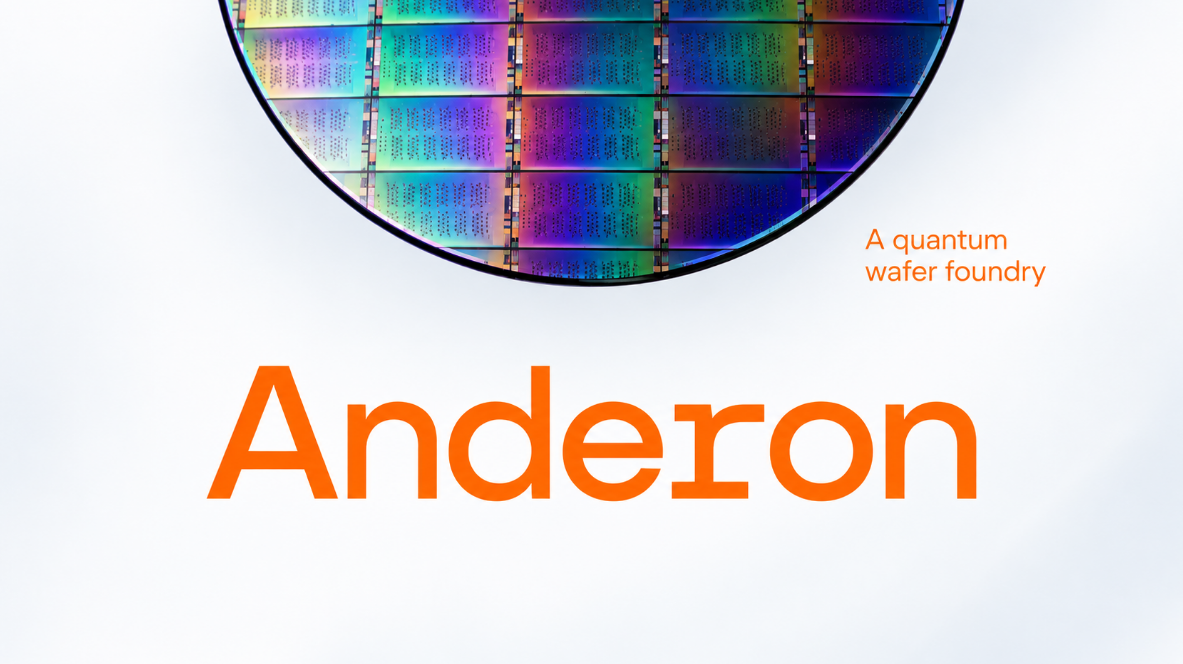
Anderon Finalizes $1 Billion CHIPS Award for Quantum Wafer Manufacturing
THE SO WHAT
A $1 billion CHIPS Act award to Anderon for quantum wafer manufacturing is the US betting that control over quantum fabrication will matter as much as advanced CMOS nodes. Hardware startups in quantum and adjacent fields should assume domestic manufacturing and government alignment will increasingly shape who gets scale capital.
READ THE SOURCE
MORE FROM THE WIRE
 Deep & Emerging Tech
SK Hynix reportedly in talks with Intel to build memory chips in US
If SK Hynix and Intel stand up US-based memory production, AI-era supply chains get a little less Asia-concentrated and a little more policy-driven. Hardware buyers should assume future price and allocation dynamics will be shaped as much by geopolitics and subsidies as by node transitions.
 Deep & Emerging Tech
Clean tech startup Fluxnium found a way to tap 50,000 years’ worth of nuclear fuel
If Fluxnium’s fibers can economically extract uranium from seawater at scale, nuclear shifts from resource-constrained to infrastructure-constrained. For AI and heavy compute operators, the long-term constraint becomes siting, permitting, and grid integration—not fuel scarcity.
 Deep & Emerging Tech
DDR5 RAM pricing appears to be spiralling out of control even more — it's 5.5x pricier than before the memory crisis, and 2027 could get worse
DDR5 at 5.5x pre-crisis pricing with warnings about 2027 means memory, not just GPUs, is now a first-order cost driver for AI and high-performance workloads. Architects should be aggressively optimizing for memory efficiency—model size, batch strategy, and compression—because the DRAM line item may keep climbing.
 Deep & Emerging Tech
Third-party WooCommerce plugin hits WordPress sites with PHP backdoor abusing recently patched vulnerability
A "recently patched" plugin flaw being mass-exploited is a reminder that your risk window is defined by patch latency, not CVE publication. If you run WordPress or WooCommerce at scale, treat plugin inventory and 72-hour patch SLAs as core revenue protection, not IT hygiene.