
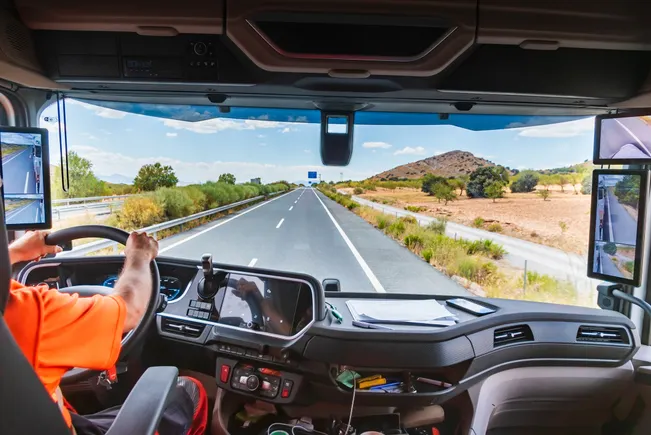
ATRI: The top underutilized telematics that can benefit truckers
THE SO WHAT
If one in three carriers aren’t even integrating their telematics data, the bottleneck in freight isn’t sensors—it’s data plumbing and workflow design. Early signal that logistics operators who actually wire this data into dispatch, maintenance, and pricing will have a durable edge before AI optimization even enters the picture.
READ THE SOURCE
MORE FROM THE WIRE
 Deep & Emerging Tech
Critical Microsoft Authenticator flaw let malicious Android apps steal access to your precious accounts
A single Authenticator bug handing out session tokens is a reminder that your MFA app is now a crown-jewel dependency, not a commodity. CISOs should treat mobile authenticators like privileged infra this week—tighten mobile app policies, harden device posture, and assume at least one factor can fail.
 Deep & Emerging Tech
Ford Fathom will be the cheapest American EV capable of powering a house
Ford pushing V2X into its cheapest house-powering EV per [TechCrunch](https://techcrunch.com/2026/10/27/ford-fathom-will-be-the-cheapest-american-ev-capable-of-powering-a-house/) turns cars into mainstream backup and grid assets, not just transport. Facilities and energy managers should start treating EV fleets as part of their resilience and demand-response planning, not a separate line item.
 Deep & Emerging Tech
Intel to buy quantum software firm Classiq for about $2.3bn
A $2.3B software buy for Classiq says the quantum stack is being treated as a full compute paradigm, not a research sidecar. If you’re betting on accelerated compute, start tracking where your algorithms and workloads could map to quantum toolchains over a 5–10 year horizon.
 Deep & Emerging Tech
Nuclear power at sea: Seattle startup targets Norway for ships and floating power plants
Emerald Nuclear’s Norway-backed project targeting a 2031 commercial deployment per [GeekWire Startups](https://www.geekwire.com/2026/nuclear-power-at-sea-seattle-startup-targets-norway-for-ships-and-floating-power-plants/) is an early move toward nuclear as mobile maritime and offshore baseload. Port operators, shippers, and offshore asset owners should start mapping how regulatory, fuel, and insurance regimes would change if nuclear-powered vessels become viable.