

China Defies US Restrictions and Builds the World’s Fastest Supercomputer
THE SO WHAT
A Chinese system topping speed charts without GPUs shows that compute advantage can route around export controls via alternative architectures. For operators, the takeaway is resilience—don’t overfit your stack to a single vendor or chip type when the performance frontier is clearly diversifying.
READ THE SOURCE
MORE FROM THE WIRE
 Deep & Emerging Tech
‘Crypto v community’: 4,000 local US lenders join forces to fight ‘stablecoins’ law
When 4,000 community banks argue a stablecoin law could pull $850B of lending out of rural economies, the fight is about credit creation, not token ideology. If you touch payments or lending, expect regulatory compromises that hard-bake which rails can hold deposits and originate loans.
 Deep & Emerging Tech
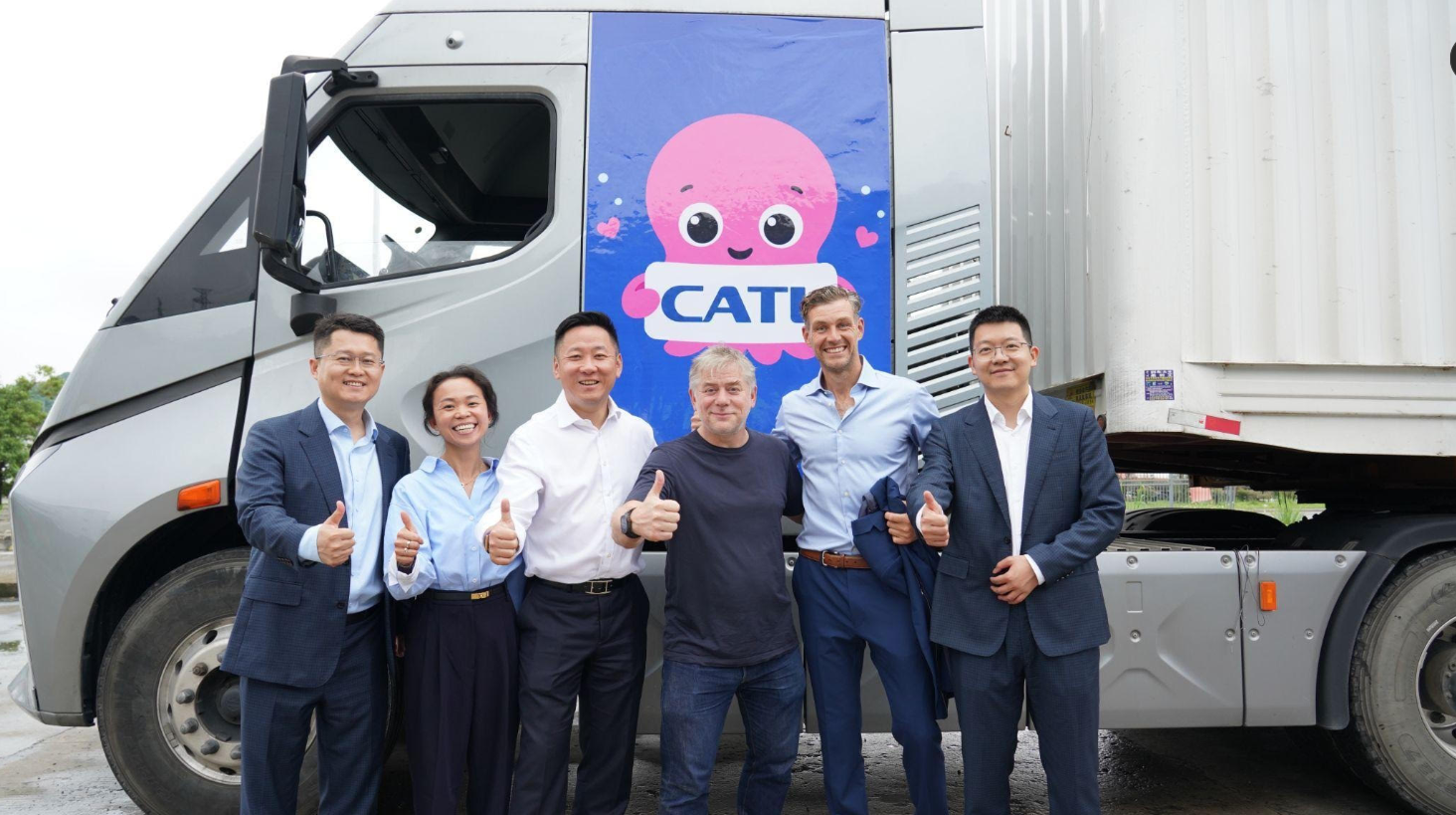
Battery swapping for EV trucks to go mainstream as Octopus teams with CATL to service 300,000+ electric trucks across Europe
Designing battery-swapping hubs for 300,000+ electric trucks in Europe turns heavy EVs into an energy-logistics problem, not a charging problem. Fleet operators should start modeling routes, dwell times, and contracts around swap networks and storage arbitrage, not just depot chargers.
Kevin O'Leary has entered a new villain era
When celebrity investors are barnstorming towns to sell data centers, you know local permitting and public sentiment have become gating factors in AI infra deployment. If your roadmap assumes frictionless access to land, power, and water, you’re underestimating the politics layer.
 Deep & Emerging Tech
A rare supernova peeled back a star’s layers and revealed a hidden secret
Astrophysicists getting a rare look at a star’s interior is a pure science win, but the operator takeaway is about instrumentation—rare, high‑fidelity events can validate or overturn long‑held models. In your own systems, log and study the “supernova moments” instead of smoothing them out; they often contain the structural truths your averages hide.