
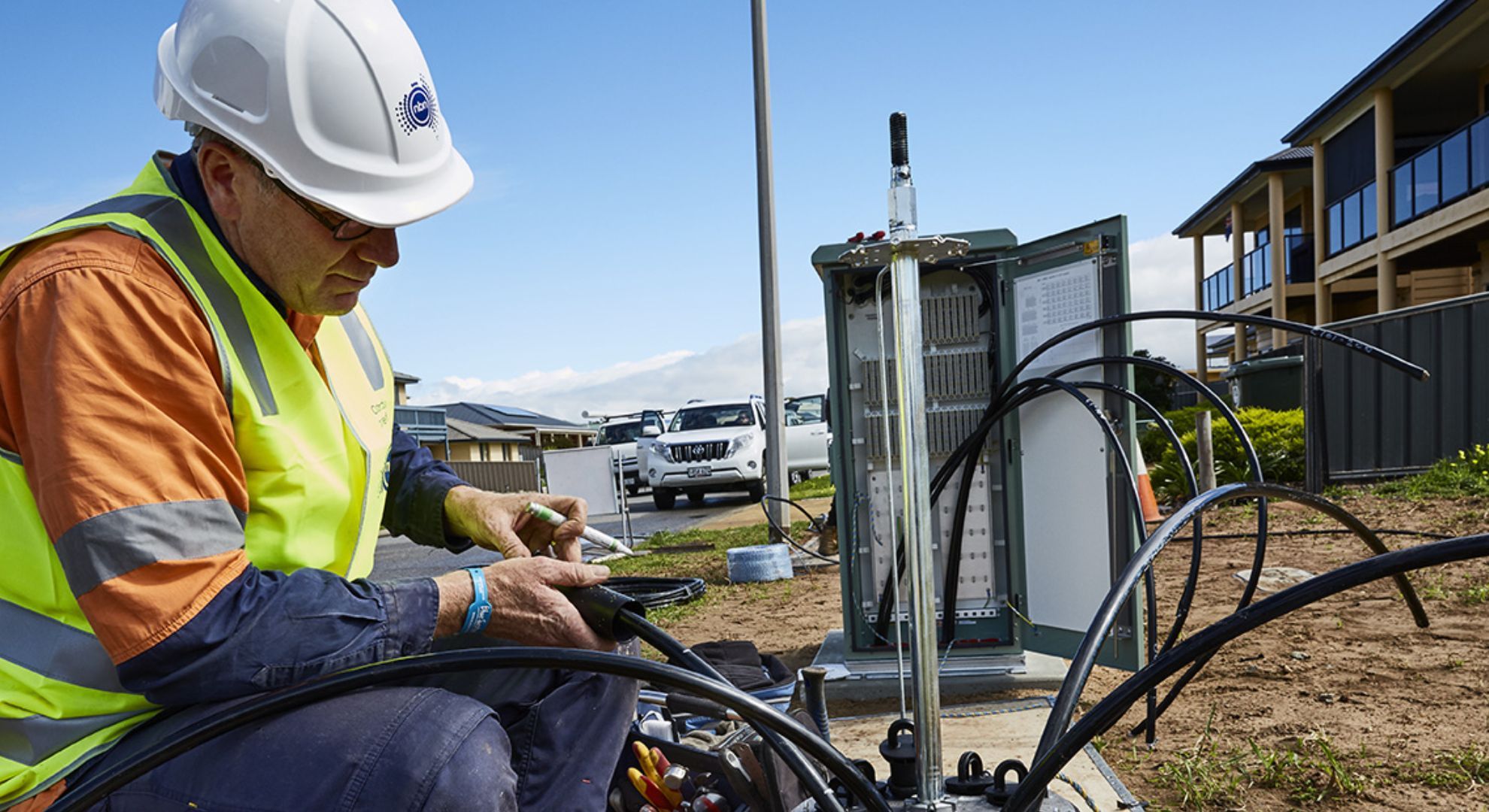
Chinese firm's fiber trial hits staggering 51.3 Tb/s over 128 miles without signal regeneration — could this be an end to bandwidth bottlenecks?
THE SO WHAT
51.3 Tb/s over 206.5 km without regeneration is backbone, not last‑mile — it buys headroom for AI data center interconnects and metro fabrics before you hit optical limits. If you’re planning multi‑site training or inference clusters, start treating dark fiber and next‑gen optics as a core part of the AI infra stack, not an afterthought to GPUs.
READ THE SOURCE
MORE FROM THE WIRE
 Deep & Emerging Tech
Live coverage: Semiconductor manufacturing test bed to fly alongside Starlink satellites on Falcon 9 launch
Semiconductor manufacturing pods hitching a ride on a Starlink Falcon 9 launch point to a future where parts of the chip supply chain move off-planet—microgravity process advantages plus orbital redundancy. For hardware and infra operators, this is an early signal to track: long-term resilience planning for compute may eventually include space-based fabs as a hedge against terrestrial chokepoints.
 Deep & Emerging Tech
'Advances in quantum research and development have shifted the risk horizon': Microsoft says it is ramping up its quantum computing security work
A 2029 target for broad post-quantum migration means crypto agility just moved from theory to dated project plans. If your org has long-lived sensitive data, you need an inventory of vulnerable protocols and vendors this year, not when your cloud provider sends a deadline email.
 Deep & Emerging Tech
Hong Kong now handles more than half of China’s chip imports
Hong Kong becoming the conduit for more than half of China’s $239B in chip imports turns the city into a geopolitical choke point for advanced compute. If your supply chain touches Chinese fabs or OEMs, treat Hong Kong routing and export controls as a single risk surface, not separate issues.
Deep & Emerging TechA look at the troubled rollout of the EU's automated biometric entry/exit border system, as airport operators warn of severe delays ahead of the summer holidays
The EU’s automated biometric border system shows how a security-first design can still fail operationally if throughput and exception handling are under-modeled. Any operator deploying biometric or AI-driven access control at scale should stress-test for peak-load friction and public tolerance, not just accuracy metrics.