
Copper Set to Give Australia’s Mining Stock Rally a New Engine
THE SO WHAT
AI and grid build-out are now directly driving upstream demand — surging copper needs for power infrastructure and data centers are turning miners into indirect AI beneficiaries. If your AI roadmap is compute-heavy, factor commodity and grid constraints into long-term cost models, not just chip pricing.
READ THE SOURCE
MORE FROM THE WIRE
 Deep & Emerging Tech
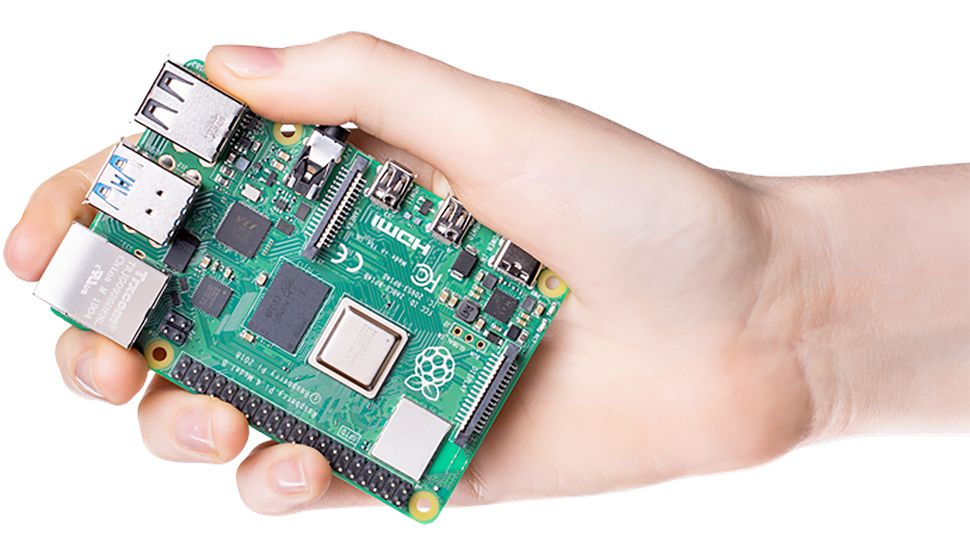
'Don't waste your time': Raspberry Pi expert reveals users are essentially unable to swap out RAM chips for repairs or upgrades
Locked-down RAM on Raspberry Pi undercuts its role as a truly modular, repairable edge platform — useful context if you’re planning fleets of Pi-based devices. For hardware roadmaps, assume you’re buying fixed SKUs, not upgradable nodes, and design your cost and lifecycle models accordingly.
Thieves stole an Nvidia-branded trailer filled with nothing but 20,000 pounds of sand
People are now stealing trucks just because they have an Nvidia logo—perception of AI hardware value is driving opportunistic crime. If you move anything that might plausibly be GPUs, tighten physical security and routing this quarter, even if the cargo is “just” components or decoys.
 Deep & Emerging Tech
Europe and UAE plan $1 billion orbital data center with 50 connected "computers" and a central "LLM store" that allows users to select what open source model to use on data collected by satellite sensors
An in-orbit “LLM store” tied to 50 AI-equipped EO satellites is a bet that the bottleneck in space data is now on-orbit processing and model choice, not downlink. If you depend on geospatial data, start mapping which workloads could move from batch ground analysis to near-real-time orbital inference and what that does to your latency and bandwidth assumptions.
 Deep & Emerging Tech
AI is supercharging hacking, and your local hospitals and banks aren’t ready
If AI is lowering the skill floor for attackers while hospitals and local banks still run fragile, underfunded IT, the asymmetry is getting worse, not better. Boards in regulated sectors should treat AI-augmented intrusion and fraud as a present risk and re-baseline security budgets, incident playbooks, and vendor requirements accordingly.