

Did ChatGPT give you a perfect answer? Use this prompt to find out why
THE SO WHAT
Meta-prompts that dissect why a response worked are turning prompt craft into an inspectable, repeatable asset. Teams should start treating high-performing prompts like code—versioned, documented, and shared across the org, not left in individual chat histories.
READ THE SOURCE
MORE FROM THE WIRE
 Applied AI
Claude Sonnet 5 costs $2 per 1M input tokens and $10 per 1M output tokens through August 31, after which prices rise to $3 and $15, respectively
Anthropic is using a time-boxed discount window on Sonnet 5 to pull real agent workloads onto its stack before Labor Day—your cost models for pilots vs. production need to reflect the post-August 31 pricing, not the teaser rate. If you’re locking in contracts or budgeting for high-output agents, model against $3 / $15 now and treat the current pricing as a temporary subsidy.
 Applied AI
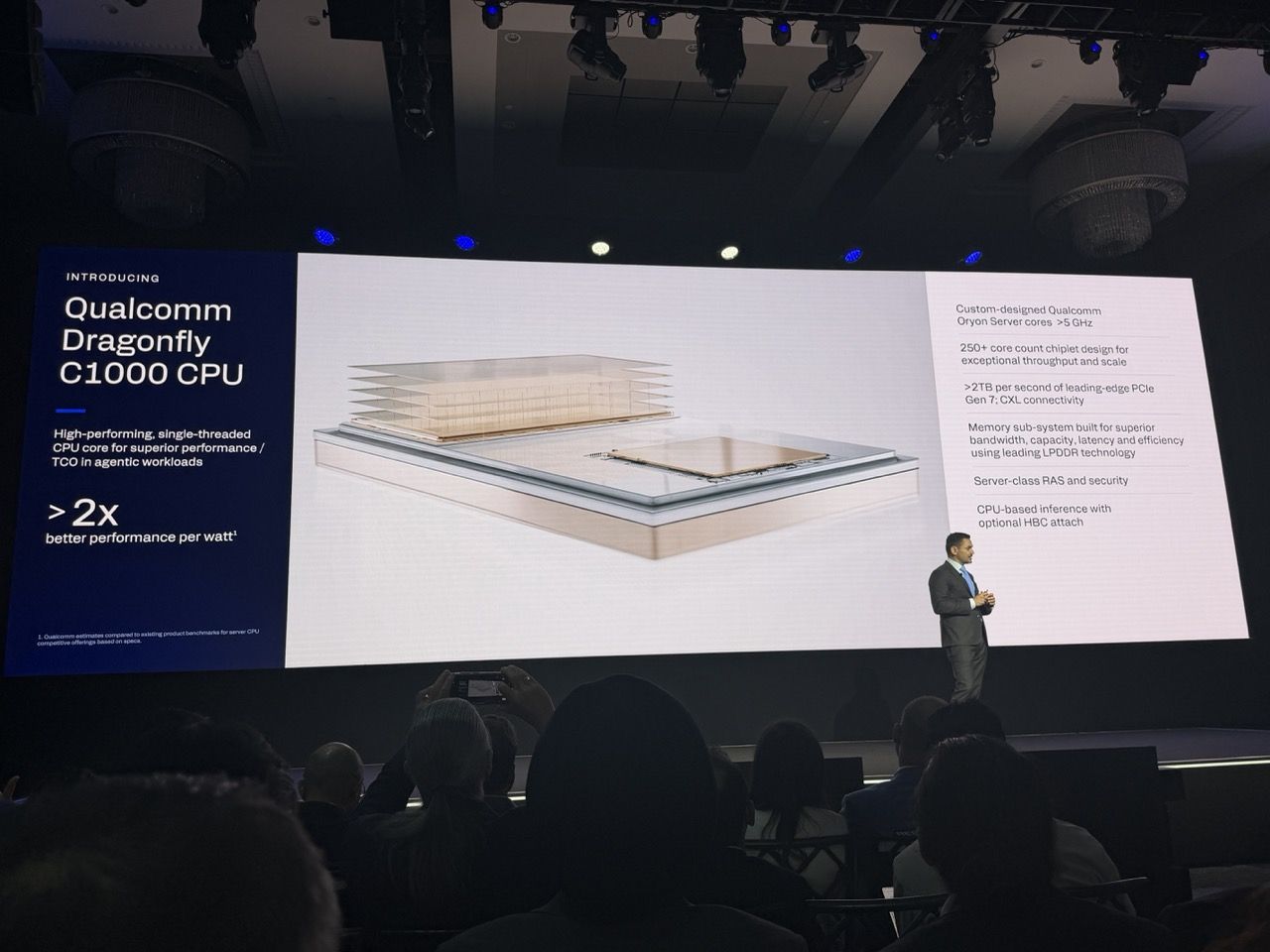
Qualcomm targets Nvidia, AMD, Huawei with Dragonfly AI accelerator rack loaded with 43TB of LPDDR5x, future generations set to smash 7PB/s bandwidth
Qualcomm is betting that LPDDR5x plus its proprietary HBC can win inference on cost and power, not just raw FLOPs—43 TB per rack and future 7 PB/s bandwidth is a direct play at memory-bound workloads. If you’re building large-scale inference services, start tracking HBM-free architectures as a hedge against both cost and supply volatility in HBM-heavy stacks.
 Applied AI
Schneider Electric buys industrial-AI firm Cognite for $3.1bn
A $3.1B all-cash buy for Cognite says OT vendors now see industrial AI software as core IP, not a partner ecosystem add-on—Schneider wants factories and grids that ‘think for themselves’ sitting directly on its stack. If you run heavy industry, expect your control-system providers to bundle more AI natively and re-evaluate whether you still want a neutral data layer in the middle.
 Applied AI
Anthropic launches Claude Sonnet 5, saying it nears Opus 4.8 performance at lower prices and is substantially better than Sonnet 4.6 for agentic work
Near-Opus 4.8 performance at Sonnet pricing, tuned for planning and tool use, compresses the premium you pay for top-tier models in agent workflows. If you’ve been reserving your heaviest agents for only the most valuable tasks, this is the moment to re-benchmark and see which can drop to a cheaper-but-capable tier without losing reliability.