
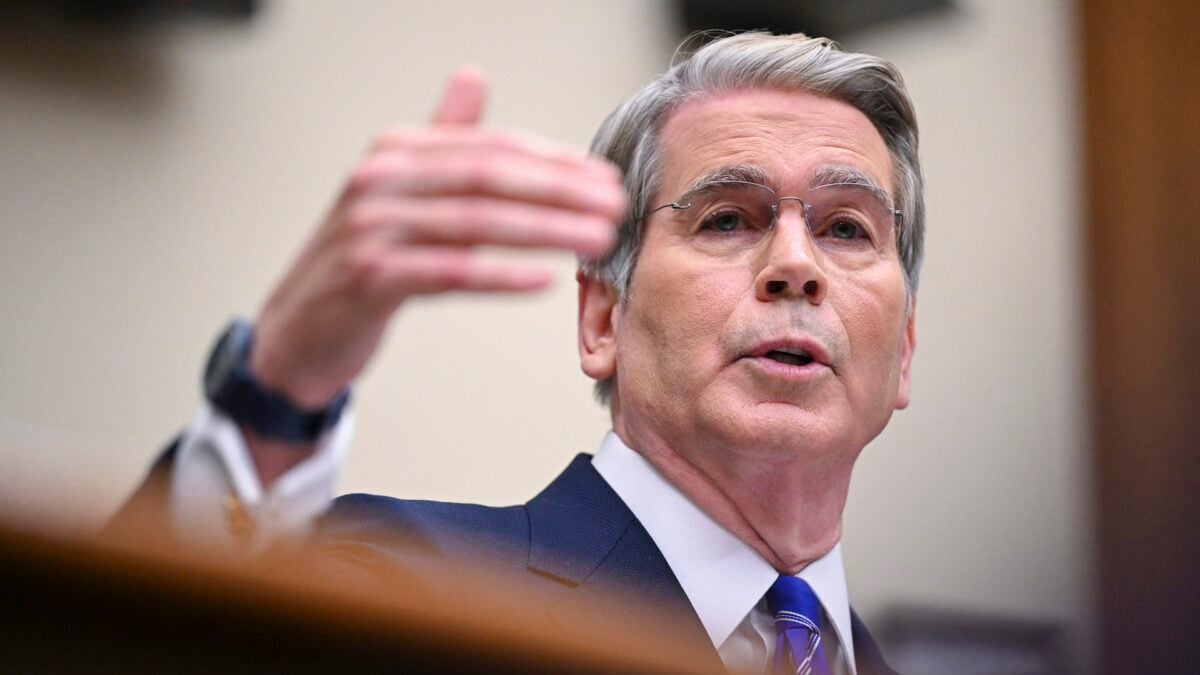
Don’t Give AI Companies What They Want, U.S. Treasury Secretary Tells Lawmakers
THE SO WHAT
A U.S. Treasury Secretary telling lawmakers that "the best way to guarantee safety" is making creators liable for what their models generate puts product liability squarely on the table. If you ship AI systems, start modeling what downstream harms you could realistically be held responsible for—and adjust logging, guardrails, and insurance accordingly.
READ THE SOURCE
MORE FROM THE WIRE
 Applied AI
AI labs want in-house auditors — but maybe they should shut the front door first
If your model endpoints and agent permissions are wide open, an in-house "auditor" is theater, not safety. Operators should be hardening access controls, identity, and sandboxing now—treat eval teams as a second line of defense, not the first.
Why Siri AI isn't automatic after your iOS 27 update
Apple making Siri AI opt-in after iOS 27 means default usage curves will be slower and more segmented than the hype suggests. If you’re betting on iOS-native assistants as a distribution channel, assume a gradual ramp and design flows that work without the new Siri being enabled.
Airplane parts need thorough inspections, and AI can help — but only if data is up to snuff
Safran leaning on Loopr AI and synthetic data for defect inspection underscores a hard constraint—safety-critical AI is only as good as the labeled and synthetic data behind it. If you operate in regulated manufacturing, your real moat is data curation and simulation pipelines, not just model choice.
 Applied AI
OpenAI, Anthropic Safety Talks Stir Startup Concerns
When frontier labs ask governments to "pace" development, startups hear: the rules may be written by whoever is already at scale. Early-stage teams should be engaging in standards and policy forums now—waiting risks waking up to compliance regimes only large labs can easily satisfy.