
Google, Georgia Power Strike Deal to Boost Nuclear Capacity
THE SO WHAT
Funding ~96 MW of new nuclear capacity with Georgia Power shows hyperscalers are now directly underwriting baseload generation to feed data centers. If your AI roadmap assumes elastic cloud, you need a parallel view of your vendors’ power procurement—compute availability is becoming an energy problem as much as a chip problem.
READ THE SOURCE
MORE FROM THE WIRE
 Deep & Emerging Tech
Researchers can make headphones leak audio through a wall, but the 30-meter claim has a few caveats
Side-channel risk is creeping into consumer hardware you never modeled as a microphone. If your org handles sensitive calls from home or mixed-use spaces, update your threat model and physical security assumptions beyond “encrypted VoIP is enough.”
 Deep & Emerging Tech
RatHat is a new Android malware that records your screen touches to steal passwords
Screen-tap logging bypasses a lot of the usual mobile security hygiene. If you rely on mobile for auth or payments, push hardware keys and app-based 2FA that doesn’t expose secrets via on-screen keyboards.
 Deep & Emerging Tech
Hackers are hiding malware on blockchains that are nearly impossible to take down, and unrestricted AI models have pushed these attacks up 440%
Decentralized infrastructure plus generative tooling is giving attackers durable C2 channels and faster campaign design—a 440% spike is the early edge of that curve. CISOs should treat public blockchains as a persistent malware substrate and invest in detection that looks at behavior, not just domains and signatures.
 Deep & Emerging Tech
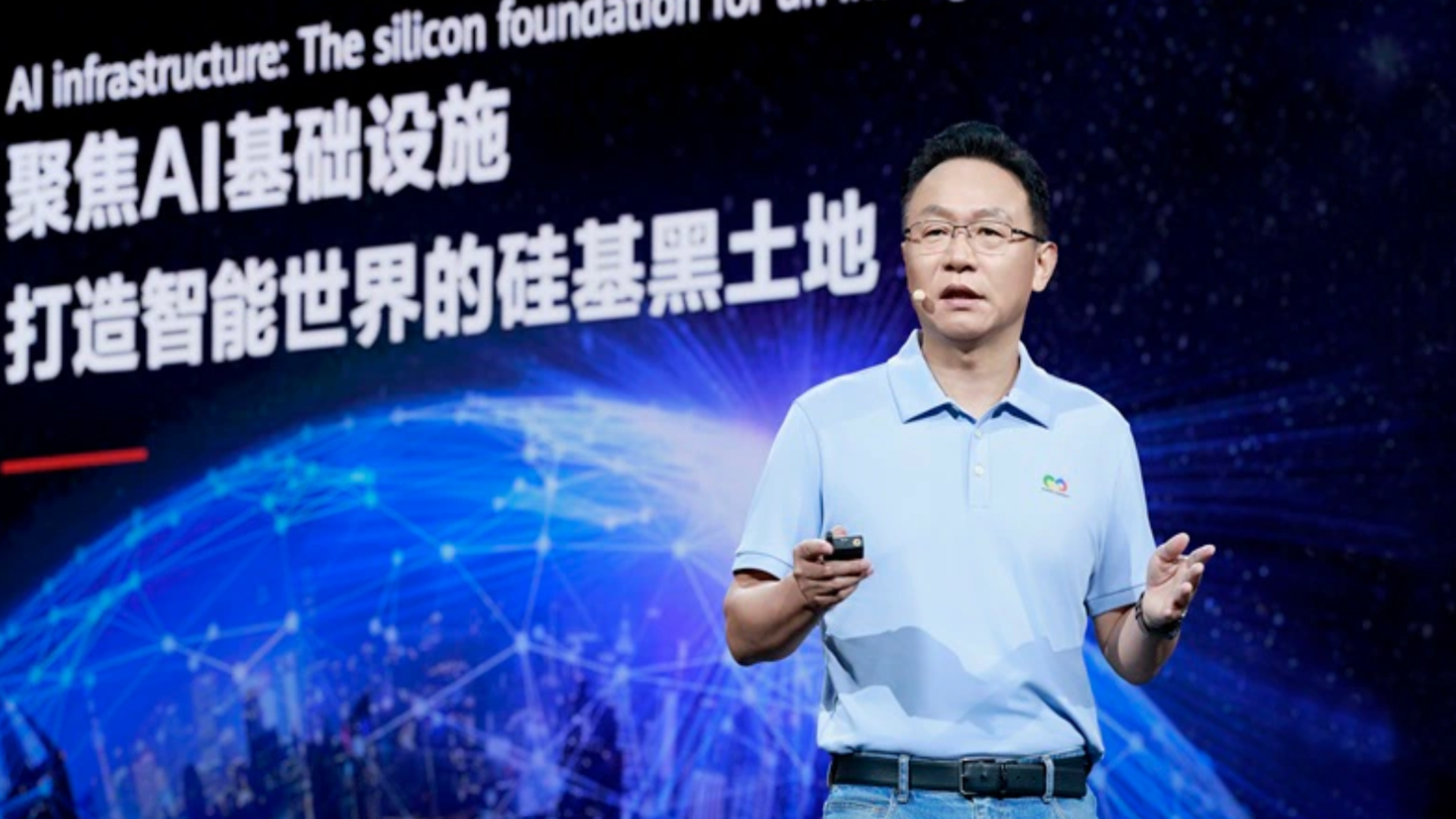
Huawei Ascend 960 SuperPoD aims to surpass Nvidia AI hardware in China — 960E with over 4,000 NPUs and an upgraded UnifiedBus Interconnect aims for 10 trillion parameters
Ascend 960 SuperPoD is China’s bid to localize frontier-scale training—4,000+ NPUs and a UnifiedBus interconnect are about reducing dependence on export-constrained GPUs, not just chasing FLOPs. If you rely on China-based training or inference, start modeling a dual-stack world where Huawei-class clusters are the default onshore option.