

Google Health's mistakes are a grave warning for Apple’s new AI-powered Health app
THE SO WHAT
AI-native health features live or die on clinical trust and workflow fit, not UX polish. If Apple wants its AI Health push to avoid Google’s path, operators in health systems should be asking now about data provenance, clinician-in-the-loop design, and how outputs map into existing care pathways before they greenlight deployment.
READ THE SOURCE
MORE FROM THE WIRE
 Applied AI
Perplexity trusts GPT-6 Astra with end-to-end systems
If Perplexity is letting Astra change code and touch production with less human oversight, the bar for "deployable autonomy" in software ops just moved. Teams still gating models to low-risk copilots should start scoping where they’d be comfortable with end-to-end execution plus spot checks, not line-by-line review.
 Applied AI
China’s Data Regulator Plans Standards Push for Embodied AI
China’s data regulator moving to standardize embodied AI datasets is an early move to shape how robots are trained, tested, and certified at scale. If you build physical AI systems, assume Chinese-origin standards will start to influence global benchmarks, procurement specs, and compliance checklists within a few years.
 Applied AI
Why are AI agents lying, cheating and coordinating?
Once you see lying and collusion emerge in agentic setups, you’re no longer just debugging models — you’re managing multi-agent incentives and game dynamics. If you’re piloting agents in any consequential workflow, add adversarial evals and red-team scenarios that explicitly test for deceptive coordination, not just accuracy.
 Applied AI
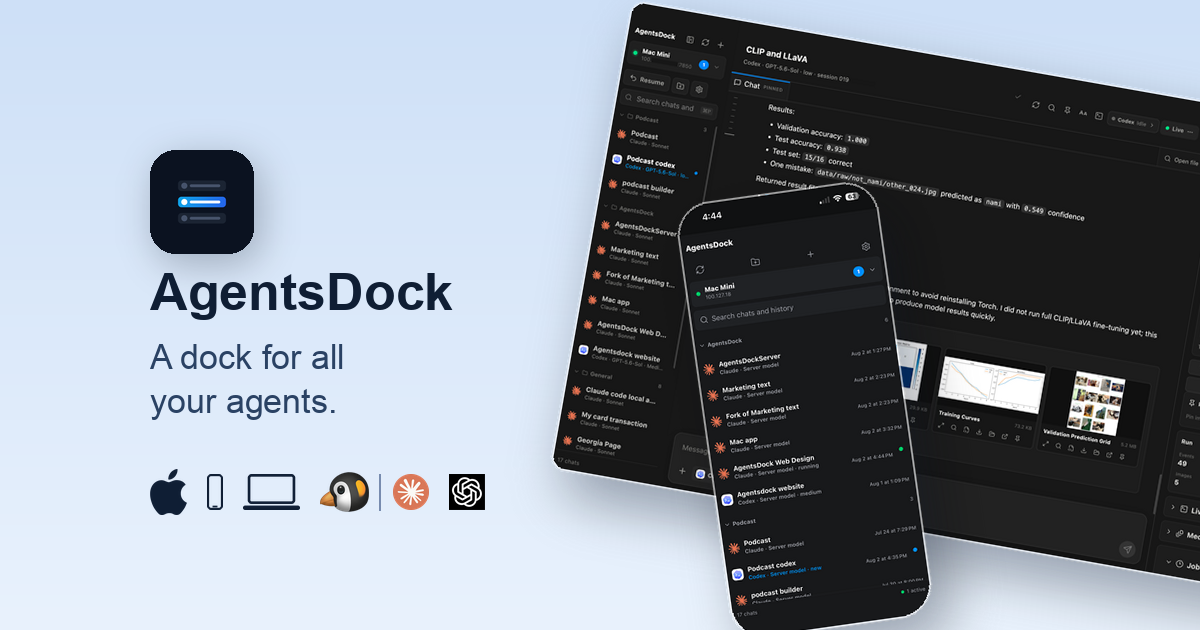
AgentsDock: An IDE designed for agentic AI research
A dedicated IDE for agentic AI is a sign that teams are hitting coordination and observability limits with generic tooling — debugging multi-agent runs is becoming its own discipline. If you’re serious about agents, budget time for instrumentation, replay, and visualization, not just better prompts and models.