

Google plans to end Pixel production in China by 2027
THE SO WHAT
Google shifting all Pixel hardware out of China by 2027 is another data point in the slow-motion supply chain redomiciling. If you rely on Chinese manufacturing for critical SKUs, start mapping alternative capacity in Vietnam, India, or elsewhere before your vendors are fully booked.
READ THE SOURCE
MORE FROM THE WIRE
 Deep & Emerging Tech
Chip Stocks Get Hit as Global Bond Anxiety Builds
Rising yields and macro anxiety hitting chip stocks show how fragile the AI capex trade is to financing costs. If your roadmap assumes cheap capital for GPUs or data centers, stress-test scenarios where financing tightens and prioritize deployments with near-term cash returns.
 Deep & Emerging Tech
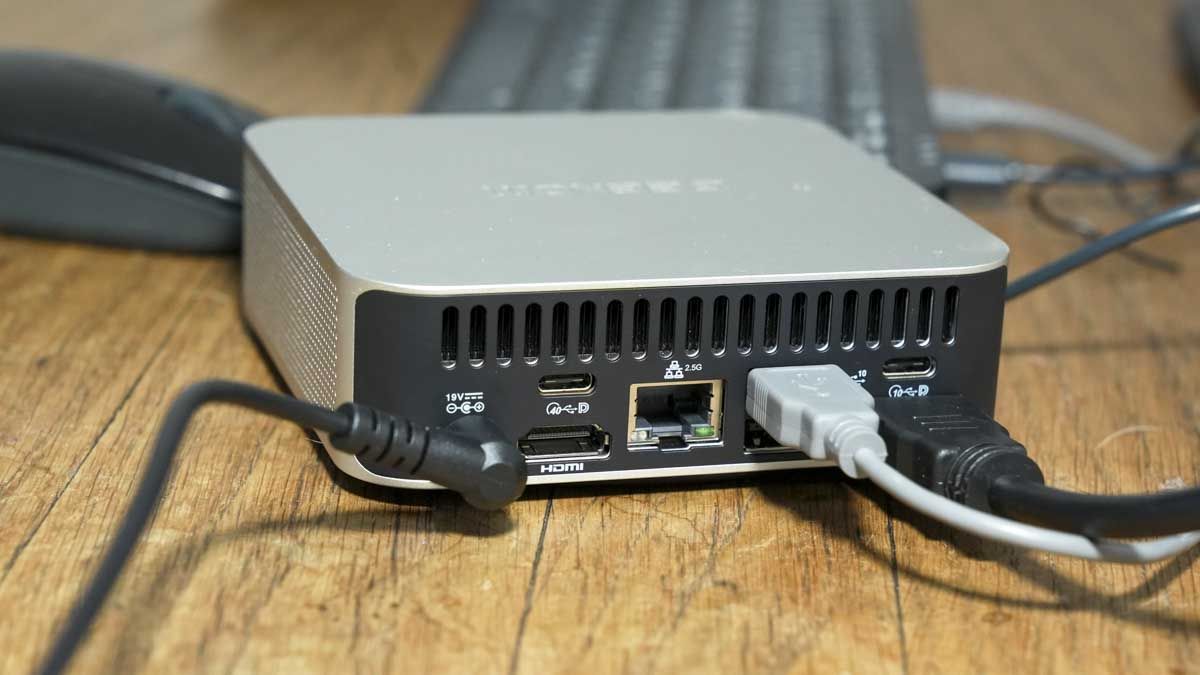
Geekom reveals multiple mini-PCs may be infected with malware hidden in a network driver — but it's now down to you to fix your PC
Malware hiding in a shipped LAN driver is another reminder that the supply chain, not your perimeter, is often the weakest link. If you deploy fleet hardware, bake driver and firmware integrity checks into onboarding and don’t assume OEM images are clean.
Deep & Emerging TechWhat Are Flock Cameras? Why Are They So Controversial?
Networked ALPRs turning vehicle movement into queryable history is a structural shift in how physical presence is logged and governed. If your product touches mobility, public safety, or local government, assume data exhaust from these systems will become both an integration surface and a policy constraint.
Deep & Emerging TechVelaura AI, which is developing low-power chips for data centers and physical AI applications, like robotics, raised a $110M Series A at a $1B+ valuation
A $110M Series A at a $1B+ valuation for low-power AI chips is a bet that energy and thermals will be the binding constraint for both data centers and physical AI. If you’re planning large-scale inference or robotics deployments, start modeling TCO with power as a first-class variable—not an afterthought in the cloud bill.