

Ground Robots Inherit the Kill Zone
THE SO WHAT
Autonomous and remotely operated ground robots moving into active kill zones in Ukraine mark a step-change in how cheap, networked autonomy reshapes conflict. Defense and dual-use robotics teams should assume rapid doctrinal learning from this theater will harden requirements and accelerate procurement for off-the-shelf platforms.
READ THE SOURCE
MORE FROM THE WIRE
 Robotics & Autonomy
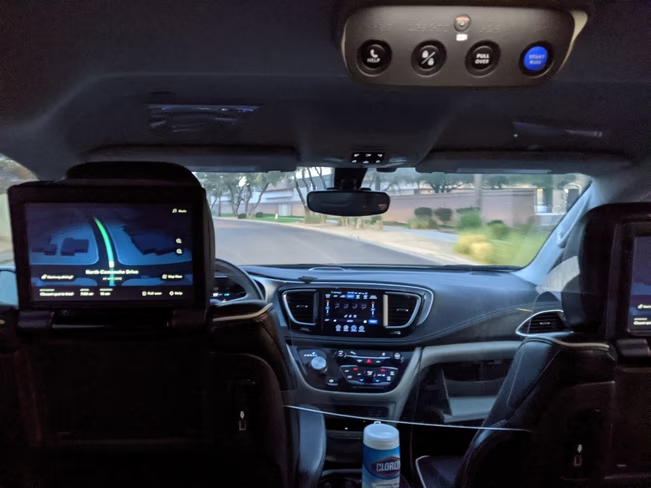
The US wants to delete the steering wheel. The EU wants a camera on your face
Regulators are diverging at the human–vehicle interface: the U.S. flirts with full driverless, while Europe doubles down on driver monitoring. Auto and AV teams will need region-specific hardware and compliance roadmaps—there’s no single global cockpit design anymore.
 Robotics & Autonomy
The more I watch the new NEO robot video the creepier it gets
The reaction to NEO’s new robot underscores that human comfort is now a design constraint alongside dexterity and speed. Humanoid and high-DOF robot teams should be testing for “creep factor” with users early—social acceptance will shape where these machines can actually be deployed.
 Robotics & Autonomy
‘Physical AI is Europe’s last chance to be useful to the world’
If Europe treats ‘physical AI’ as a thesis, not a slogan, it has a path to compound its strengths in manufacturing, regulation, and safety into exportable systems. Operators in EU industry should be mapping where autonomy at the edge can be bundled with existing hardware and logistics footprints before US and Chinese vendors set the standards.
 Robotics & Autonomy
Didi-Backed Autonomous Truck Firm on Profitability
A Didi-backed autonomous freight firm talking about profitability in ~2.5 years suggests some AV logistics models are maturing into real P&Ls, not perpetual pilots. Shippers and 3PLs should be running small contracts now to understand where autonomy can lock in cost or reliability advantages on specific lanes.