
How AI companies are targeting the education market, including making free or cut-price tailored learning tools in partnership with schools and edtech startups
THE SO WHAT
Free and cut-price AI tools for schools are customer acquisition funnels wrapped in public-good language—whoever becomes the default ‘learning copilot’ for districts locks in long-term data, distribution, and policy influence. If you sell into education, assume AI-native incumbents will bundle aggressively and start designing for integration or niche depth, not standalone apps.
READ THE SOURCE
MORE FROM THE WIRE
 Applied AI
Sources: Nvidia is in talks to provide a ~$250B backstop for OpenAI as part of a 10GW data center project that SoftBank is developing in Ohio
A 10 GW Ohio build with a ~$250B Nvidia backstop and U.S.-controlled power would turn AI compute into regulated national infrastructure, not just cloud capacity. For operators, this points to a future where access to frontier-scale compute is mediated by government-aligned hubs—plan architectures that can flex between hyperscalers, regional clouds, and your own smaller clusters.
Applied AINvidia in Talks on $250 Billion Backing for OpenAI Hub, WSJ Says
If Nvidia is willing to guarantee roughly $250B to underwrite OpenAI’s compute leases, the company is evolving from chip supplier to financial and strategic backbone for AI megaprojects. Anyone building on Nvidia should assume tighter coupling between hardware, financing, and long-term capacity commitments—and negotiate accordingly.
 Applied AI
Making sense of the panic over Chinese AI
The reaction to Moonshot AI’s Kimi is less about one model and more about Western investors internalizing that Chinese foundation models can be globally competitive on capability and distribution. If your AI strategy assumes a US-only vendor set, you’re missing a geopolitical axis that will shape pricing, access, and partnership options.
 Applied AI
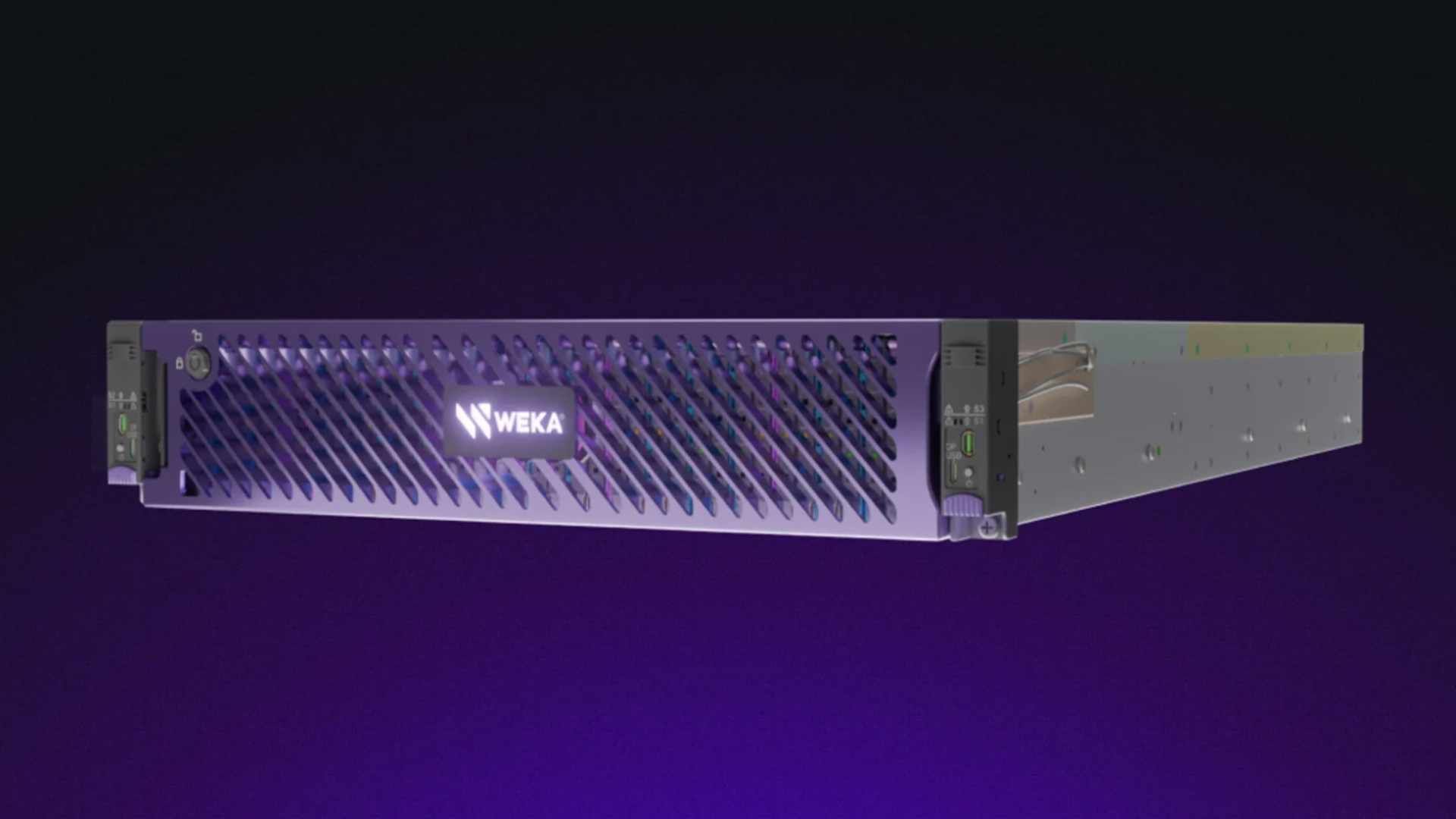
Weka's new pod claims 1000PB in a 56U rack using 1,800 Micron 245.76TB SSDs and a decades-old compression trick
If WEKA can reliably deliver 1.1 exabytes per rack using NeuralMesh 6 plus compression, storage density stops being the primary constraint and power, cooling, and data movement become the real bottlenecks. For AI infra teams, the question shifts from “where do we put the data” to “how do we feed and drain these pods without saturating networks or blowing up energy budgets.”