
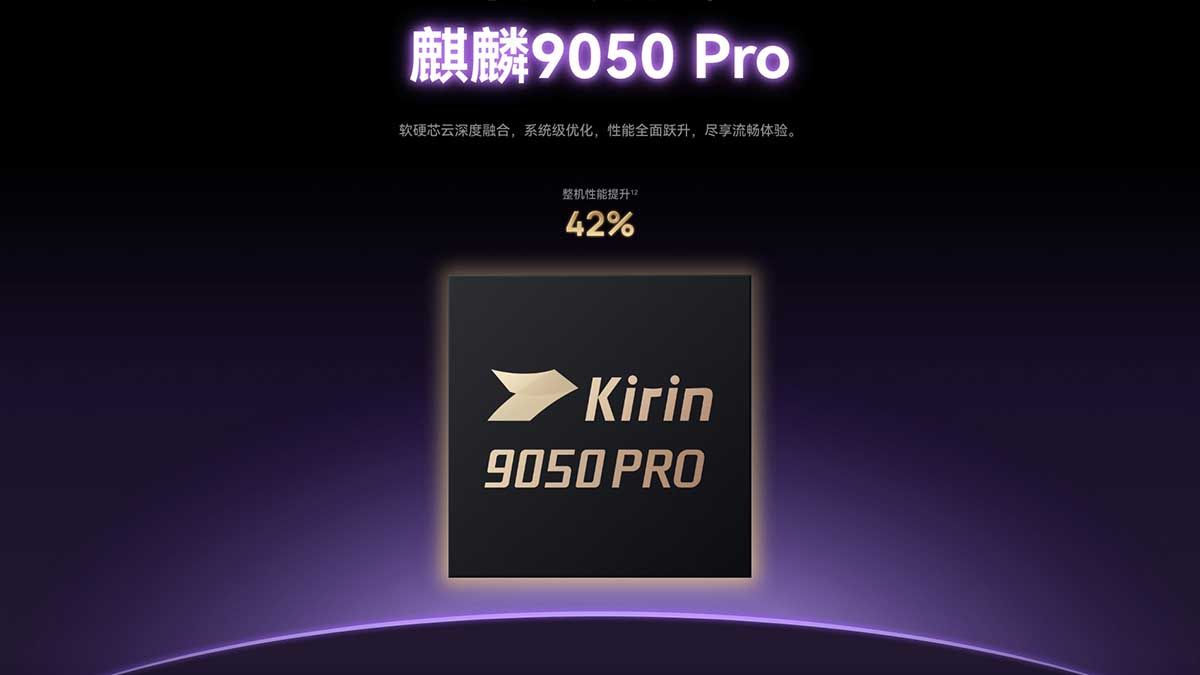
Huawei says its new smartphone chip is entirely free of any US-made components
THE SO WHAT
A Kirin 9050 Pro that is fully non‑US is a concrete step toward a parallel mobile silicon stack that’s sanction-resilient. If your distribution or revenue depends on US-controlled chips, treat this as a prompt to model scenarios where key markets run on alternative hardware and software ecosystems you don’t control.
READ THE SOURCE
MORE FROM THE WIRE
 Deep & Emerging Tech
Blackstone Seeks $8 Billion for Green Infrastructure Credit Fund
Blackstone chasing at least $8B for renewables and digital infrastructure credit is a bet that power, grid, and data assets will be the choke points of the next decade. If your AI roadmap assumes cheap, abundant energy or easy data center siting, start modeling financing and permitting risk alongside compute.
Deep & Emerging TechMoneyGram CEO on Launch of New Payments Card
MoneyGram pushing ahead with a new payments card despite regulatory uncertainty around the Clarity Act shows incumbents won’t wait for perfect policy before iterating. If you’re in payments or fintech, design products with modular compliance so you can adapt quickly as legislation finally lands.
 Deep & Emerging Tech
The AI data center boom is colliding with cities scarred by big industry
Community pushback in places like Philadelphia shows AI data centers are inheriting the political baggage of refineries and heavy industry—land, noise, water, and trust. If you rely on hyperscale capacity, track local permitting and community sentiment as real constraints, not just line items for your cloud provider.
Deep & Emerging TechThese 4 stocks could benefit most from a $3.2 trillion semiconductor opportunity
A BofA call for a $3.2T semiconductor market by decade’s end assumes AI demand more than offsets any cyclical slowdown. For operators, the takeaway isn’t stock picking—it’s that silicon supply, pricing, and vendor leverage will keep shifting, so avoid hardwiring your stack to a single chip or board design.