
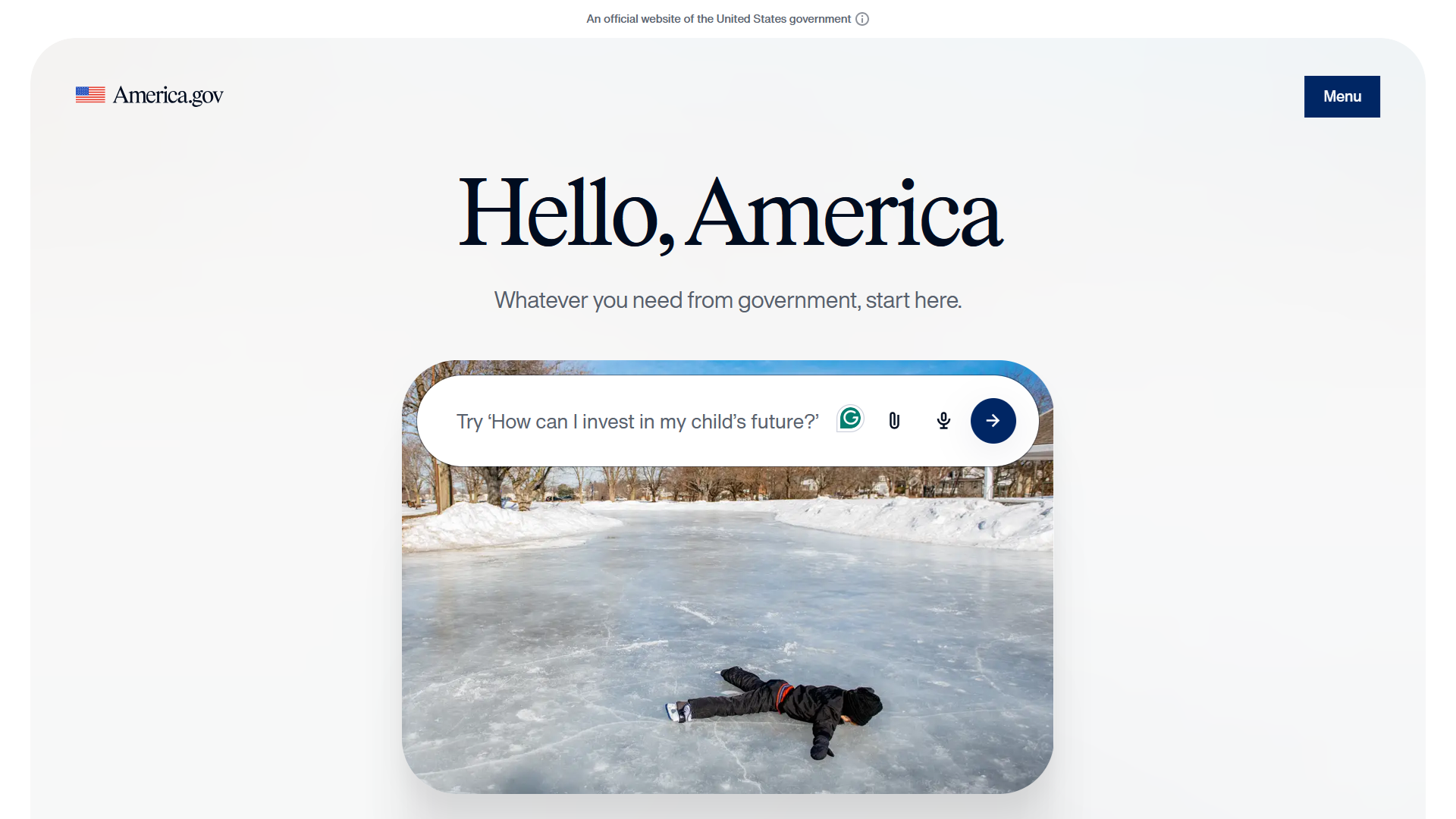
I tried America.gov, and I'm wary of trusting it with my data
THE SO WHAT
An AI-powered America.gov that raises more concern about data handling than model quality is a warning shot for any org deploying assistants on sensitive domains. If you’re rolling out AI interfaces around identity, benefits, or legal guidance, treat privacy UX and data governance as product features, not compliance afterthoughts.
READ THE SOURCE
MORE FROM THE WIRE
 Applied AI
The ugly economics of consumer AI
Consumer assistants are turning into loss leaders for data, distribution, and downstream enterprise upsell — not standalone profit centers. If you’re building on top of frontier APIs, assume pricing and access volatility as labs chase sustainable unit economics.
 Applied AI
OpenAI Blames Moonshot for Mass Data Extraction on Its AI Models
Model exfiltration at this scale turns frontier systems into IP and security assets that need nation-state-grade protection — not just rate limits. If you expose high-value model behavior via APIs, treat scraping and behavioral cloning as core threat models and budget for active defense.
 Applied AI
Adios, Gems: Google’s new Gemini skills won’t be paywalled
Making Gemini skills free collapses the price floor for customizable assistants — monetization will shift toward usage, integrations, and enterprise controls, not basic personalization. If you’re charging for “build your own bot” features, expect churn pressure and re-evaluate where your real value sits in the workflow.
Applied AIMusk’s SpaceXAI Considers Overhaul of Pricing for Grok, X Users
Tying Grok pricing more tightly to X subscriptions would turn the chatbot into a retention and ARPU lever, not just a standalone product. If your assistant rides on an existing network, model your economics around bundle dynamics and engagement lift, not pure per-seat AI revenue.