
Is Europe’s secondaries boom only serving the 1%?
THE SO WHAT
If secondary liquidity concentrates in late-stage, brand-name assets, Europe’s boom just deepens the insider gap instead of recycling risk capital into new builds. LPs and founders should be explicit about whether secondaries are funding fresh innovation or just providing exit liquidity for the same small network.
READ THE SOURCE
MORE FROM THE WIRE
 Startups & Venture
London- and Paris-based tokenized cash startup Spiko raised a $90M Series B at an $800M valuation, taking its total funding to $120M, and hits ~$2.7B in AUM
Tokenized cash with ~$2.7B AUM and a fresh $90M on the balance sheet means real competition for traditional money-market wrappers—especially in cross-border and 24/7 treasury flows. If you run finance or product in fintech or exchanges, you now have to decide whether to integrate these rails or risk your users parking assets elsewhere.
 Startups & Venture
SignSplit, which offers infrastructure to let people digitally sign datasets, likenesses, and creative works, raised $400M from W Group at a $1B valuation
$400M into signed data and likeness infrastructure is a bet that provenance and payouts become first-class primitives in the AI economy. If your product touches user data or creator content, assume a near-term future where contributors expect cryptographic proof and revenue share—not just a terms-of-service checkbox.
Startups & VentureOpenAI, DeepSeek & Moonshot Chase Billions in New AI Funding
Billions more flowing into top AI labs means the capital cycle is still favoring scale and frontier R&D over downstream application layers. Operators should plan for faster model capability curves and more pricing power at the foundation level—and be explicit about where they want to be price-takers versus building moats on top.
 Startups & Venture
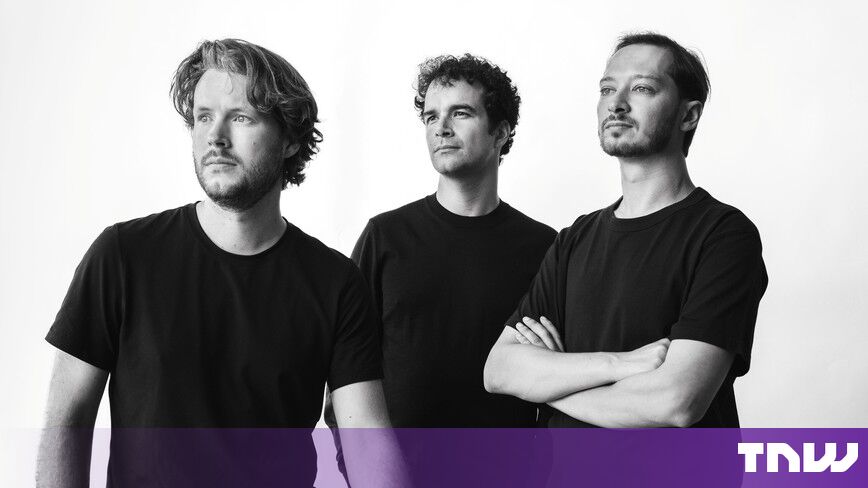
Amsterdam’s Hadrian raises $40M for AI-powered offensive security
$40m into Hadrian’s AI‑powered offensive security is more evidence that automated red‑teaming is becoming its own product category, not just a consulting add‑on. CISOs should start budgeting for continuous AI‑driven attack simulation alongside traditional pen tests and ask vendors how they’re using AI to find what humans miss.