

LinkedIn’s ‘Seems like AI slop’ button has already been used 1 million times
THE SO WHAT
A million “AI slop” reports in weeks is a hard datapoint that users can and will push back on low-quality generative content when given a simple control. If your product surfaces AI-generated material, build explicit quality levers and feedback loops now—or risk platforms and users routing around you as spam.
READ THE SOURCE
MORE FROM THE WIRE
 Applied AI
Inner Mongolia signs $27bn of AI computing projects
Inner Mongolia locking in ~$27.49B across 12 ‘green computing’ projects is China turning remote regions into AI export zones. For anyone selling AI services into or against Chinese providers, power, land, and policy arbitrage are now part of the competitive set, not just model quality.
 Applied AI
Nvidia says its Groq 3 LPX racks delivered 3,400 tokens per second in an Artificial Analysis benchmark running Gemma 4 31B with a 100,000-token input sequence
3,400 tokens/sec on a 100,000-token Gemma 4 31B prompt is Nvidia signaling that long-context, low-latency inference is moving into production territory. If your workloads are bottlenecked on context length or response time, it’s time to re-run your infra and vendor benchmarks with LPU-class options in the mix.
 Applied AI
Businesses Are Shunning Anthropic’s Fable 5 for Cheaper Models
Enterprises passing on a frontier model in favor of cheaper options is a reminder that “good enough per token” is the real benchmark in most workflows. If you’re a buyer, treat top-tier models as specialized tools for narrow, high-value use cases—and design the rest of your stack around cost-optimized, fine-tuned, or open alternatives.
 Applied AI
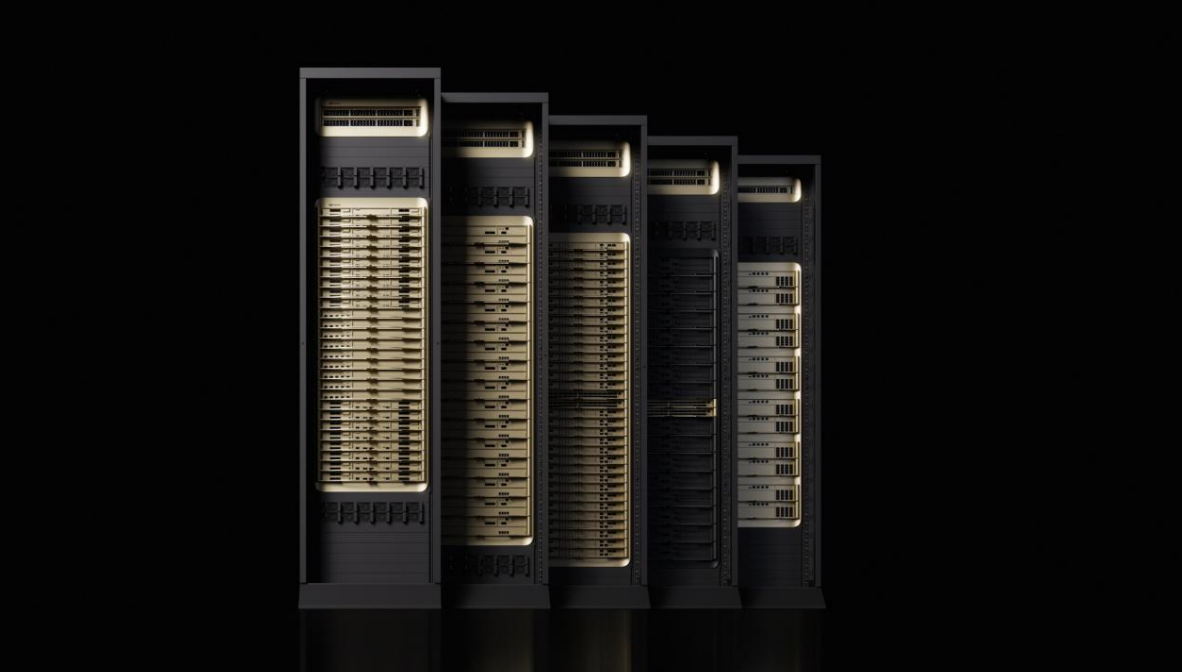
Nvidia says its inference accelerator Groq 3 LPX has entered full production and Nebius has signed on as the first customer; SpaceXAI will adopt Vera CPUs
Dedicated inference silicon like Groq 3 LPX entering full production—paired with early adopters like Nebius and SpaceXAI—means the performance-per-watt race for agent workloads is moving beyond general GPUs. If you’re planning high-volume inference, start modeling TCO across heterogeneous accelerators now rather than assuming “more H100s” is the only path.