
London-based Jack & Jill, which offers Jack, an AI agent for job seekers, and Jill, an agent for companies, raised a $40M Series A, after raising $20M in 2025
THE SO WHAT
A $40 million Series A for agentic job-matching is a bet that hiring and search workflows become continuous, AI-mediated conversations rather than static postings and resumes. HR and talent leaders should expect pressure to expose their pipelines and internal data to third-party agents or build their own.
READ THE SOURCE
MORE FROM THE WIRE
 Startups & Venture
Source: defense tech startup Shield AI is in talks to raise new funds at a valuation of at least $20B; Shield raised $2B at a valuation of $12.7B in March
A potential jump from a $12.7B to $20B+ valuation in six months for a defense autonomy company shows how much capital is chasing dual-use AI and drones. If you’re in adjacent markets—sensing, comms, simulation—expect defense buyers and investors to pull you into that orbit whether you planned for it or not.
 Startups & Venture
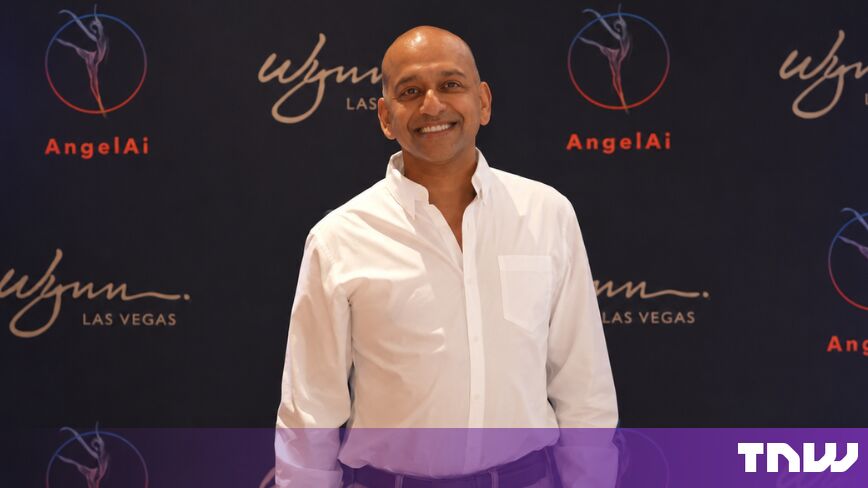
Before developing AngelAi, Pavan Agarwal built reverse mortgage software later adopted by other lenders
A founder with deep domain rails in reverse mortgages moving into AI is a reminder that vertical expertise plus automation still beats generic copilots in regulated workflows. If you're in a niche financial product, assume a specialist AI-native competitor is coming that understands your forms, edge cases, and regulators better than you do.
 Startups & Venture
OpenAI IPO will not take place in 2026, Sam Altman says
Pushing the IPO to 2027 and citing safety concerns keeps OpenAI in a quasi-private posture while it scales capabilities and revenue away from quarterly earnings pressure. For enterprises betting on their stack, this buys time for the cap table and governance to stabilize — but also extends the period where strategic direction is set by a tight inner circle.
 Startups & Venture
Only at TechCrunch Disrupt 2026: What happens when OpenAI ships your roadmap?
The real risk for AI startups isn’t weak product, it’s building something a foundation model vendor can ship as a feature six months later. Founders need to anchor on distribution, data, or regulated workflows that don’t evaporate when the API surface expands.