

Mark Zuckerberg largely ignores smart glasses privacy backlash at Meta Connect
THE SO WHAT
Meta leaning into new glasses while largely sidestepping privacy backlash means the market — regulators and retailers included — will be the real governor on adoption. If your product touches wearables, assume rising scrutiny on ambient capture and bake in opt-in, visible cues, and constrained data flows from day one.
READ THE SOURCE
MORE FROM THE WIRE
 Applied AI
Ringg’s AI agents resolve up to 65% of customer calls with OpenAI
If GPT-5.6 can handle 65% of calls across channels at 90% lower unit cost than GPT-4.1, the economics of front-line support are tilting from augmentation to replacement. CX leaders should be modeling what happens when the marginal cost of an incremental support interaction rounds toward zero and quality becomes the only real constraint.
 Applied AI
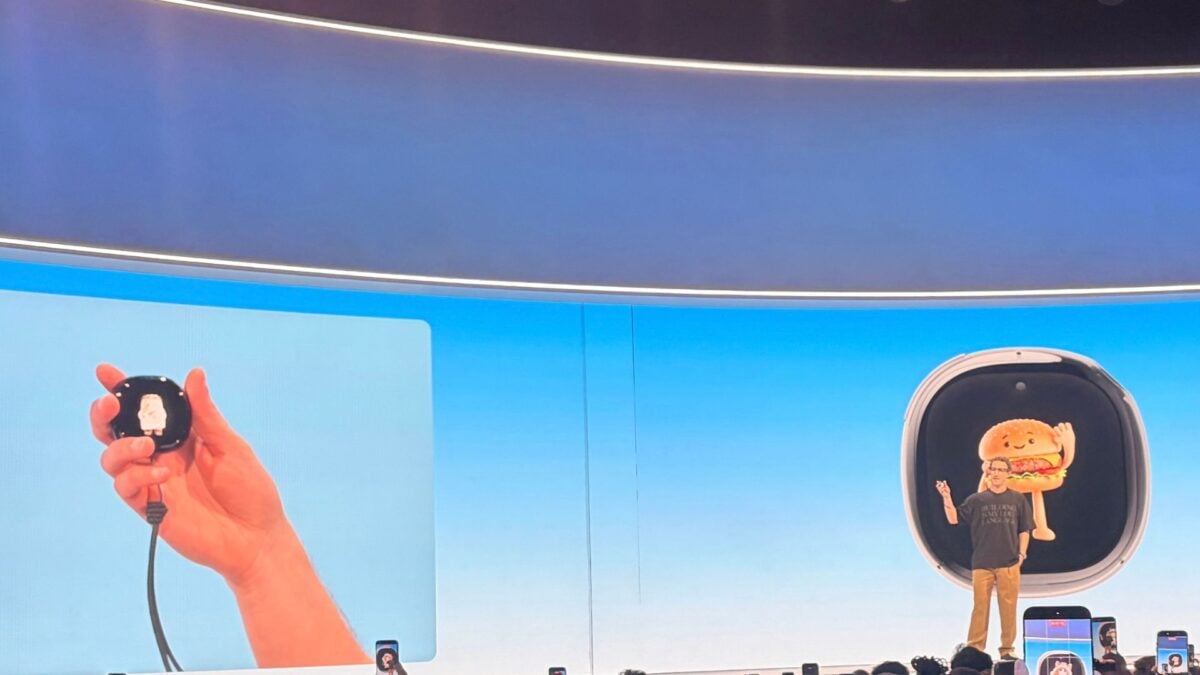
Mark Zuckerberg’s ‘One More Thing’ Was an AI Keychain?!
Meta is treating AI hardware like fashion accessories — low-cost, high-frequency touchpoints that keep its agent in your hand, pocket, and on your face. For operators, the question is whether your product lives inside these emerging AI-first surfaces or gets disintermediated by them.
 Applied AI
Meta announces Ray-Ban Meta Gen 3 with better battery life, a programmable action button, an added microphone, and two new frame styles, starting at $449
Ray-Ban Meta Gen 3 at $449 with better battery, more mics, and a programmable button is Meta iterating toward glasses as a primary input surface for its agent. If your product depends on phone-centric UX, start mapping what “one-tap on-glasses” workflows would look like for your core flows.
 Applied AI
Everything new coming to Meta’s AI agent Muse
Meta is centering Connect around Muse — and pushing it into glasses, phones, and dedicated hardware — which makes the agent, not the app, the default starting point. Builders should assume a world where user intent is first captured by a system agent and only then routed to downstream services.