
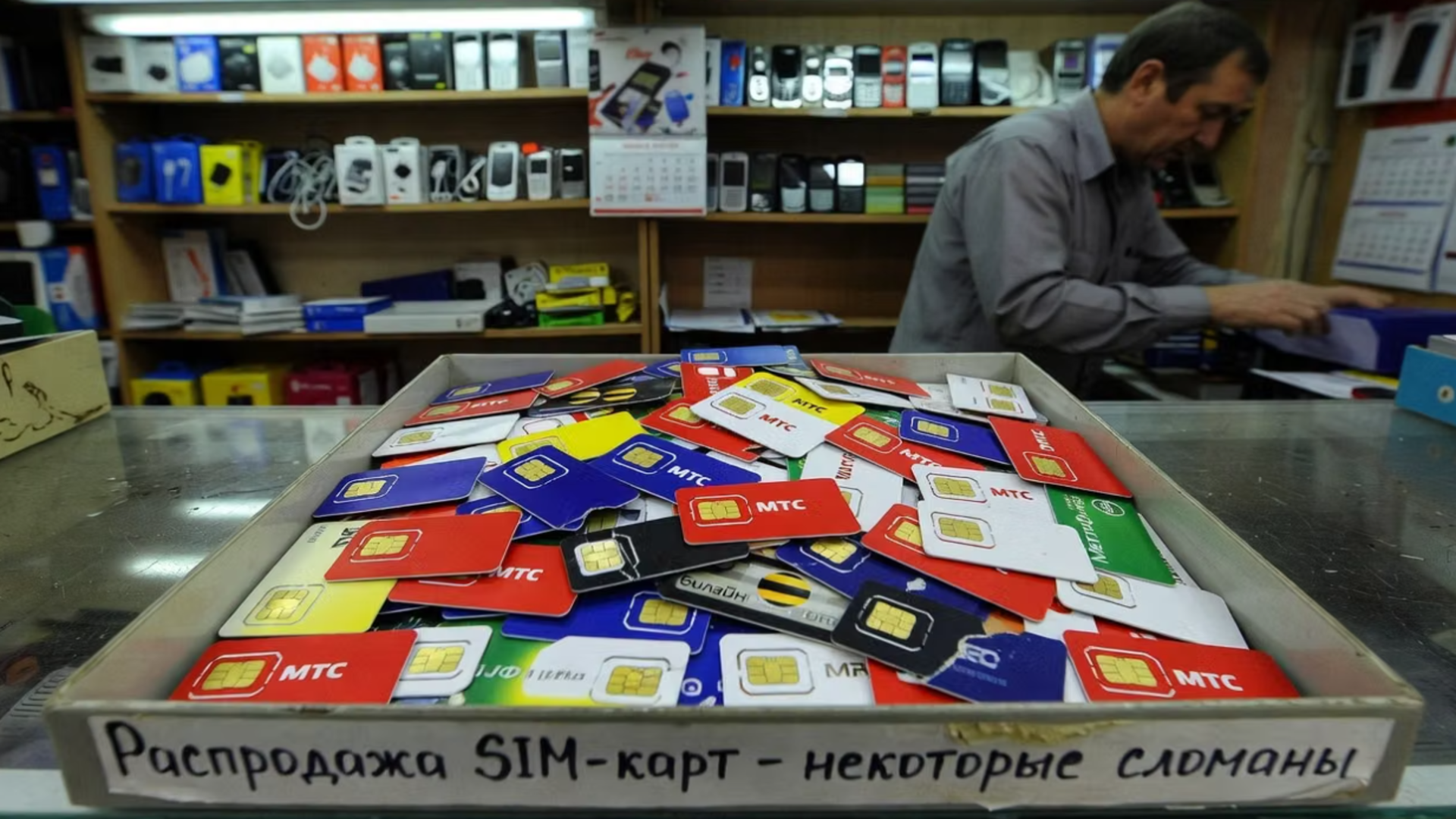
Moscow tightens regulation on SIM market to crack down on fraud and 'attackers' — Anti-Fraud 3.0 could see SIMs sold without money and a massive reduction in SIM card sellers
THE SO WHAT
Russia’s Anti-Fraud 3.0 plan—zero-balance SIMs, fewer sellers, tighter payment trails—shows mobile identity is becoming a frontline anti-fraud instrument. If your product depends on cheap, disposable SIMs or phone-based KYC, expect higher friction and redesign flows for this market.
READ THE SOURCE
MORE FROM THE WIRE
 Deep & Emerging Tech
44,000 object to Palantir’s NHS data platform, the Guardian reports
Tens of thousands of formal objections to the NHS Federated Data Platform show that public data trust can become a hard constraint on health AI deployments. If you’re building on sensitive datasets, budget for consent, opt-out, and comms infrastructure the same way you budget for cloud and models.
 Deep & Emerging Tech
US government reveals $5.25 billion spending on boosting national grid to help power new AI data centers — money will cover 31 projects across 26 states, but how will it affect energy bills?
A $5.25 billion federal push into wires and sensors instead of new plants confirms that grid capacity and reliability are now the gating factors for AI data center growth. If you’re planning large-scale AI infra, your real bottlenecks are interconnect queues and transmission upgrades, not just GPUs.
 Deep & Emerging Tech
BMW built the same car for gas and electric. The EV is $4,400 cheaper.
BMW pricing an otherwise identical EV 3 Series $4,400 below the gas version shows EV cost parity is no longer theoretical—it’s on the lot. If your business assumes ICE vehicles are cheaper to buy or operate, revisit TCO models and residual value assumptions now.
 Deep & Emerging Tech
Boeing beats Northrop to build the US Navy’s $20bn F/A-XX fighter
A ~$20 billion F/A-XX development award signals that sixth-gen fighters—and the autonomy, sensing, and networking they require—will anchor US defense R&D for the next decade. Dual-use startups in perception, secure comms, and human–machine teaming should read this as a durable demand signal.