
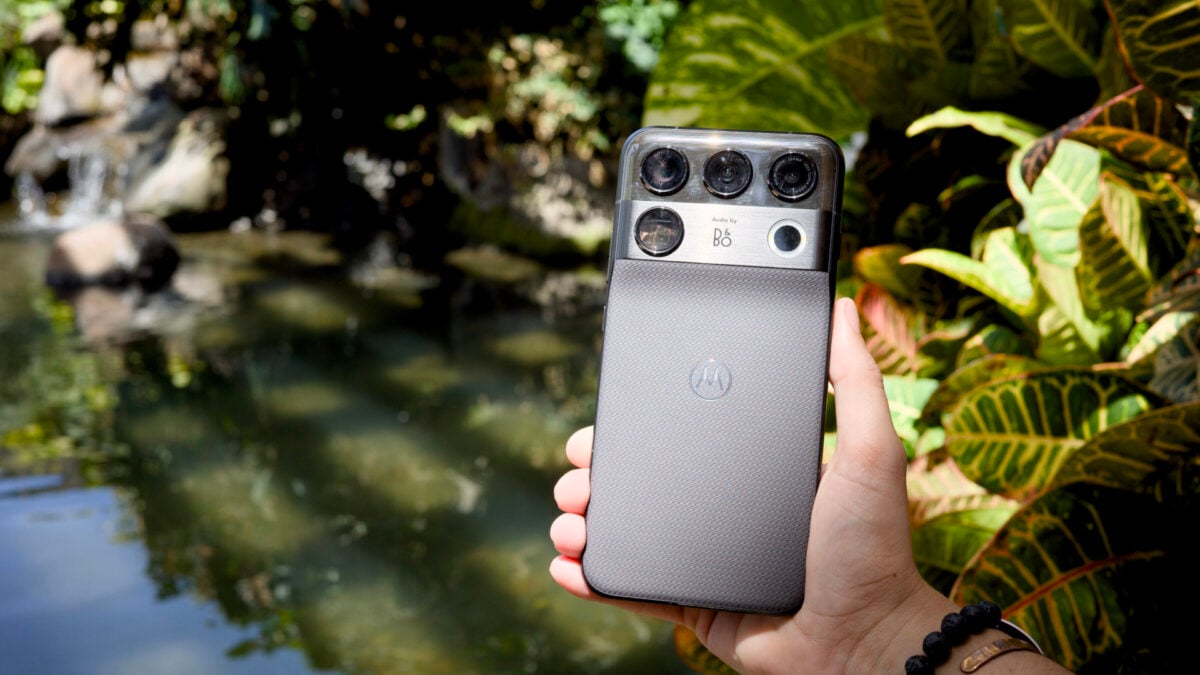
Motorola’s Stacked Signature 27 Phone May Be More Obscene Than We Imagined
THE SO WHAT
Ultra-premium phones like Motorola’s Signature 27 are less about unit volume and more about testing how far a subset of users will pay for status and niche features. If you build mobile-first experiences, watch these devices as testbeds for new input, display, and AI-assistant patterns that may trickle down to mainstream hardware in 12–24 months.
READ THE SOURCE
MORE FROM THE WIRE
 Tech & Innovation
The Data Center Fight Is Just Beginning
Local backlash against data centers is turning AI infrastructure into a frontline political issue, not just a zoning problem. If you depend on US-based capacity, you now have to underwrite political risk at the state and municipal level the same way you model power and water.
Tech & InnovationGoogle, Meta, and TikTok file lawsuits to block a California law that bans online platforms from providing "psychologically exploitative features" to under-16s
Design patterns like streaks, infinite scroll, and certain notifications are being carved out as a regulated surface for minors. Product and policy teams should assume youth-specific UX rules are coming in more states and start building age-aware feature flags and audit trails now.
Tech & InnovationHow Musk’s Starlink Can Challenge AT&T, Verizon and T-Mobile
If Starlink can credibly offer terrestrial-like wireless, the moat around spectrum and tower assets looks less absolute. Connectivity-dependent products should be architected for multi-path access—satellite plus terrestrial—rather than assuming the big three MNOs as the only backbone.
Tech & InnovationState-Driven Data Center Backlash Reshaping the AI Trade
The “neocloud” trade is being repriced as a regulatory and permitting bet, not just a power-and-capex story. Operators planning to lean on upstart data center partners need a second source and a clear view of which states are turning hostile to large-scale AI infrastructure.