
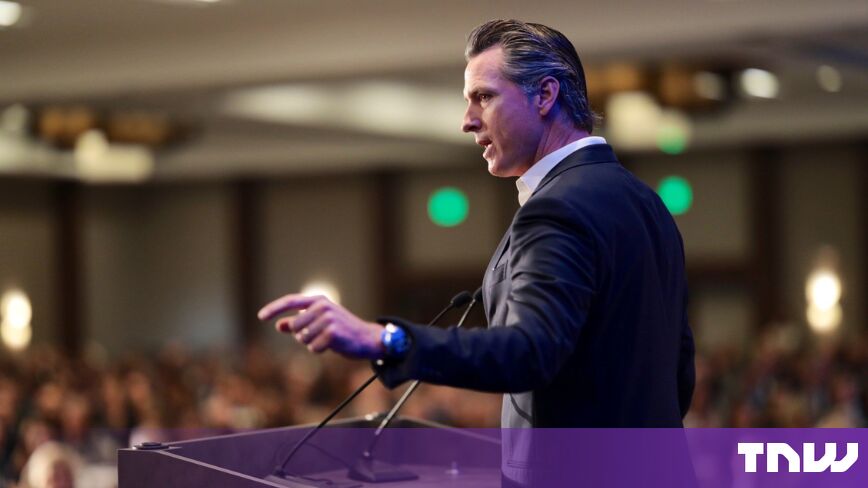
Newsom pitches an AI kill switch for California
THE SO WHAT
California is probing whether frontier models should ship with a regulatory kill switch—governance is drifting from voluntary standards toward hard technical controls. If you deploy or build large models in-state, start mapping how shutdown, rollback, and auditability would work under law, not just policy.
READ THE SOURCE
MORE FROM THE WIRE
 Applied AI
Dario Amodei and other AI leaders want to ‘Pace the Frontier’ but…how?
The frontier labs are openly asking for independent evaluators and democratic-country coordination, which means external safety audits are on a glide path to becoming a de facto license to operate. If you’re building near the frontier, budget now for third-party evals and treat eval-readiness as a core engineering requirement, not PR.
 Applied AI
Coders lose their DMCA case against GitHub Copilot and Codex
The Ninth Circuit calling Copilot-style training and output ‘run-of-the-mill copyright’ rather than a DMCA issue lowers one major legal overhang for code assistants. Enterprises still need IP policies, but the risk is shifting from ‘is this legal at all’ to ‘how do we track provenance and licensing in mixed human/AI codebases.’
 Applied AI
Napster Is Now Making AI-Powered ‘Digital Twins’ of Teachers
Turning teachers into AI ‘digital twins’ shifts education from content delivery to relationship and assessment—everything else becomes software. Edtech and institutions need to decide quickly whether they’re building, licensing, or banning these twins, because student expectations will move faster than policy.
 Applied AI
What Hollywood thinks about existential AI warnings
Hollywood labor groups pushing back on existential AI doom to refocus on present-day job and IP impacts shows how split the AI narrative has become. For studios and AI vendors, that means any deployment plan now has to navigate two conversations in parallel: frontier risk optics and near-term labor contracts.