
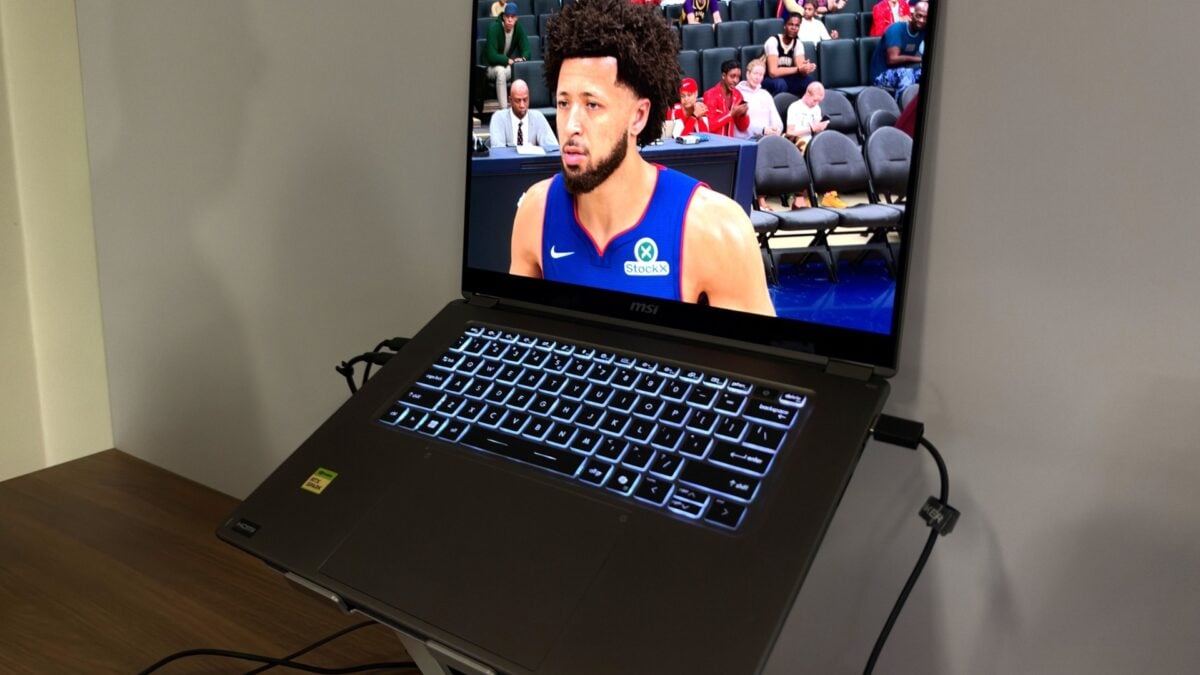
Nvidia’s DLSS 5 Is Now Less in Your Face, Less Performance-Hogging
THE SO WHAT
DLSS 5 getting lighter and less intrusive while still occasionally glitching visuals shows the trade is shifting from raw FPS to acceptable artifacts. Game and 3D tool builders should assume AI upscaling is the baseline and focus on giving users control over quality-performance tradeoffs, not on chasing ever-higher native resolution.
READ THE SOURCE
MORE FROM THE WIRE
 Applied AI
How Windows is being optimized for Nvidia’s RTX Spark laptops
AI PCs are shifting from generic Windows boxes to co-designed hardware–OS stacks tuned for local inference. If you ship desktop software, assume your users will have on-device models and start designing workflows that exploit low-latency, offline AI rather than round-tripping to the cloud.
 Applied AI
Nobody is safe from celebrity AI deepfakes
Celebrity deepfakes are normalizing AI slop in mainstream feeds—eroding trust in authentic media by default. Brands and public figures need active monitoring and a playbook for rapid takedowns and counter-messaging, not just passive PR statements after the fact.
 Applied AI
CoreWeave Risk Gauge Hits Record, Pricing 60% Odds of Default
A 60% implied default risk on a major AI cloud player is a warning that hyperscale GPU buildouts are stretching balance sheets. If your roadmap assumes a single specialized cloud provider, quantify counterparty risk and line up multi-cloud or on-prem contingencies now, not after spreads blow out further.
 Applied AI
Men Are Shaping the Future of AI. That Doesn’t Mean They Know What They’re Talking About
The gender skew in AI decision-making isn’t just an equity issue—it narrows the lived experience informing product, policy, and risk calls. If you’re setting AI strategy, audit who is actually in the room for model, safety, and deployment decisions and correct the imbalance before it bakes into your systems.