

OpenAI buys camera startup Glass Imaging for over $300m, WSJ reports
THE SO WHAT
Spending $300m+ on Glass Imaging’s AI camera stack shows how seriously foundation model players take control of sensor and data quality at the edge. If your product depends on visual input, assume the bar for on-device perception and pre-processing is about to rise sharply.
READ THE SOURCE
MORE FROM THE WIRE
 Applied AI
Nvidia’s Huang Says AI Industry Doesn’t Need Any New Laws
When the dominant GPU supplier argues market forces are enough, it’s a signal that near-term regulatory friction for AI infra may stay lower than many boards fear. Operators should still plan for sector-specific rules—but don’t pause deployments waiting for a unified AI statute that may not arrive soon.
 Applied AI
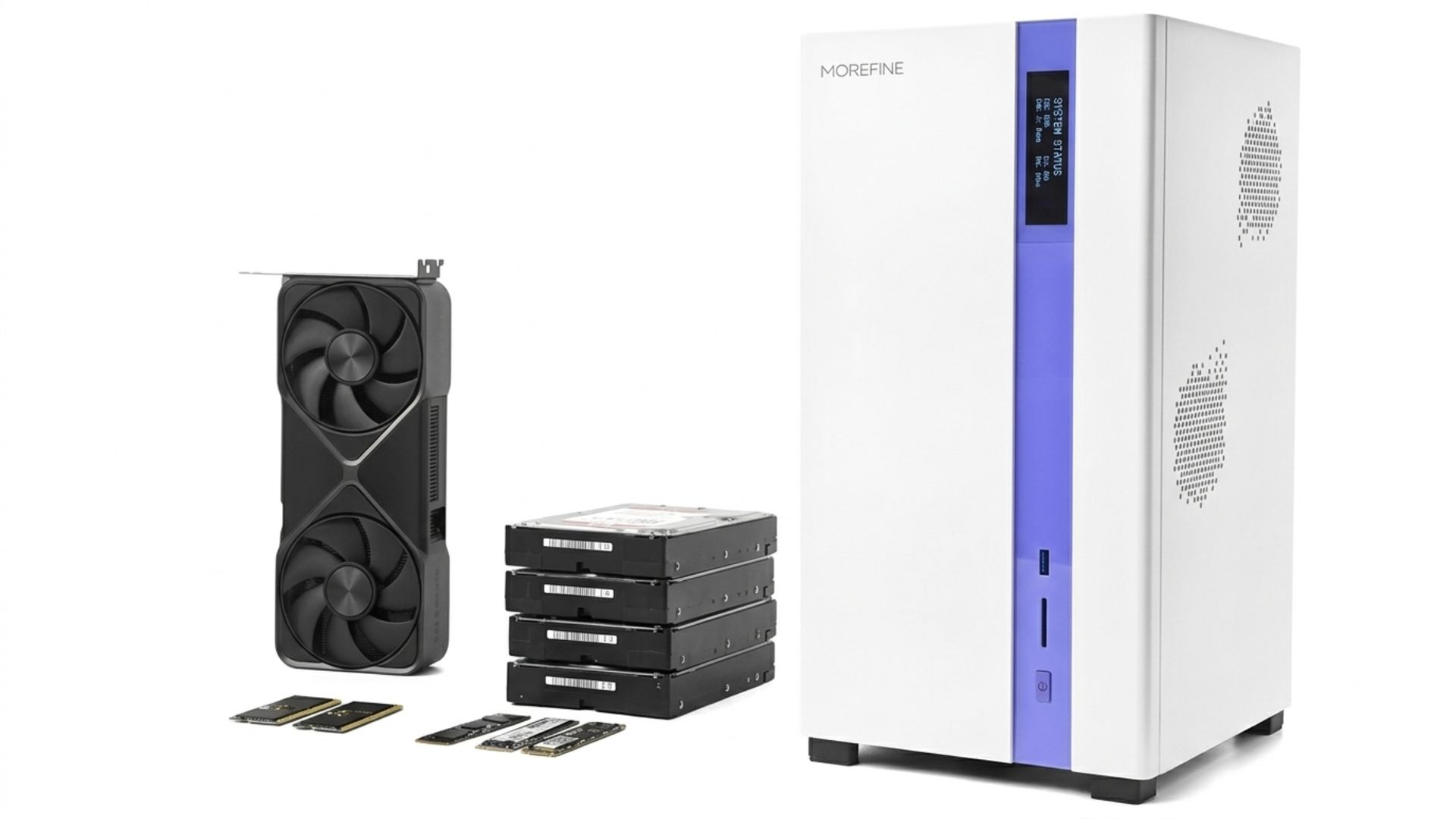
Vertical GPU, top-loading HDDs: Morefine's 4-bay NAS is unlike any AI workstation PC I've ever seen, thanks to a simple physics law
This kind of small-form-factor NAS + full-size GPU hybrid shows how far you can push edge AI without a rack. If your workloads are latency-sensitive and data-local, it’s time to benchmark what a $2–3K edge box can do before defaulting to cloud-only inference.
 Applied AI
Apple Home’s AI Security Camera Features Are Opt-In, if You Can Afford Them
Charging up to $60/month for AI summaries and NL search on home cameras makes clear that “AI features” are becoming a recurring revenue line, not a free upgrade. If you ship connected hardware, you now have permission—but also pressure—to meter AI capabilities as a premium tier.
Applied AIThe Iran War Could And Should Be Over Tomorrow Says Blinken
Blinken tying AI “wizards” and guardrails to an ongoing war underscores how quickly advanced models are being pulled into geopolitical and military decision loops. For operators with any exposure to dual-use AI, governance is no longer a PR exercise—it’s a live policy and sanctions risk surface.