
Pennsylvania Data Center Limits Are a Threat to Gas Firms, Trade Group Says
THE SO WHAT
Pennsylvania’s new data center limits — and gas producers’ backlash — make clear that AI-driven power demand is now a contested political resource. Infra planners need to treat siting as a regulatory chess game: map where power, permits, and local politics align before you commit to any large-scale build.
READ THE SOURCE
MORE FROM THE WIRE
 Deep & Emerging Tech
Iraq Fires Maysan Commander After Drone Attacks on Saudi Arabia’s Pipeline
Low-cost drones are now credible tools for disrupting critical energy infrastructure, not just battlefield assets. Operators with exposure to pipelines, grids, or ports should be treating counter-drone detection and response as a core resilience line item, not a niche security add-on.
 Deep & Emerging Tech
Klea Dhmitri (Hamamatsu): Photonics as the hidden backbone of quantum hardware scaling
Quantum hardware scaling is quietly turning into a photonics supply-chain problem — PMTs, SPADs, and specialized CMOS cameras become gating components for larger trapped-ion and neutral-atom systems. If you're building in quantum, vendor concentration in these photonic parts is a real risk surface to map now, before demand spikes.
Deep & Emerging TechWall Street Week | Venezuela’s Oil Test, Overcapacity in Renewables, Defense Tech Boom
Overcapacity in European solar and a defense-tech boom point to a capital rotation inside energy and infrastructure—cheap electrons plus conflict risk are reshaping where money flows. Data center and AI infra planners should be modeling power sourcing and geopolitical exposure as first-order variables, not afterthoughts.
 Deep & Emerging Tech
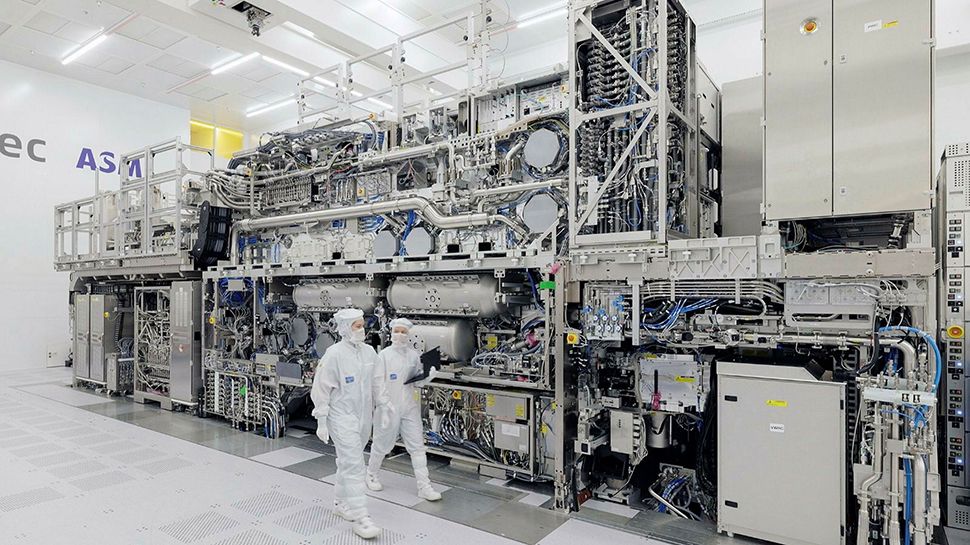
Intel says it has already passed a million High-NA EUV wafers - more than the rest of the industry combined
Intel running ~1M High-NA EUV wafers — roughly three-quarters of all High-NA exposure to date — is a process-learning lead, not just a PR stat. If you’re betting on next-node performance or custom silicon, assume Intel has a real shot at schedule and density advantages over the next 2–3 years and plan multi-foundry contingencies accordingly.