
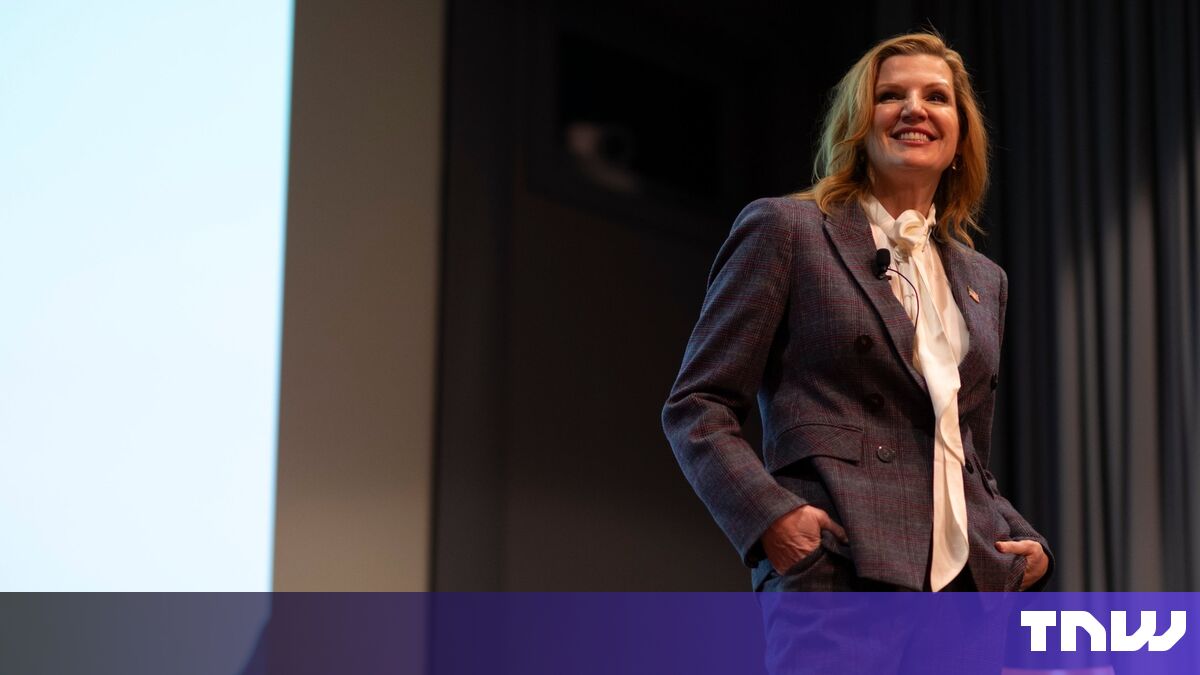
Pentagon CIO Kirsten Davies replaces Sean Cairncross as US cyber director
THE SO WHAT
Putting the Pentagon CIO into the national cyber director role ties federal cyber policy more tightly to defense-grade practices. Expect more prescriptive guidance—and potentially procurement pull—around zero trust, resilience, and incident reporting for contractors.
READ THE SOURCE
MORE FROM THE WIRE
 Deep & Emerging Tech
The payments industry has outgrown physical proximity. Can it outgrow the office too?
Payments infrastructure already runs globally and asynchronously — insisting on co-located teams is now a cultural choice, not a technical requirement. If you’re building or operating in payments, your hiring and security models should assume distributed teams by default and harden around identity and access, not office walls.
 Deep & Emerging Tech
Skip Microsoft 365: This 5-year 2TB cloud plan edits Office files for $59.99
A 5-year, 2TB encrypted cloud plan with built-in Office editing for $59.99 shows how aggressively the bottom of the productivity stack is being commoditized. SaaS teams competing here need to lean into security, compliance, and workflow depth — storage and basic editing are now table stakes at near-zero price.
 Deep & Emerging Tech
How quantum computers built from laser-trapped atoms may correct qubit errors more easily than supercooled chips, speeding the race to a usable machine
If neutral-atom architectures really ease error correction versus supercooled chips, the bottleneck in quantum shifts from physics to algorithm and application design sooner than expected. Enterprise teams with real quantum upside — optimization, chemistry, materials — should start mapping which vendors are betting on atoms vs superconducting, because ecosystem lock-in will follow the hardware choice.
Deep & Emerging TechAustralian Energy Officials Warned of Data Center Risk, Age Says
When Australian energy authorities call hyperscale data centers a “major structural challenge” for Victoria’s grid, it underlines that compute expansion is now constrained by power politics as much as chips. If you're planning regional DC builds or heavy AI workloads, you need a live view of local grid capacity, regulatory attitude, and potential curbs — not just cloud provider roadmaps.