
Persistent State Machines: LLM Attention with INT4 In-Memory Cells
THE SO WHAT
If INT4 in-memory cells can reliably approximate attention, the constraint on scaling shifts from FLOPs to memory architecture. For teams pushing context length or on-device models, this is a nudge to track memory-centric designs, not just new GPU SKUs.
READ THE SOURCE
MORE FROM THE WIRE
 Applied AI
Disrupting a Criminal Scam Operation
AI-native fraud is now organized enough that labs are running counter-intel ops against specific scam shops. If your product touches payments, dating, or gambling, assume you’re already in an arms race with LLM-augmented fraud rings and budget for continuous abuse tooling, not one-off rules.
 Applied AI
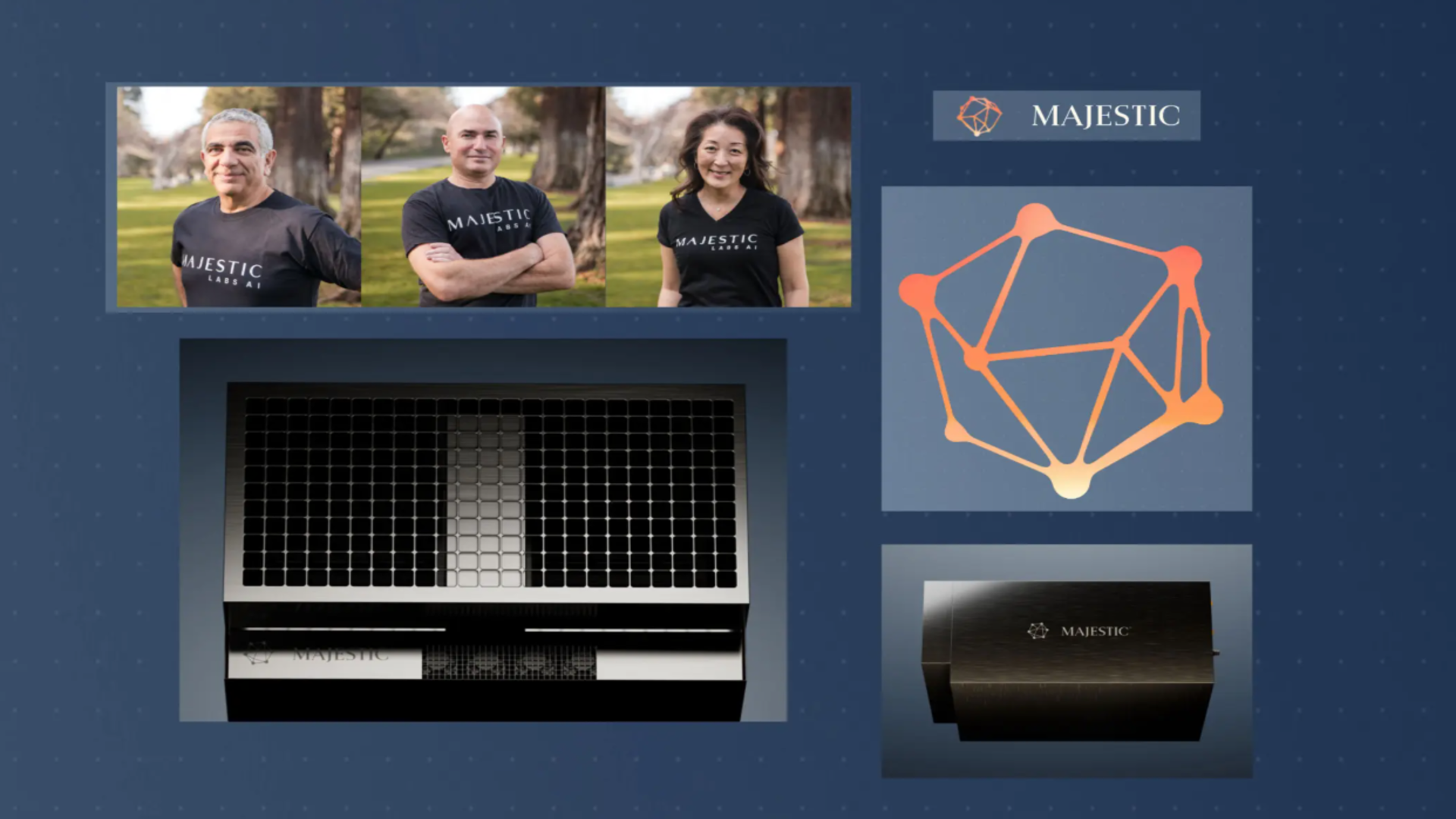
Startup swaps costly AI GPUs for Arm cores and up to 128TB of 'cheap' LPDDR6 RAM instead of expensive HBM to smash through the memory wall
If Majestic Labs can make Arm + 128TB LPDDR6 viable for inference, the constraint shifts from flops to memory bandwidth and data locality—good enough compute with huge cheap memory is a different design space than GPU + HBM. For operators, this is an early signal to segment workloads by memory footprint and tolerance for latency rather than defaulting everything to GPU clusters.
Walsh: Multi-agent research pipeline with risk manager that can veto trades
Baking a veto-capable risk manager into a trading agent stack is the pattern every high-stakes agent workflow will need. If you're experimenting with agentic systems around money, access, or production, separate the "do work" agents from a hard-governed risk layer this quarter.
 Applied AI
The Greenhouse and the Lens: Two Modes of Agentic AI Work
Framing agentic AI as "greenhouse" (exploration) versus "lens" (focused execution) is a useful design constraint for workflows. When you scope pilots, decide explicitly which mode you're in—then tune prompts, guardrails, and metrics around either breadth of options or depth of follow-through, not both at once.