
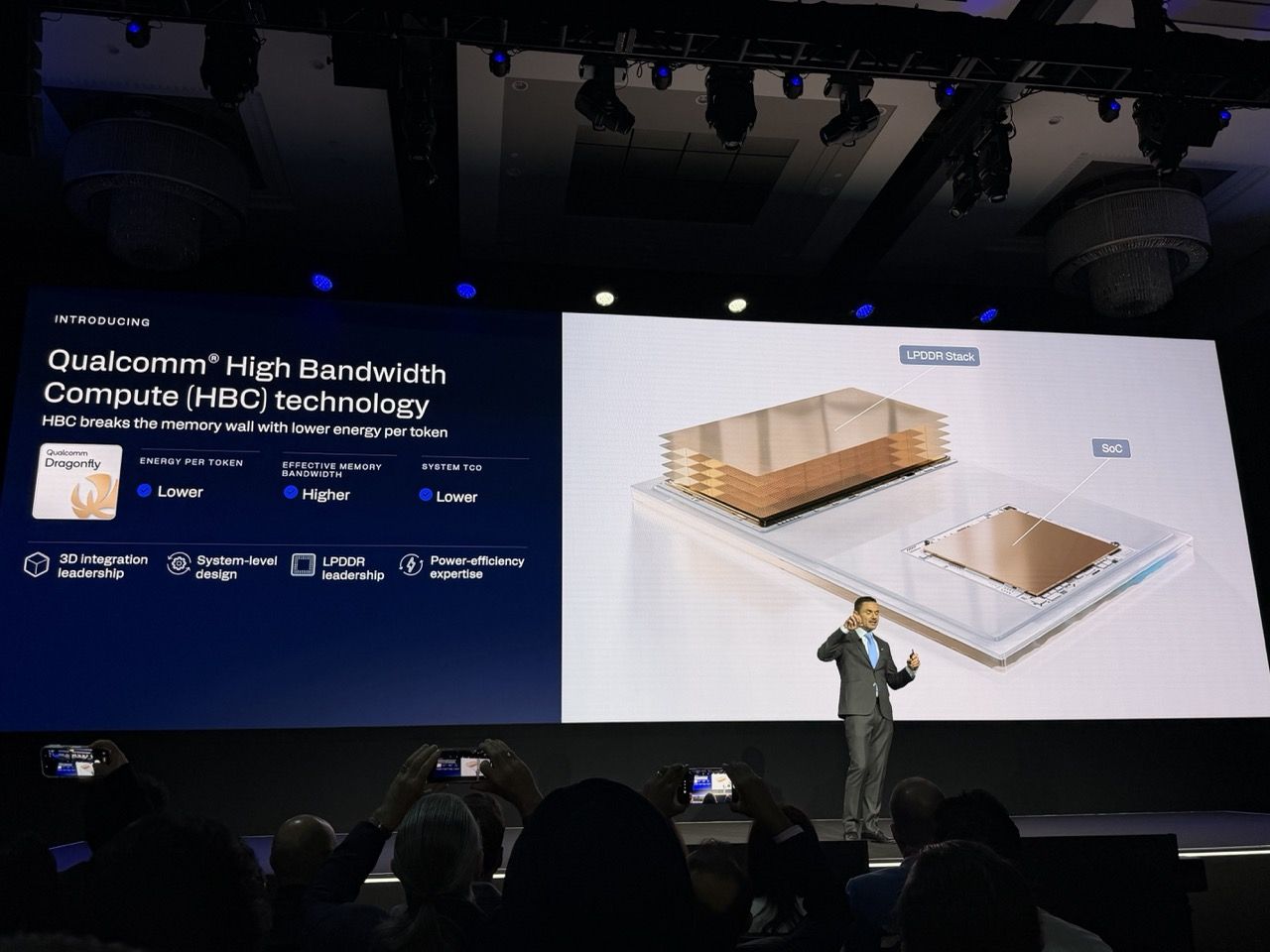
Qualcomm High Bandwidth Compute aims to compete with High Bandwidth Flash and Memory by stacking LPDDR just above the CPU to 'eliminate HBM tax'
THE SO WHAT
Qualcomm’s High Bandwidth Compute pitch — stacking LPDDR above the CPU to dodge the HBM tax — is a direct attempt to reprice AI memory bandwidth. If you’re planning data center AI deployments, you now have to model not just GPU vendors but alternative memory architectures into your three-year TCO.
READ THE SOURCE
MORE FROM THE WIRE
 Deep & Emerging Tech
Trump’s Nuclear Watchdog to Ditch 50-Year-Old Radiation Guidance
Rewriting 1970s-era radiation limits would change the economics and siting calculus for nuclear-heavy grids and data center projects. If you’re planning long-lived infrastructure, you now have to model regulatory volatility as a first-class risk, not a background assumption.
Deep & Emerging TechNuclear Firm First in US to Produce Power From Advanced Reactor
An advanced reactor powering an Nvidia AI chip — even briefly — ties next-gen nuclear directly to AI compute demand. If you’re planning multi-megawatt clusters, long-term power strategy is now a board-level question, not a colo line item.
 Deep & Emerging Tech
Zoning authority could be the answer to data center woes, as San Marcos becomes the first Texas city to ban data centers
A Texas city banning data centers via zoning shows local land-use politics are now a hard constraint on AI buildout. If you’re siting new capacity, you need a permitting and community strategy as serious as your chip procurement plan.
Deep & Emerging TechOne Leveraged ETF Is Reshaping Trading in World's Top AI Memory Stock
A $13B leveraged ETF swinging SK Hynix’s price means financial engineering is now a real variable in AI hardware supply chains. If your roadmap depends on specific memory vendors, hedge not just against chip shortages but against market-driven volatility in their capex and pricing power.