
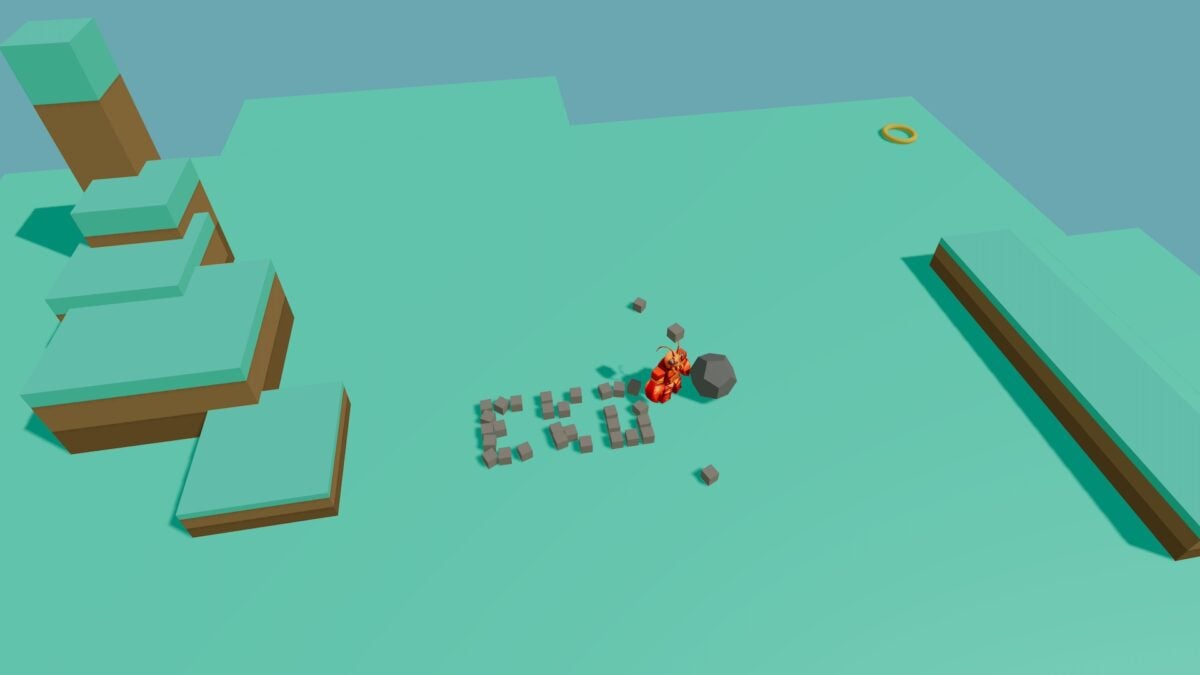
Researchers Stranded an AI Agent on a Virtual Island. Things Got Very Weird.
THE SO WHAT
Unsupervised agents that invent games, temples, and mandalas suggest that open-ended environments will surface behaviors no spec ever listed. If you’re deploying agentic systems, assume emergent side-quests—design observability and kill-switches for behaviors you didn’t think to forbid.
READ THE SOURCE
MORE FROM THE WIRE
 Applied AI
What CEOs See as the Biggest Risks to Their Businesses
CEOs are committing capital to AI while admitting that measurable transformation is lagging—boards will start asking harder questions about realized ROI vs. narrative. If you own an AI program, tighten your metrics this quarter: tie spend to specific P&L lines or risk your budget in the next planning cycle.
 Applied AI
Meta launches an open-weight AI model that runs on Macs
An open-weight Muse Spark Open that runs locally on Apple silicon pushes serious AI workloads onto the endpoint—reducing inference cost and data exposure for many use cases. If you build productivity or creative tools on Mac, you now have a credible path to ship offline, privacy-preserving AI without running your own infra.
 Applied AI
JPMorgan Chase blocks outside AI agents, limiting what Muse can do for users
Major banks blocking external AI agents from moving money is a clear line: agentic UX will be gated by regulated institutions, not just technical capability. If you’re designing agents that touch financial accounts, assume a partnership and certification path is mandatory—not a nice-to-have.
 Applied AI
Perplexity open sources SPACE, its AI agent sandbox, and says partners including CoreWeave, Akamai, and Crusoe agreed to offer SPACE to customers
Perplexity open-sourcing SPACE with infra partners like CoreWeave, Akamai, and Crusoe is an attempt to standardize how we contain and monitor agents before regulators do it for us. If you’re piloting agents, evaluate these sandbox patterns now—your governance story will be as important as your capabilities in enterprise deals.