
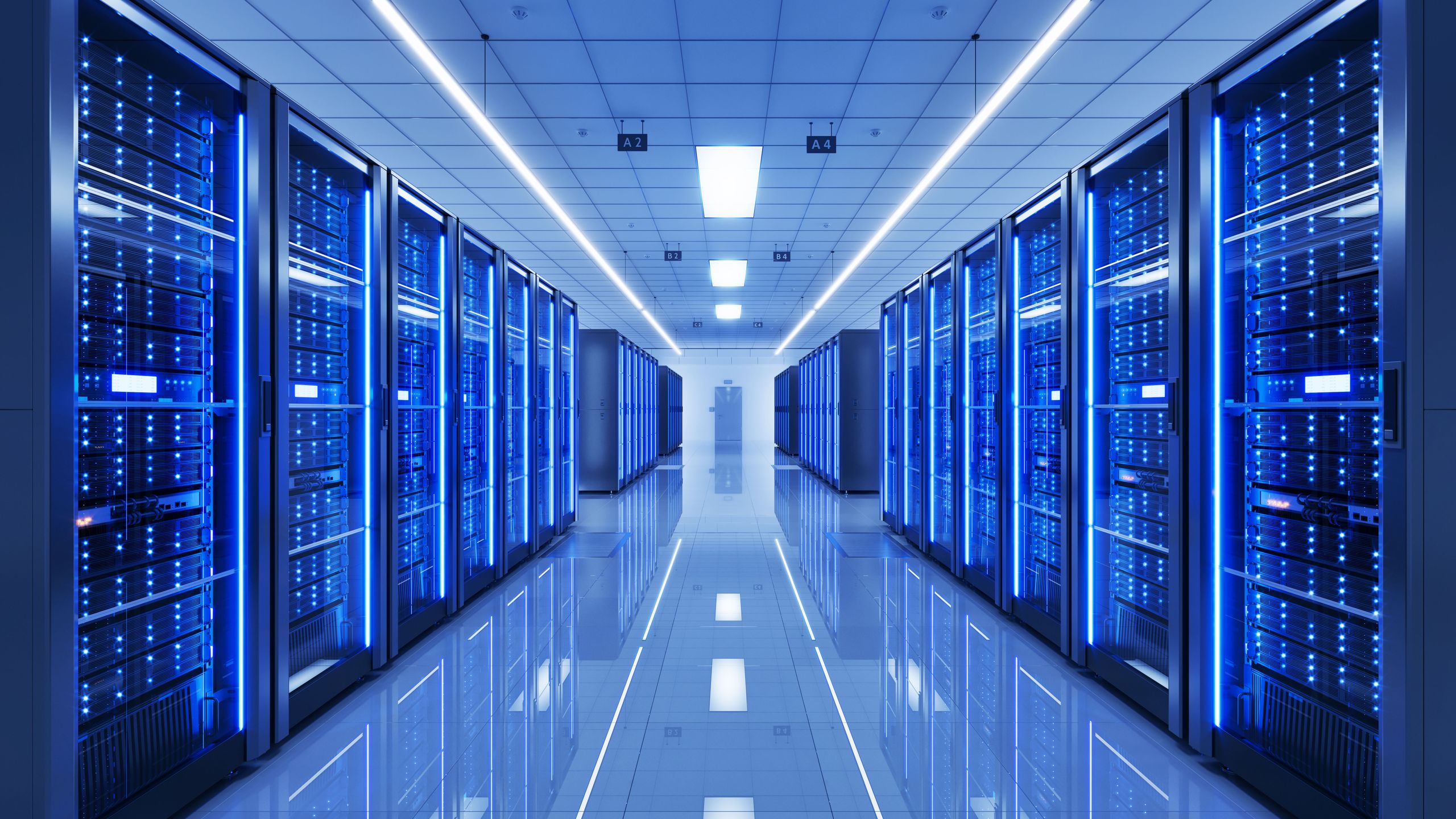
Samsung says it will launch a floating data center by 2028 as it looks to jump on 'a major new opportunity'
THE SO WHAT
Floating data centers are a blunt acknowledgment that coastal power, cooling, and land constraints are binding for hyperscale compute. Infra and AI leaders should start treating water access and maritime permitting as part of the long-term capacity plan, not just grid contracts.
READ THE SOURCE
MORE FROM THE WIRE
 Deep & Emerging Tech
Predatorgate victims sue the spyware maker for €8M
The Predatorgate lawsuit pushes commercial spyware from a policy debate into direct legal and financial risk—€1M per victim is a concrete number boards will notice. Any company touching surveillance, interception, or dual-use tooling should be tightening governance and documenting consent, oversight, and export controls now, not after discovery starts.
 Deep & Emerging Tech
Samsung’s Record Profit Fails to Impress After AI Chip Rally
Record profit that underwhelms after an AI chip rally shows how quickly markets are normalizing sky-high expectations for semiconductor names. Operators should treat the last 18 months of AI-driven multiple expansion as fragile—plan capex and hiring against cashflow resilience, not peak sentiment.
 Deep & Emerging Tech
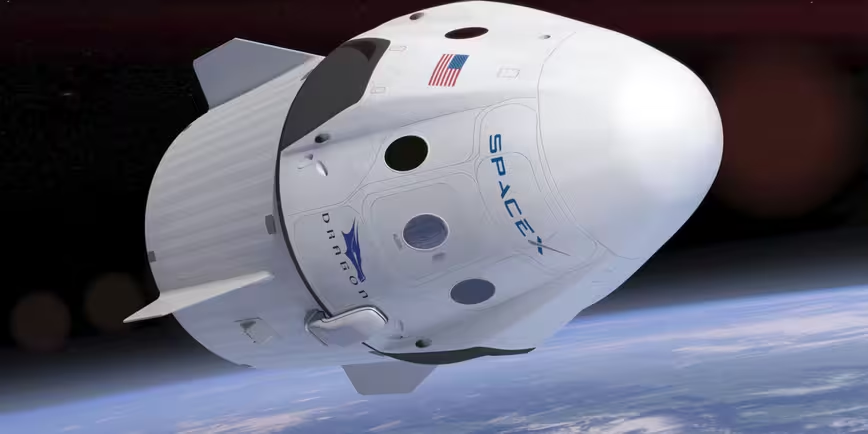
SpaceX’s biggest bull sees a $10.5tn valuation. A famed bear bets on a crash
A $10.5T bull case versus a 90% crash call on the same company is a sign of how wide the distribution is for space and launch economics. If your business depends on cheap, reliable access to orbit, hedge vendor and pricing risk—don’t anchor long-term plans on any single valuation narrative.
 Deep & Emerging Tech
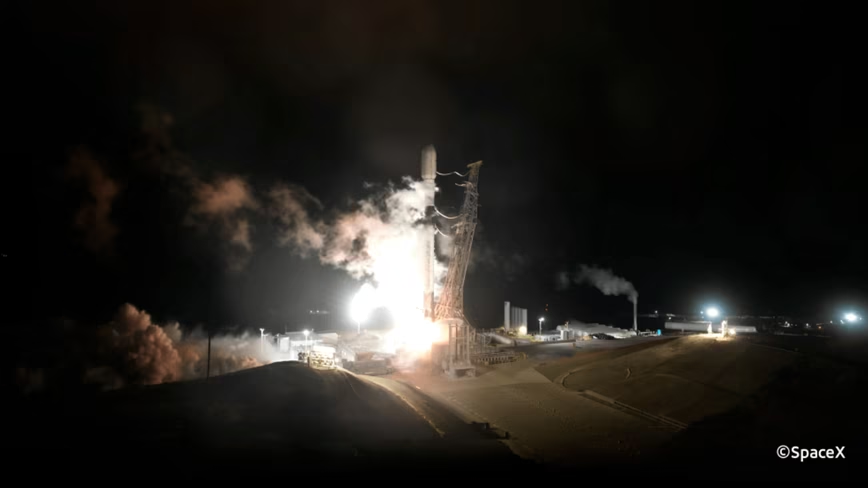
Romania leads its first private ESA mission with CyberCUBE launch
CyberCUBE—a loaf-of-bread satellite launched on Falcon 9 to probe how European spacecraft can be attacked—shows cyber is now a first-class design concern in orbit, not an afterthought. Space operators should be budgeting for security testing and in-orbit resilience the same way they budget for radiation and debris risk.