
ServiceNow’s stock falls as a new AI threat overshadows earnings beat
THE SO WHAT
ServiceNow beating earnings while trading down on fear of OpenAI Presence shows how quickly enterprise software is being repriced on the risk of assistant-native workflows. If you run a SaaS business, you now have to assume that horizontal AI assistants will sit between you and the user — design APIs, pricing, and UX for that mediated reality.
READ THE SOURCE
MORE FROM THE WIRE
 Applied AI
AMD is working with Cerebras to combine AMD Helios and Cerebras wafer-scale chips for an AI inference solution to make workloads faster; CBRS closed up 4.86%
AMD teaming up with Cerebras on a combined Helios + wafer-scale inference rack underscores how heterogeneous AI compute is becoming at the system level, not just the chip level. Infra buyers should start architecting for mixed-vendor, mixed-accelerator clusters rather than assuming a single GPU family will dominate their next buildout.
 Applied AI
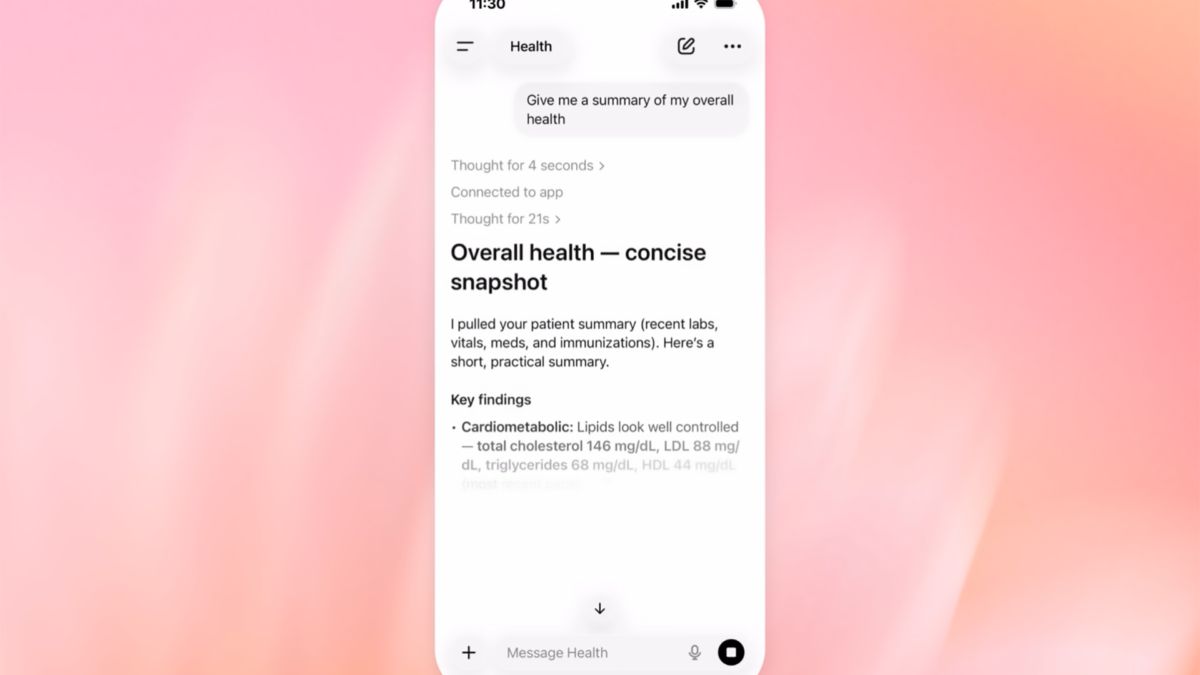
ChatGPT Health Rolls Out to Everyone While OpenAI Stares Down Major Lawsuits
Rolling out a health-branded assistant while facing lawsuits over allegedly fatal advice moves AI triage from a UX question to a liability and governance question. If you’re deploying AI into any regulated or safety-adjacent domain, you need explicit guardrails, escalation paths, and insurance in place before usage scales, not after.
Applied AIAgentic coding goes hands free as OpenAI brings GPT-Live's full duplex voice control to Codex and ChatGPT on the desktop
Full-duplex voice in desktop ChatGPT and Codex turns coding and ops into a continuous spoken interaction loop—closer to pairing with a junior engineer than issuing discrete prompts. Teams should start experimenting with voice-driven workflows for debugging, code review, and incident response where keyboard friction is currently the bottleneck.
 Applied AI
Alexa Plus is getting an AI update to handle more complicated instructions
Alexa Plus gaining the ability to route complex instructions across Bosch, Delta, iRobot, Yale, Whirlpool and others is another step toward the home assistant as the de facto orchestration layer. Device makers that don't expose rich, reliable APIs risk becoming invisible commodities behind someone else's voice UX.