
Sources: Baidu's chip unit Kunlunxin Technology plans a Hong Kong IPO at a $50B target valuation, asking investors to buy chips worth 3-7x their IPO investment
THE SO WHAT
Tying a $50B IPO allocation to mandatory chip purchases 3–7x the equity check turns capital markets into a go-to-market channel. If you rely on Chinese accelerators, expect tighter coupling between financial exposure and supply access—procurement may need to think like an investor, not just a buyer.
READ THE SOURCE
MORE FROM THE WIRE
 Startups & Venture
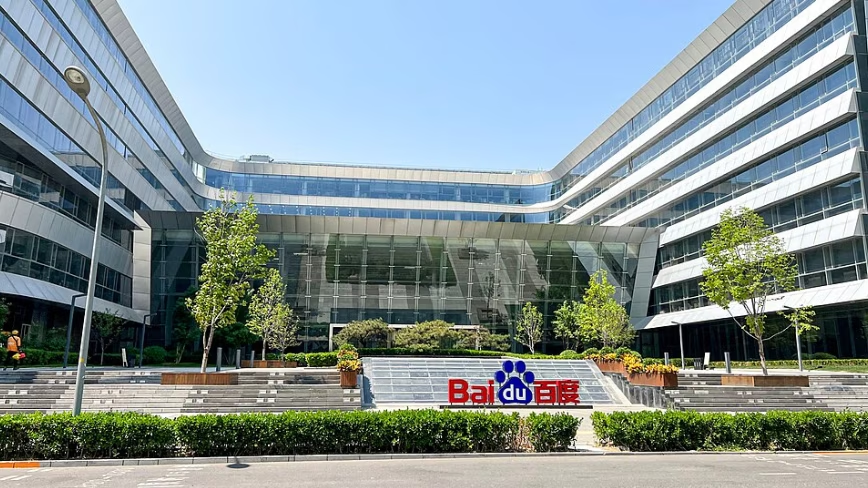
Baidu’s chip unit Kunlunxin is targeting a $50 billion Hong Kong IPO and asked investors to buy its semiconductors
Kunlunxin’s reported $50B IPO plus bundled chip-purchase commitments formalizes a playbook where capital, capacity, and demand are negotiated in one shot. For anyone building on non-U.S. AI silicon, watch how often access starts coming with financial strings attached—your infra roadmap may inherit capital-market constraints.
I left Google after making nearly $1M in a year. Fears about layoffs and missing out on the AI boom gave me the push.
When someone walks away from nearly $1M in comp at Google to chase AI upside and avoid perceived layoff risk, it’s a signal that talent now prices option value over cash. If you’re not a top lab, your edge is speed and ownership—design roles and equity so ambitious builders feel like they’re compounding, not waiting.
 Startups & Venture
AI Fever Powers HK Share Sales Through Hurdles to Five-Year High
Equity capital is routing around macro drag and regulatory friction when the story is AI growth — Hong Kong’s five-year high in share sales is another data point that public markets will still pay up for credible AI exposure. If you’re raising in Asia, sharpen the AI part of your equity narrative or expect to be repriced against those who do.
Startups & VentureLSEG: tech companies have raised $3.1B from mainland China stock market listings YTD, up 5x+ from a year earlier, as AI and chip companies drive onshore IPOs
Beijing is pulling AI and semiconductor listings back onshore — a 5x year-on-year jump to $3.1B YTD means domestic markets are becoming a primary liquidity venue for this stack. If you depend on Chinese AI or chip vendors, assume tighter alignment with local policy and more capital to scale at home rather than abroad.